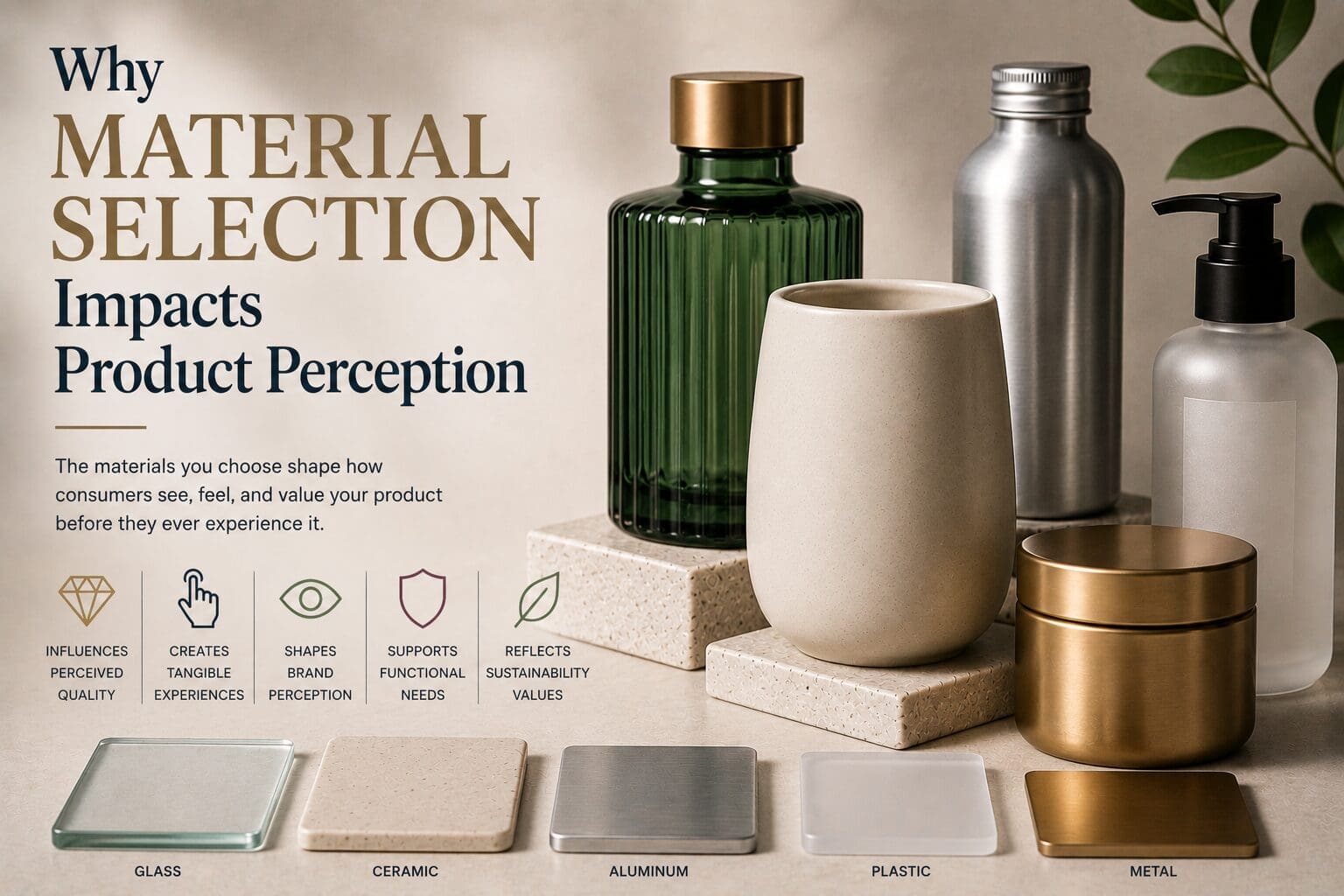
When consumers evaluate a product, they’re not just assessing what’s inside the package.
They’re evaluating the entire experience.
The color of the container, the shape of the vessel, the finish of the surface, and even the weight of the package all contribute to how a product is perceived. One of the most influential factors in that experience is often overlooked: material selection.
The materials used in product packaging help shape expectations about quality, value, functionality, and brand positioning. In many cases, consumers begin forming opinions about a product before they’ve ever used it, simply based on how the package looks and feels.
That’s why material selection plays a critical role in CMF (Color, Material, and Finish) design.
Why Material Matters More Than Many Brands Realize
Consumers interact with packaging using multiple senses.
Before they experience the product itself, they may:
- See the package on a shelf
- Pick it up and feel its weight
- Notice its texture
- Observe how it reflects light
- Compare it to competing products nearby
These interactions create immediate impressions.
A heavy glass vessel may communicate luxury and permanence.
A lightweight plastic container may communicate convenience and portability.
Neither perception is inherently better. The key is ensuring the material supports the experience the brand intends to create.
Successful packaging design aligns material choices with customer expectations.
Material Selection Influences Perceived Quality
One of the strongest connections consumers make is between material and quality.
Even when two products contain similar formulations, consumers often perceive them differently based on packaging materials alone.
For example:
- Thick-walled glass often feels premium and substantial.
- Ceramic containers may feel artisanal and handcrafted.
- Aluminum packaging can appear modern and sophisticated.
- Lightweight plastics may emphasize practicality and accessibility.
These impressions can influence purchasing decisions, pricing expectations, and overall brand perception.
Material selection helps communicate value before a consumer ever uses the product.
Glass Packaging and Premium Product Experiences
Glass remains one of the most popular packaging materials for premium consumer products.
Its visual clarity, weight, and versatility make it particularly effective for:
- Candles
- Home fragrance products
- Perfumery
- Beauty products
- Luxury beverages
Glass also works exceptionally well with decorative coatings, specialty finishes, screen printing, and custom color applications.
From clear and frosted appearances to rich custom colors and metallic effects, glass offers brands significant flexibility when creating distinctive product experiences.
For many premium brands, glass helps reinforce quality, craftsmanship, and permanence.
Ceramic Creates a Crafted and Elevated Feel
Ceramic packaging often communicates authenticity and artistry.
Because ceramic materials naturally carry texture and visual depth, they can create a more handcrafted impression than other packaging formats.
Brands frequently use ceramic containers when they want products to feel:
- Unique
- Artisanal
- Decorative
- Gift-worthy
- Long-lasting
Consumers often repurpose ceramic vessels after use, extending the product experience beyond the initial purchase.
This additional value can strengthen brand affinity and encourage repeat purchases.
Aluminum Supports Modern Design Trends
Aluminum packaging has become increasingly popular across beauty, personal care, fragrance, and lifestyle categories.
Its clean appearance and lightweight durability make it appealing for brands seeking a contemporary aesthetic.
Aluminum can help communicate:
- Innovation
- Sustainability initiatives
- Portability
- Modern design
- Premium simplicity
Combined with custom decoration and specialty finishes, aluminum offers brands opportunities to create distinctive packaging experiences while maintaining practical performance.
Plastic Packaging Serves Important Purposes
Plastic remains an important packaging material across many industries.
While some discussions focus primarily on premium materials, plastic often provides advantages that align with consumer needs and product requirements.
Plastic packaging can support:
- Travel-friendly products
- Lightweight shipping
- Durable handling
- Convenience-focused applications
- Cost-conscious product lines
The most effective material is not necessarily the most expensive one. It’s the material that best aligns with the intended customer experience.
Material Selection Influences Decorative Possibilities
Material choice doesn’t only affect perception. It also affects design opportunities.
Different materials interact differently with:
- Custom coatings
- Specialty finishes
- Metallic effects
- Color applications
- Screen printing
- Decorative treatments
A custom color that looks rich and vibrant on glass may appear differently on ceramic or aluminum.
Likewise, matte, gloss, frosted, and metallic finishes can behave differently depending on the substrate being decorated.
This is why material selection should be considered alongside color and finish decisions rather than treated as a separate process.
Sustainability Considerations Continue to Evolve
Consumers are increasingly interested in sustainability, but expectations vary across industries and customer groups.
Material selection often becomes part of that conversation.
Many brands evaluate materials based on factors such as:
- Reusability
- Recyclability
- Durability
- Product lifespan
- Transportation considerations
There is rarely a one-size-fits-all solution.
The most effective approach is often balancing sustainability goals with product performance, customer expectations, and overall brand positioning.
Material Selection Is a Strategic Brand Decision
The best packaging materials do more than contain products.
They communicate.
They help consumers understand what a brand stands for, what quality level they should expect, and how a product fits into their lifestyle.
When material selection aligns with color strategy, decorative finishes, and brand positioning, products feel more intentional and cohesive.
That consistency helps create stronger product experiences and more memorable brand interactions.
Creating Better Consumer Experiences Through Material Selection
As part of a comprehensive CMF strategy, material selection plays an essential role in shaping consumer perception.
The materials brands choose influence how products are viewed, handled, remembered, and valued.
Whether the goal is luxury, craftsmanship, convenience, sustainability, or innovation, thoughtful material selection helps ensure the packaging experience supports the product experience.
Because in today’s competitive marketplace, consumers aren’t just buying products.
They’re buying experiences.
And those experiences often begin with the materials in their hands.