Consumers form opinions about products long before they use them.
Before a candle is lit, a fragrance is sprayed, or a beverage is opened, customers are already evaluating what they see, what they touch, and what they expect the product experience to be.
Those early impressions often influence purchasing decisions just as much as the product itself.
This is where CMF design comes into play.
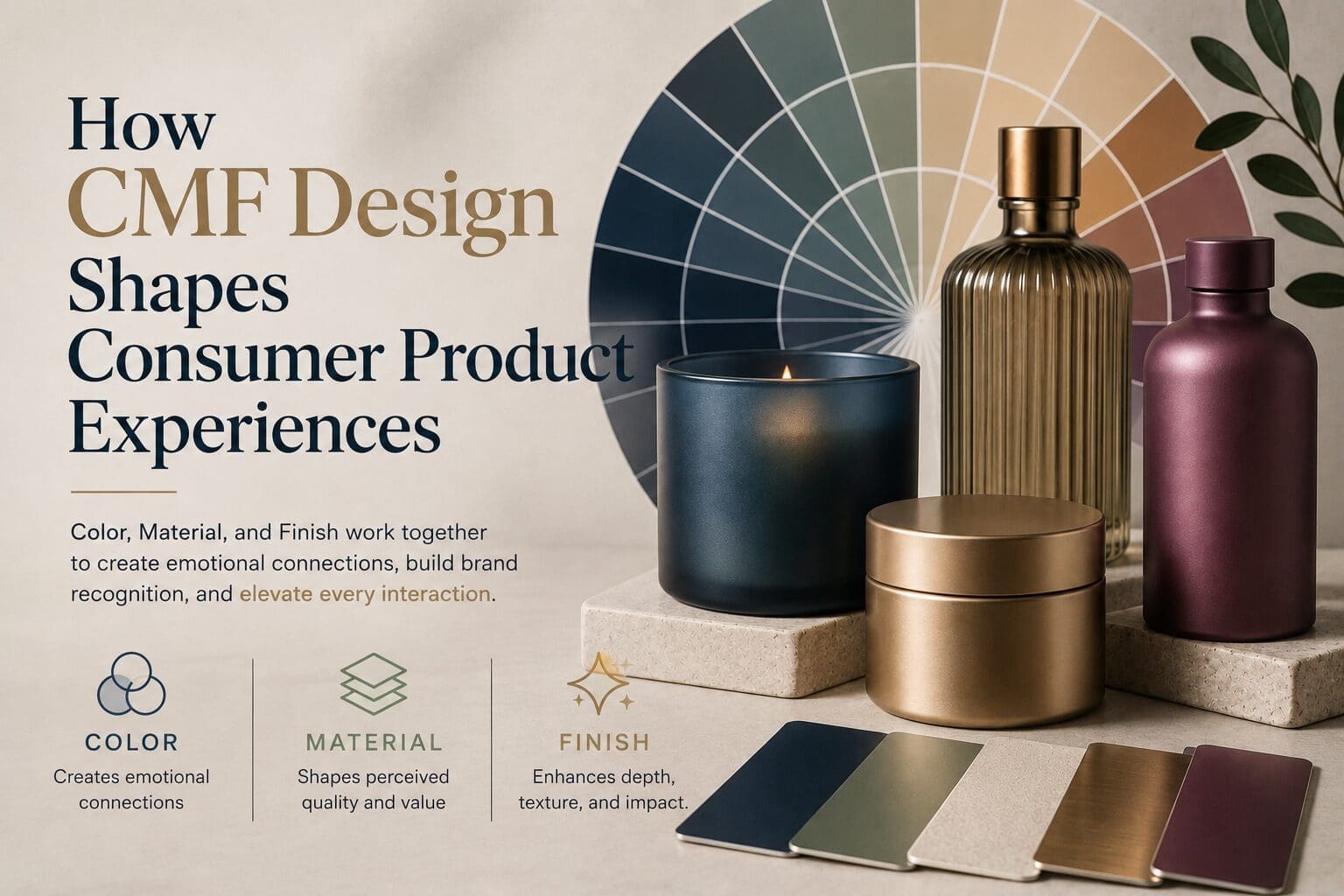
CMF, which stands for Color, Material, and Finish, is the strategic process of using visual and tactile elements to shape how consumers perceive a product. While product performance remains critical, CMF design helps create the emotional and sensory experiences that influence first impressions, strengthen brand recognition, and support long-term customer loyalty.
As competition continues to increase across consumer product categories, CMF design is becoming an increasingly important part of successful product development.
What Is CMF Design?
CMF stands for:
- Color
- Material
- Finish
Together, these three elements help define how a product looks, feels, and communicates with consumers.
While product designers have always considered color, materials, and decorative finishes, CMF design takes a more strategic approach. Rather than treating these elements as separate decisions, CMF design evaluates how they work together to create a cohesive product experience.
For example, a deep navy color applied to clear glass with a high-gloss finish communicates something very different than the same color applied to frosted glass with a matte finish.
The color may be identical, but the overall experience is not.
That difference matters.
Why Consumer Product Experience Starts Before Product Use
Many brands focus heavily on the experience consumers have after purchase.
That’s important. But consumers begin evaluating products much earlier.
When a customer encounters a product for the first time, they are already asking questions, often without realizing it:
- Does this feel premium?
- Does this look trustworthy?
- Does this fit my personal style?
- Does this seem worth the price?
- Does this align with the experience I’m looking for?
CMF design helps answer those questions through visual and physical cues.
The goal is to create alignment between what a product promises and what a consumer expects.
When those expectations match the experience, brands build confidence and trust.
Color Creates Immediate Emotional Connections
Color is often the first element consumers notice.
It helps communicate personality, positioning, and emotion within seconds.
Different colors can influence perception in different ways:
- Deep blues often suggest trust and sophistication.
- Earth tones can communicate warmth and authenticity.
- Soft neutrals may feel calming and elevated.
- Metallic tones often reinforce luxury and exclusivity.
- Vibrant colors can create energy and excitement.
The right color strategy helps products stand out while supporting the overall brand story.
More importantly, color creates consistency across product lines and customer touchpoints, helping consumers recognize a brand wherever they encounter it.
Materials Influence Perceived Quality
Consumers may not always understand why they perceive one product as more premium than another, but material selection often plays a significant role.
The weight of a glass vessel, the texture of a ceramic container, or the feel of an aluminum package can all shape expectations about quality.
Different materials communicate different messages:
- Glass often feels refined and elevated.
- Ceramic can create a handcrafted or artisanal impression.
- Aluminum frequently supports modern and premium aesthetics.
- Plastic may prioritize convenience, portability, or functionality.
There is no universally “best” material.
The right material depends on the brand’s positioning, target audience, and intended product experience.
Finishes Add Depth to the Experience
Finish is often the most overlooked component of CMF design.
Yet it can dramatically influence how consumers perceive a product.
Consider how these finishes affect the same package:
Matte Finishes
Matte surfaces often feel modern, understated, and sophisticated.
They tend to communicate confidence without demanding attention.
Gloss Finishes
Gloss surfaces reflect light and create visual energy.
They can make colors appear more vibrant while helping products stand out in retail environments.
Frosted Effects
Frosted finishes introduce softness and depth.
They are especially effective for candles, fragrances, and beauty products where ambiance contributes to the customer experience.
Metallic Finishes
Metallic effects add dimension and visual richness.
Gold, bronze, silver, and custom metallic finishes are frequently used to reinforce premium positioning and enhance shelf presence.
Why CMF Design Matters More in Competitive Markets
Consumers have more choices than ever before.
In many categories, products offer similar features, similar benefits, and similar performance claims.
CMF design helps create meaningful differentiation.
When color, material, and finish work together intentionally, products become easier to recognize and more memorable to consumers.
Strong CMF strategies can help brands:
- Improve shelf appeal
- Strengthen brand recognition
- Support premium positioning
- Create emotional connections
- Increase perceived value
- Enhance customer experiences
These advantages become increasingly important as competition grows.
CMF Design Supports Brand Consistency
One of the greatest benefits of CMF design is consistency.
As brands expand product lines, launch new collections, and enter new categories, maintaining a cohesive visual identity becomes more challenging.
CMF principles help guide those decisions.
Whether a brand is introducing a new candle collection, expanding into home fragrance, or launching a new beauty product, a clear CMF strategy helps ensure every product feels connected to the same brand story.
Consistency creates familiarity.
Familiarity builds trust.
And trust supports long-term growth.
The Future of Consumer Product Design
Consumers no longer evaluate products solely on functionality.
They evaluate experiences.
The products that stand out today are often the ones that successfully combine performance with thoughtful design, meaningful storytelling, and sensory engagement.
CMF design sits at the center of that process.
By strategically combining color, material, and finish, brands can create products that not only perform well but also leave lasting impressions.
As consumer expectations continue to evolve, CMF design will remain one of the most powerful tools available for creating products that feel distinctive, memorable, and aligned with the experiences customers are seeking.