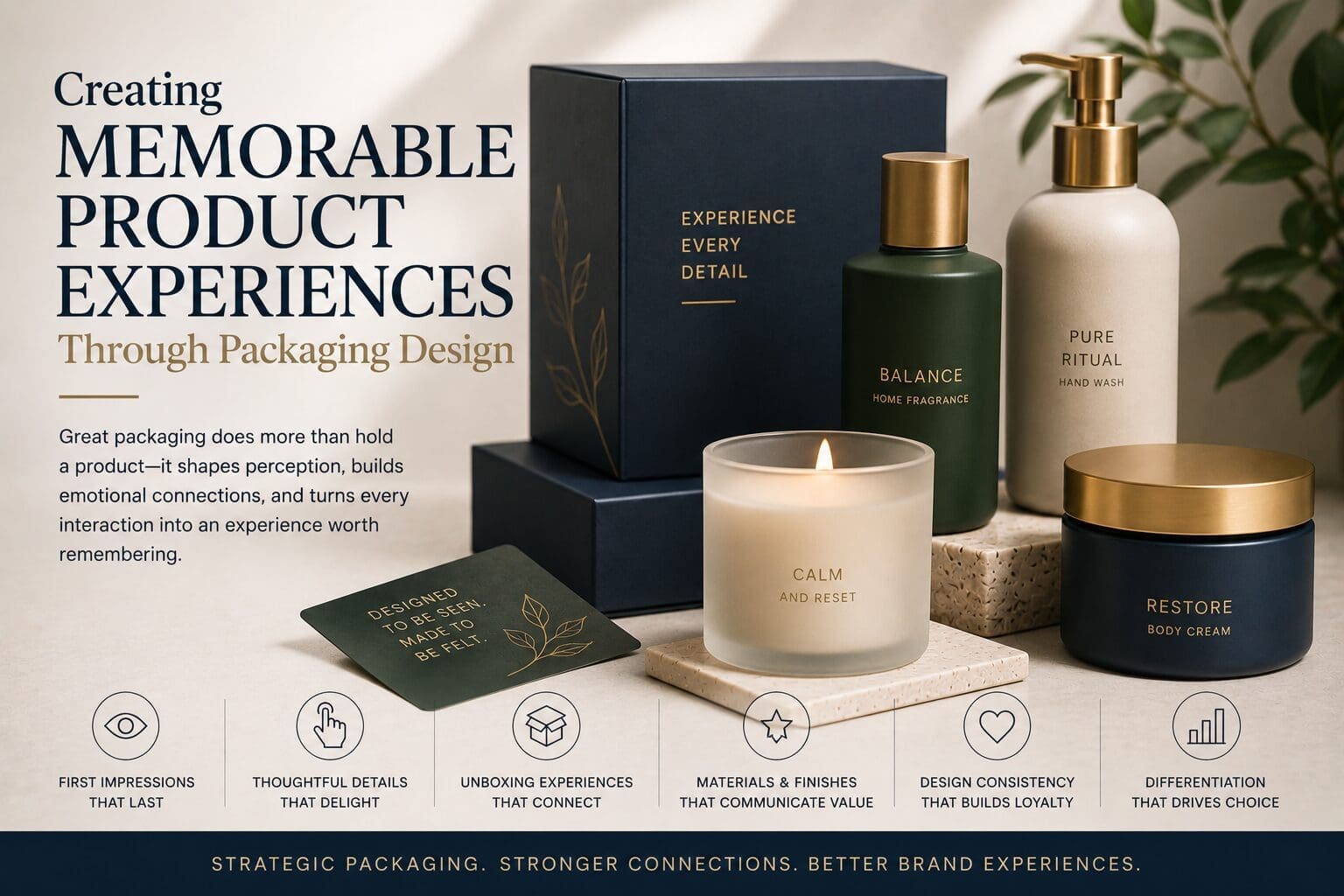
A product’s packaging is often the first physical interaction a customer has with a brand.
Before a candle is lit, a fragrance is sprayed, or a beauty product is used, consumers experience the package itself. They see it, touch it, evaluate it, and begin forming opinions about the quality of what’s inside.
These moments matter.
Packaging is no longer simply a protective container. It has become an important part of the customer experience, influencing how products are perceived, remembered, and shared.
For brands looking to strengthen customer relationships and stand out in competitive markets, thoughtful packaging design can be one of the most powerful tools available.
Why Packaging Design Matters More Than Ever
Today’s consumers interact with products across multiple channels before making a purchase.
They may first discover a product through:
- Social media
- Product photography
- Influencer content
- Online storefronts
- Retail displays
- Word-of-mouth recommendations
By the time the product arrives in their hands, expectations have already been formed.
Packaging plays a critical role in either reinforcing those expectations or undermining them.
When packaging aligns with the brand promise, customers experience a sense of consistency and confidence.
When it doesn’t, even a great product can feel less impressive.
Customer Experience Starts Before Product Use
Many brands focus on the experience customers have after they use a product.
While product performance remains essential, the customer experience often begins much earlier.
Consumers immediately notice:
- Color
- Shape
- Material
- Weight
- Texture
- Finish
- Presentation
Together, these elements create a first impression that influences how customers feel about the product before they’ve even opened it.
The most effective packaging design considers these moments as part of the overall brand experience.
Packaging Helps Communicate Brand Value
Consumers frequently use packaging as a signal of quality.
Thoughtful design choices can help communicate:
- Premium positioning
- Craftsmanship
- Innovation
- Simplicity
- Luxury
- Sustainability
- Authenticity
For example, a heavy glass vessel may create a sense of permanence and quality.
A soft-touch matte finish may feel elevated and sophisticated.
A carefully selected color palette may reinforce a specific emotional response.
These design decisions help shape expectations and support the product story.
The Role of Unboxing in Customer Experience
Unboxing has become an increasingly important touchpoint for many brands.
Whether customers are purchasing products online or receiving gifts, the process of opening a package can create memorable emotional moments.
A positive unboxing experience can:
- Reinforce brand value
- Increase customer satisfaction
- Encourage social sharing
- Improve perceived quality
- Strengthen emotional connections
The best unboxing experiences are not necessarily the most elaborate.
They are the ones that feel intentional and aligned with the brand.
Consistency and attention to detail often matter more than complexity.
Material Selection Shapes Perception
The materials used in packaging influence how products are experienced.
Different materials communicate different messages.
Glass
Often associated with quality, craftsmanship, and premium positioning.
Ceramic
Can create a handcrafted, artisanal, or decorative impression.
Aluminum
Frequently communicates modernity, durability, and innovation.
Plastic
Can support convenience, portability, and practicality when aligned with product goals.
The most effective material is not determined by cost alone.
It is determined by how well it supports the intended customer experience.
Color Creates Emotional Connections
Color remains one of the most influential packaging design elements.
It helps consumers form expectations and emotional responses within seconds.
Color can help communicate:
- Calmness
- Luxury
- Confidence
- Energy
- Warmth
- Trust
- Creativity
When color aligns with product positioning and brand identity, it creates a more cohesive experience for customers.
Consistency across packaging, marketing materials, and product collections further strengthens recognition and trust.
Finishes Add Depth to the Experience
Specialty finishes help transform packaging from functional to memorable.
Matte, gloss, frosted, metallic, and textured finishes all create unique sensory experiences.
For example:
- Matte finishes often feel modern and sophisticated.
- Gloss finishes can increase visual energy.
- Frosted finishes create softness and refinement.
- Metallic finishes reinforce premium positioning.
- Textured finishes add tactile engagement.
These details may seem subtle, but they contribute significantly to how consumers perceive products.
Packaging Design Creates Differentiation
Many products compete within crowded categories.
Consumers often compare multiple options that offer similar benefits and price points.
Packaging helps create meaningful differentiation.
Strong packaging design can:
- Capture attention
- Increase memorability
- Support premium pricing
- Reinforce brand identity
- Improve customer perception
The goal is not simply to create attractive packaging.
The goal is to create packaging that communicates something meaningful about the product and the brand.
Consistency Builds Loyalty
Customers value consistency.
When packaging delivers a familiar and reliable experience, consumers gain confidence in the brand.
Consistent design across:
- Product lines
- Seasonal collections
- Retail displays
- Digital channels
- Marketing materials
helps reinforce recognition and trust over time.
These repeated positive experiences contribute to stronger customer loyalty and long-term brand growth.
Packaging Is an Experience, Not Just a Container
The most successful brands understand that packaging design is not separate from the product.
It is part of the product.
Every interaction, from the first glance on a shelf to the moment a customer opens the package, contributes to how the brand is perceived.
Thoughtful packaging design helps create emotional connections, strengthen brand identity, and deliver experiences that customers remember long after the product has been used.
Because in today’s marketplace, consumers are not simply buying products.
They’re buying experiences.
And those experiences often begin with the package itself.