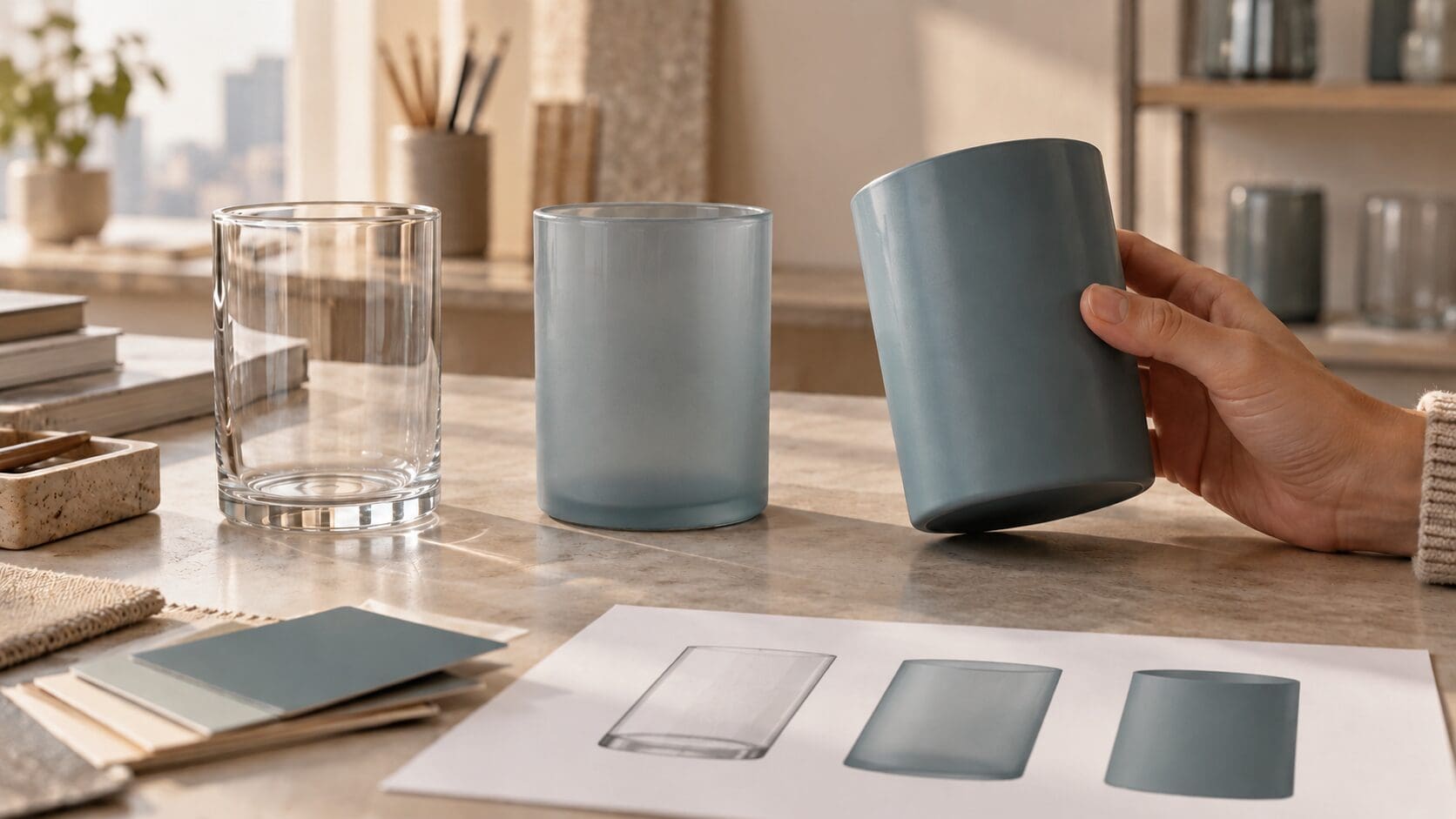
Bringing a decorated-glass product to life involves more than selecting a color and applying artwork to a container. The glass, shape, coating, ink, finish, opacity, application method, and lighting all influence how the final product appears.
That is why JAFE requires an approved physical sample for every new project before full production begins.
A digital rendering communicates intent. A physical sample shows the actual result.
Sampling gives your team the opportunity to evaluate the product that will represent your brand before materials, labor, and production capacity are committed to the full order. It also gives you and your decorating partner a shared production standard based on a real container rather than a digital approximation.
Sampling is not an unnecessary delay. It is one of the most important risk-reduction steps in product development.
What Does a Production Sample Validate?
A production sample helps answer the practical questions that cannot be fully resolved through artwork files, specifications, color references, or digital renderings alone.
Depending on the project, a physical sample can be used to evaluate the following.
Color and Opacity
A Pantone color or physical reference establishes a target, but color does not exist independently from the material on which it is applied.
The appearance of a decorated container may be influenced by:
- The natural color and clarity of the glass
- The thickness of the vessel
- Whether the coating is transparent, translucent, or opaque
- Whether the decoration is applied to the interior or exterior
- The amount and direction of surrounding light
- The relationship between the coating and the product inside the container
A transparent color may look subtle in one lighting condition and much richer in another. An opaque finish may appear different on clear glass than it did on a flat paper color reference. Sampling allows these variables to be evaluated on the actual vessel.
Finish and Visual Appearance
The same color can create a very different brand impression depending on the finish.
Gloss, frost, silk, transparent, translucent, opaque, textured, and specialty finishes interact with light differently. They can change the perceived depth, softness, saturation, and visual weight of a color.
A physical sample helps your team determine whether the selected combination of color and finish supports the intended positioning of the product. What looks appropriate in a digital concept may feel too glossy, too soft, too transparent, or too visually heavy once it is applied to the container.
Artwork Size and Placement
When a project includes screen printing, the artwork must work with the physical dimensions and shape of the vessel.
A logo that looks balanced in a flat artwork file may appear smaller, larger, or visually distorted when wrapped around a curved surface. Seams, tapers, shoulders, bases, and other structural features can also affect where artwork can be placed.
Sampling allows your team to review:
- Artwork scale
- Print placement
- Alignment
- Readability
- Line clarity
- Visual balance
- The relationship between the print and the coated finish
This is especially important when the design must align with other packaging elements, such as a lid, closure, label, carton, or front-facing retail presentation.
Decoration Compatibility
Not every decoration behaves the same way on every container.
The glass surface, container geometry, coating, ink, artwork, and application method must work together. Sampling helps determine whether the requested design can be reproduced successfully on the selected vessel and whether adjustments should be made before production.
Those adjustments may include refining the color, changing the opacity, modifying artwork placement, or selecting a finish that better supports the intended result.
Overall Brand Presentation
A decorated container should be evaluated as a complete product rather than as a collection of individual specifications.
Color, finish, artwork, shape, lighting, and any secondary packaging must work together to create the intended brand impression. Sampling gives brand owners, designers, product developers, and procurement teams something tangible to review before approving the complete direction.
It answers the most important question: Does the actual decorated product look and feel right for the brand?
Manufacturability
A concept must be both visually effective and appropriate for a repeatable production process.
Sampling gives JAFE an opportunity to evaluate how the selected decoration translates from the design concept to the physical vessel. If a detail requires adjustment, the best time to identify it is before the full order enters production.
The goal is not simply to produce one attractive sample. The goal is to establish a clear, approved standard that can guide production.
Why a Digital Rendering Is Not Enough
Digital renderings are valuable during product development. They help teams explore concepts, compare directions, discuss placement, and communicate the intended design.
However, a rendering remains a visual approximation.
Screens Display Color Differently
Color can vary across monitors, phones, tablets, printers, software programs, and display settings. Two people reviewing the same file may not see exactly the same color.
A digital image also cannot fully reproduce the depth, reflectivity, translucency, or surface character of decorated glass.
Glass and Coatings Interact With Light
Glass is a dimensional material. It reflects, transmits, and refracts light, and the decoration changes how those effects are perceived.
Transparent and translucent coatings may shift in appearance depending on the viewing angle, background, light source, or product inside the vessel. Frosted, silk, opaque, and glossy finishes each respond differently to retail lighting, natural daylight, and home environments.
A flat screen cannot fully reproduce those interactions.
Container Shape Affects Artwork
Artwork is usually created and reviewed as a flat file. The container is three-dimensional.
Curves, tapers, shoulders, and other features can affect the perceived size, spacing, alignment, and clarity of a printed design. Reviewing the decoration on the actual vessel is the most reliable way to determine whether the artwork feels balanced.
Finish Changes How Color Is Perceived
Color and finish should not be evaluated separately. A glossy surface may make a color appear more saturated or reflective, while a frost or silk finish may soften it. Transparent coatings allow more light and background influence, while opaque coatings provide greater visual coverage.
A rendering can communicate the intended combination. Only a physical sample can show how that combination appears on the chosen container.
What Can Happen When Sampling Is Skipped?
Moving directly from a rendering or specification into full production can introduce avoidable risk.
Potential issues include:
- A color appearing different from what the customer expected
- A coating being more or less opaque than anticipated
- Artwork looking too large, too small, or incorrectly positioned
- A print becoming difficult to read on the selected finish
- A decoration not working as intended with the vessel
- Decision-makers disagreeing about the expected appearance
- Rework, rejected inventory, or launch delays
These risks become much more costly after materials have been committed and a full production run has started.
Physical sampling protects the customer’s investment by establishing a shared, approved production standard before materials and production capacity are committed to the full order.
Sampling Helps Protect the Production Schedule
Sampling takes time, but it is intended to reduce uncertainty before production begins.
The best time to resolve color, artwork, and finish questions is before the full order enters production. Decisions made during sampling can prevent larger disruptions later, when changes may be more difficult or costly to accommodate.
An approved sample also gives the customer and JAFE a shared point of reference. Instead of relying only on emails, digital files, color names, or individual interpretations, both parties can refer to the approved physical result.
It is important to account for sampling separately when planning a product launch. Sampling typically takes two to four weeks, depending on the complexity of the project. Specialty finishes, multiple colors, screen printing, or revisions may require additional time.
The production timeline begins after the physical sample has been approved. Sampling occurs before the order enters the production schedule, so the sampling period and the production timeline should not be treated as the same stage.
What Should You Review Before Approving a Sample?
Sample approval should be treated as a final product decision rather than a quick confirmation that a sample was received.
Approving the sample means approving the appearance that production will be expected to reproduce.
Review the Sample in Multiple Lighting Conditions
Examine the decorated container in more than one environment. Natural daylight, office lighting, retail-style lighting, and warmer home lighting can each affect how color and finish are perceived.
This is particularly important for transparent, translucent, frosted, silk, metallic, and other light-responsive finishes.
Compare It With Your Brand Standards
Place the sample beside any relevant brand materials, including existing packaging, approved color references, labels, closures, cartons, or products in the same collection.
The goal is to confirm that the container works within the full brand system, not simply that it looks attractive on its own.
Confirm Artwork Placement and Scale
For screen-printed projects, check the print color, size, placement, clarity, and alignment.
Consider how the container will be displayed and whether the artwork reads correctly from the intended front-facing position. If the container will be paired with a lid, closure, label, or carton, review those relationships before approval whenever possible.
Include the Final Decision-Makers
The sample should be reviewed by the person authorized to approve final brand and design decisions. Depending on the organization, that may be the designer, product creator, brand owner, product-development lead, or another designated decision-maker.
Involving the correct people before approval helps prevent conflicting feedback or late-stage changes.
Provide Consolidated Feedback
If revisions are needed, gather feedback from all relevant reviewers and provide it together. Clear, consolidated direction helps reduce unnecessary revision cycles and keeps the project moving efficiently.
JAFE includes one sample revision at no additional cost. Additional revisions may affect the project’s cost and schedule.
What Happens After Sample Approval?
Once the physical sample has been approved, that approval is documented and the project requirements are finalized.
The project can then move into production planning with clearer expectations for the approved color, finish, artwork, placement, and overall appearance.
At this stage:
- The approved sample becomes the production standard
- Final production requirements are confirmed
- The project moves into production planning
- The production timeline begins
- Any later changes are evaluated for their potential effect on cost and schedule
Changes made after approval may require new sampling, particularly when they affect the color, finish, artwork, vessel, or application method.
That is why careful review before approval is so important.
Frequently Asked Questions About Product Sampling
Establish the Standard Before Production Begins
Sampling is not simply a preview of a future product. It is the point at which the intended design becomes a physical, reviewable, and approved manufacturing standard.
It gives your team the opportunity to make informed decisions while changes are still manageable. It gives JAFE clear direction for production. Most importantly, it protects the investment you are making in your product and its presentation.
We believe every new project should be physically sampled because the customer should approve the actual color, finish, and decoration, not a digital approximation, before full production begins.
Preparing a new decorated-glass product? Talk with JAFE about the sample-development process before establishing your launch schedule.