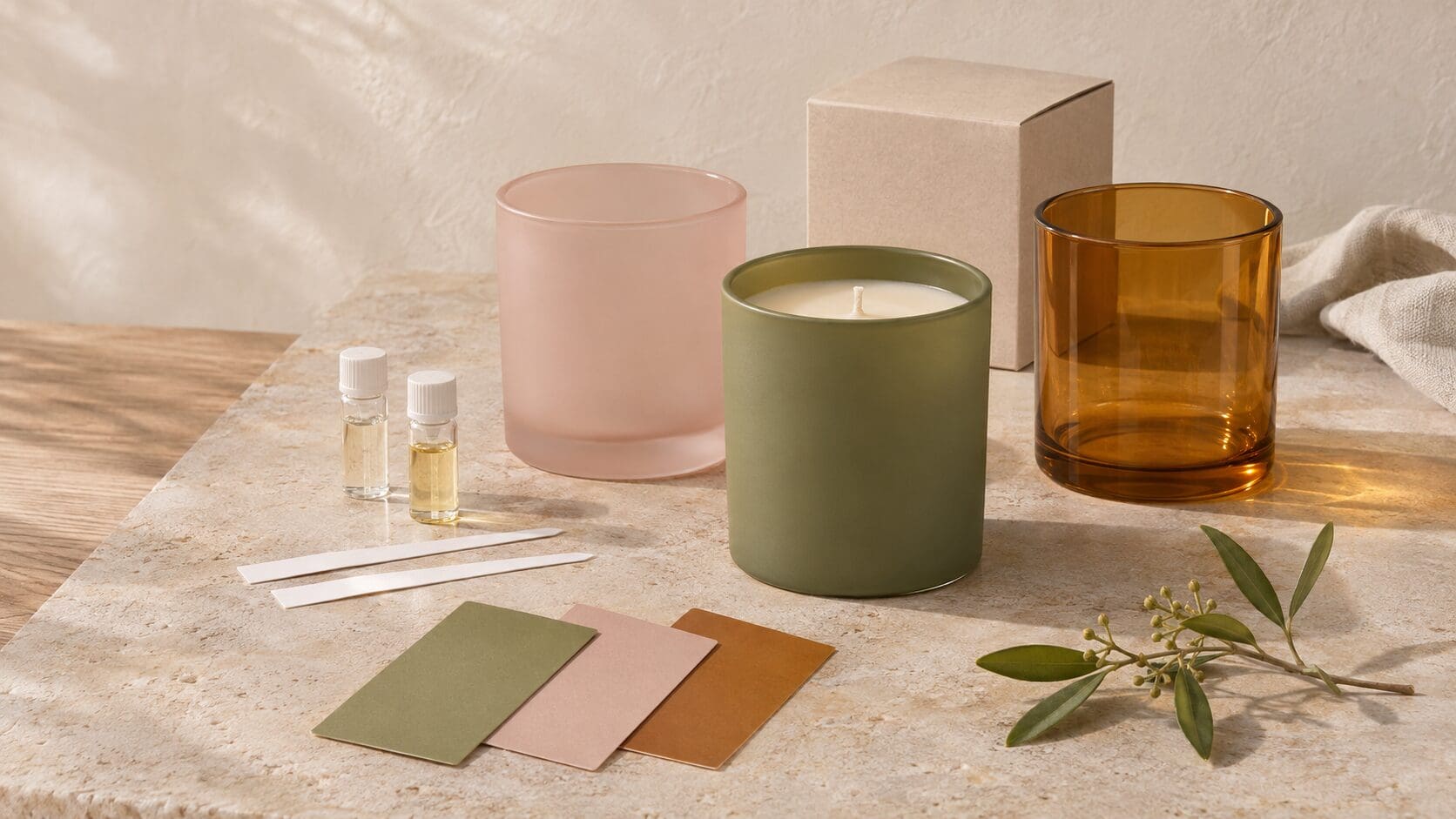
A fragrance brief explains what you want a scent to communicate, who the product is for, and how it fits your collection. For a custom candle, that brief should also consider CMF: color, material, and finish.
The fragrance, glass vessel, surface finish, and packaging all contribute to the product’s identity. Developing them together gives your partners a clearer understanding of the experience you want to create.
You don’t need a finished formula or every design decision finalized. A useful brief can begin with references, customer preferences, and a direction to explore.
Start With the Product and Its Purpose
Explain what you’re developing and where it belongs in your business.
Are you creating a signature candle, introducing a seasonal collection, or adding a branded product for a resort, retailer, or organization? Will the fragrance stand alone or sit alongside several other scents?
Include:
- The type of product.
- The number of fragrances you’re considering.
- Whether the collection is new or already established.
- The intended sales channel or use.
- Your target launch date.
This context helps your manufacturing partner and fragrance house understand the assignment.
Describe the Customer and the Experience
Describe who you expect to buy the candle and what you want the product to communicate.
Words such as “luxury,” “fresh,” or “warm” can mean different things to different people. Add details that make those descriptions useful.
For example:
- A quiet, understated fragrance for a bedroom or reading space.
- A bright citrus direction with a clean, lively presentation.
- A warm wood fragrance paired with an earthy visual direction.
- A garden-inspired collection with a restrained, contemporary appearance.
A place, memory, atmosphere, or product reference can help communicate your intentions.
Include Color Material and Finish in the Brief
CMF connects fragrance development with the physical appearance of the product. For candles, that includes the vessel material, glass color, coating finish, lid, and surrounding packaging.
Your brief should explain how those choices relate to the fragrance and brand.
Consider:
- Color: What palette supports the brand and fragrance direction?
- Material: How do glass, closure materials, and packaging work together?
- Finish: Should the vessel appear glossy, frosted, satin, opaque, transparent, or textured?
- Collection: Which elements stay consistent, and which distinguish individual fragrances?
There is no required color for a particular scent. A citrus fragrance doesn’t have to use yellow glass, and a wood fragrance doesn’t have to use brown. The goal is an intentional relationship between the fragrance, brand, and package.
For example, a garden-inspired collection could explore muted green glass with Silk, JAFE’s satin finish. Another brand might express the same fragrance direction through clear glass and minimal screen printing.
Explore JAFE’s spray coating techniques to compare the available visual effects.
Include References and Explain What You Like
Share fragrance references alongside visual references.
A mood board might include a color palette, vessel shape, finish sample, packaging material, and a short description of the scent direction. Explain what matters about each reference.
Instead of “something like this candle,” try:
“I like the soft wood character, but I’d prefer less sweetness. Visually, we’re exploring warm mineral colors with a low-sheen finish.”
Identify what you want to avoid as well. References should support your own direction rather than imply an exact reproduction of another brand’s product.
For the vessel color, identify whether your reference is a digital image, printed swatch, or physical sample. Learn more about product color matching when preparing your references.
Plan the Collection Together
For multiple fragrances, explain what connects the products and what makes each one distinct.
You might use:
- One vessel color and finish, with different scent names.
- A coordinated color palette with a consistent finish.
- Different finishes to distinguish product families.
- Shared print placement, typography, and closures across the range.
Decide whether color will identify individual scents, seasons, or collections. Sharing that structure early helps fragrance and packaging development move in the same direction.
Share the Practical Requirements
Include anticipated quantities by SKU, your target product price, development budget if established, and required timing.
Explain which components are selected and which remain open. A fragrance may be approved while the vessel finish is still being evaluated, or the packaging may be established before scent development begins.
Distinguish between the date you need presentation samples and the date you need finished inventory. Those are separate milestones.
Review Fragrance and Packaging Together
Ask your development partner how fragrance samples should be evaluated and what the next development steps involve.
As physical components become available, review the fragrance alongside the decorated vessel, lid, artwork, and packaging. Consider whether the combination communicates the intended direction.
Keep feedback specific:
- “Keep the citrus character, but reduce the sweetness.”
- “The fragrance fits; we’d like to compare a satin and gloss vessel.”
- “The color works individually, but needs adjustment alongside the other collection colors.”
Consolidate team feedback and identify the final approver. If the collection changes direction, update both the fragrance brief and the CMF references.
Read JAFE’s custom candle jar sampling guide for more information about evaluating decorated vessel samples.
A Simple Fragrance and CMF Brief
The following is an illustrative starting point.
| Brief element | Example |
|---|---|
| Product | Three fragrances for a wholesale candle collection |
| Customer | Buyers drawn to understated home décor |
| Collection direction | Inspired by a garden throughout the day |
| Fragrance direction | Green, floral, and warm wood options |
| Color direction | A coordinated palette of muted botanical and mineral colors |
| Material direction | Smooth glass vessels with coordinated closures and paperboard boxes |
| Finish direction | Compare Silk and opaque frost samples |
| Shared elements | Consistent vessel shape, print placement, and typography |
| Decisions still open | Final fragrances, colors, finish, and box design |
| Project information | Quantities by SKU, budget, sample deadline, and finished-goods deadline |
| Approval | One designated contact consolidates feedback |
Frequently Asked Questions
What is a fragrance brief?
A fragrance brief is a written description of the scent direction, intended customer, product application, references, and project requirements. It gives a fragrance house or development partner a starting point for recommending and evaluating options.
For a candle collection, include the visual direction and identify which decisions are final and which remain open.
What does CMF mean in candle packaging?
CMF stands for color, material, and finish. In candle packaging, it includes choices such as vessel color, glass appearance, surface sheen or texture, closure materials, and box materials.
Planning CMF alongside fragrance helps the scent and physical presentation support the same brand direction.
Can I start without final colors or artwork?
Yes. You can begin an initial conversation with inspiration images, draft artwork, color references, or a general collection direction.
Share what is decided and where you need guidance. JAFE can explain the information needed for the next stage. Sampling and production require the appropriate specifications and approvals, and minimum production quantities still apply.
How JAFE Can Help
JAFE Decorating supports candle projects through custom color development, glass finishes, screen printing, candle filling services, and project coordination. Depending on the project, we can also help connect customers with fragrance houses and other suppliers.
Bringing fragrance and CMF references into the same conversation helps us understand the complete product you’re developing and the decisions that still need to be made.
Developing a candle collection? Contact JAFE with your fragrance concept, color and finish direction, anticipated quantities, and target timing. We’ll help clarify the next steps.