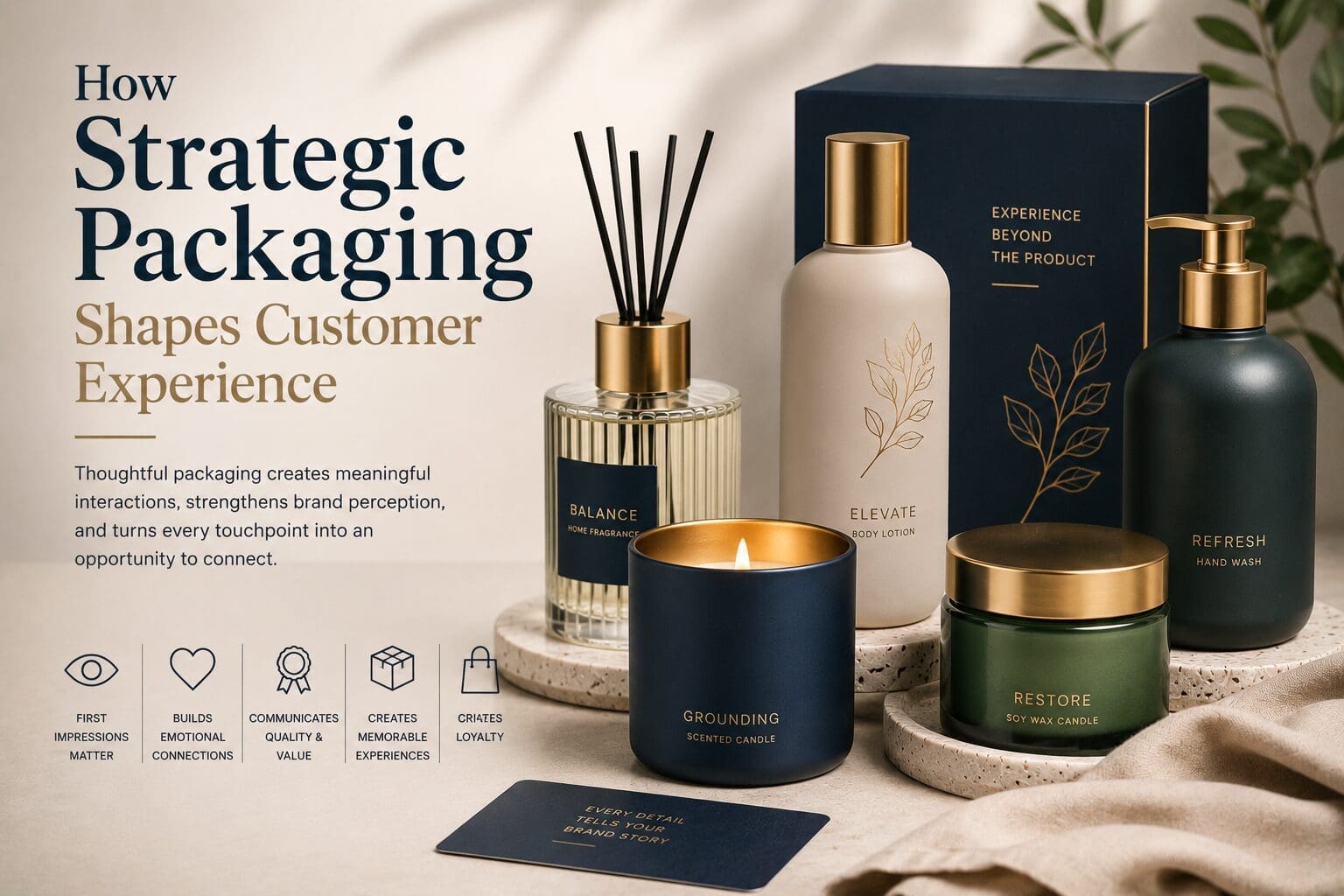
Great products create loyal customers.
But before customers experience what’s inside a package, they experience the package itself.
The color of the container. The feel of the surface. The weight in their hands. The way light reflects off the finish. The impression it creates on a retail shelf, in an online store, or during an unboxing experience.
These moments may seem small, but together they help shape how consumers perceive a product and the brand behind it.
That’s why strategic packaging has become an increasingly important part of customer experience.
For today’s brands, packaging is no longer just about protecting a product. It’s about creating meaningful interactions that influence perception, build trust, and support long-term brand loyalty.
What Is Strategic Packaging?
Strategic packaging is the intentional design of packaging to support business goals, brand positioning, and customer expectations.
Rather than focusing solely on functionality, strategic packaging considers how every visual and tactile element contributes to the overall customer experience.
This includes decisions around:
- Color
- Material
- Finish
- Decoration
- Shape
- Typography
- Product presentation
Each element helps communicate something about the product before a customer ever uses it.
The goal is simple: create packaging that reinforces the experience the brand wants consumers to have.
Customer Experience Begins Before Product Use
Many companies focus heavily on what happens after purchase.
Product performance, fragrance quality, functionality, and customer support all matter.
But customer experience begins much earlier.
Consumers start forming opinions the moment they encounter a product.
When someone picks up a candle vessel, examines a fragrance bottle, or scrolls past a product online, they immediately begin making judgments about:
- Quality
- Value
- Credibility
- Style
- Brand personality
Packaging helps answer those questions long before the product itself has a chance to.
This is why packaging often serves as the first physical interaction between a brand and its customers.
First Impressions Influence Perception
Research consistently shows that first impressions happen quickly.
Consumers often make purchasing decisions based on emotional responses before they fully evaluate product details.
Packaging plays a significant role in those responses.
A premium-looking package may suggest higher quality.
A thoughtfully designed vessel may communicate craftsmanship.
A cohesive color palette may reinforce trust and professionalism.
While packaging cannot replace product quality, it can help establish expectations and encourage consumers to engage further.
In competitive markets, that initial engagement is valuable.
Strategic Packaging Supports Brand Recognition
Strong brands are recognizable.
Consumers often identify products before they read logos, product names, or descriptions.
Packaging contributes significantly to that recognition.
Consistent use of colors, finishes, materials, and decorative elements helps create a visual identity that customers learn to associate with a particular brand.
Over time, that consistency helps:
- Improve recognition
- Build familiarity
- Reinforce trust
- Strengthen customer loyalty
The more consistently a brand presents itself, the easier it becomes for customers to recognize it across different products and channels.
Packaging Helps Communicate Value
Consumers often use packaging as a shortcut when evaluating products.
Whether consciously or subconsciously, packaging influences how customers perceive value.
Factors such as:
- Material selection
- Decorative finishes
- Color execution
- Product presentation
- Overall design quality
can all affect how consumers interpret a product’s position within the market.
For example, a heavy glass vessel may communicate permanence and quality.
A frosted finish may create a more refined appearance.
A metallic accent may reinforce premium positioning.
These elements help support the product story and shape customer expectations.
Strategic Packaging Creates Emotional Connections
People rarely purchase products based on logic alone.
Emotions play an important role in consumer decision-making.
Packaging often contributes to those emotional responses.
Thoughtful packaging can help products feel:
- Luxurious
- Comforting
- Modern
- Sophisticated
- Creative
- Approachable
The most effective packaging creates alignment between what a customer sees and what they hope to experience.
When that alignment exists, products feel more authentic and memorable.
The Role of Packaging Across Multiple Touchpoints
Today’s consumers interact with products in more places than ever before.
Packaging must perform across multiple environments, including:
- Retail shelves
- E-commerce listings
- Social media
- Product photography
- Influencer content
- Unboxing experiences
A package that looks compelling in person but photographs poorly may miss opportunities online.
Likewise, a package that looks attractive digitally but feels underwhelming in person may create disappointment.
Strategic packaging considers the entire customer journey, not just a single moment of interaction.
Packaging Differentiates Products in Competitive Markets
Many industries are becoming increasingly crowded.
Consumers are often presented with multiple products offering similar benefits, similar price points, and similar claims.
Packaging helps brands create meaningful differentiation.
When color, material, finish, and design work together effectively, products become more memorable and easier to distinguish from competitors.
Strategic packaging helps brands:
- Increase visibility
- Support premium positioning
- Improve customer perception
- Reinforce brand identity
- Create stronger product experiences
These advantages become increasingly important as competition grows.
Consistency Builds Trust
Trust is built through consistency.
Customers want confidence that every interaction with a brand will feel familiar and reliable.
Packaging plays an important role in delivering that consistency.
Whether consumers purchase a product online, in-store, or as part of a gift set, the packaging experience should reinforce the same brand story.
Consistent packaging helps create a sense of professionalism and reliability that strengthens customer relationships over time.
Packaging Is Part of the Product Experience
The most successful brands understand that packaging is not separate from the product.
It is part of the experience.
Every design decision contributes to how consumers perceive, interact with, and remember a product.
When packaging is approached strategically, it becomes more than a container.
It becomes a tool for communication, differentiation, and connection.
As customer expectations continue to evolve, brands that invest in thoughtful packaging strategies will be better positioned to create experiences that feel intentional, memorable, and aligned with what consumers value most.
Because long before a product delivers on its promise, packaging helps customers decide whether that promise is worth exploring.