Most products don’t compete in empty markets.
Whether you’re launching a luxury candle line, expanding a fragrance collection, introducing a beauty product, or refreshing an established brand, you’re likely entering a category filled with similar products, similar messaging, and similar packaging styles.
Standing out requires more than a great product.
It requires creating a visual identity that consumers recognize, remember, and associate with your brand.
One of the most effective ways to accomplish that is through custom color development.
While many brands begin with standard color libraries, companies looking to build stronger recognition often invest in colors that are uniquely their own. Over time, those colors become part of the brand itself.
What Is Custom Color Development?
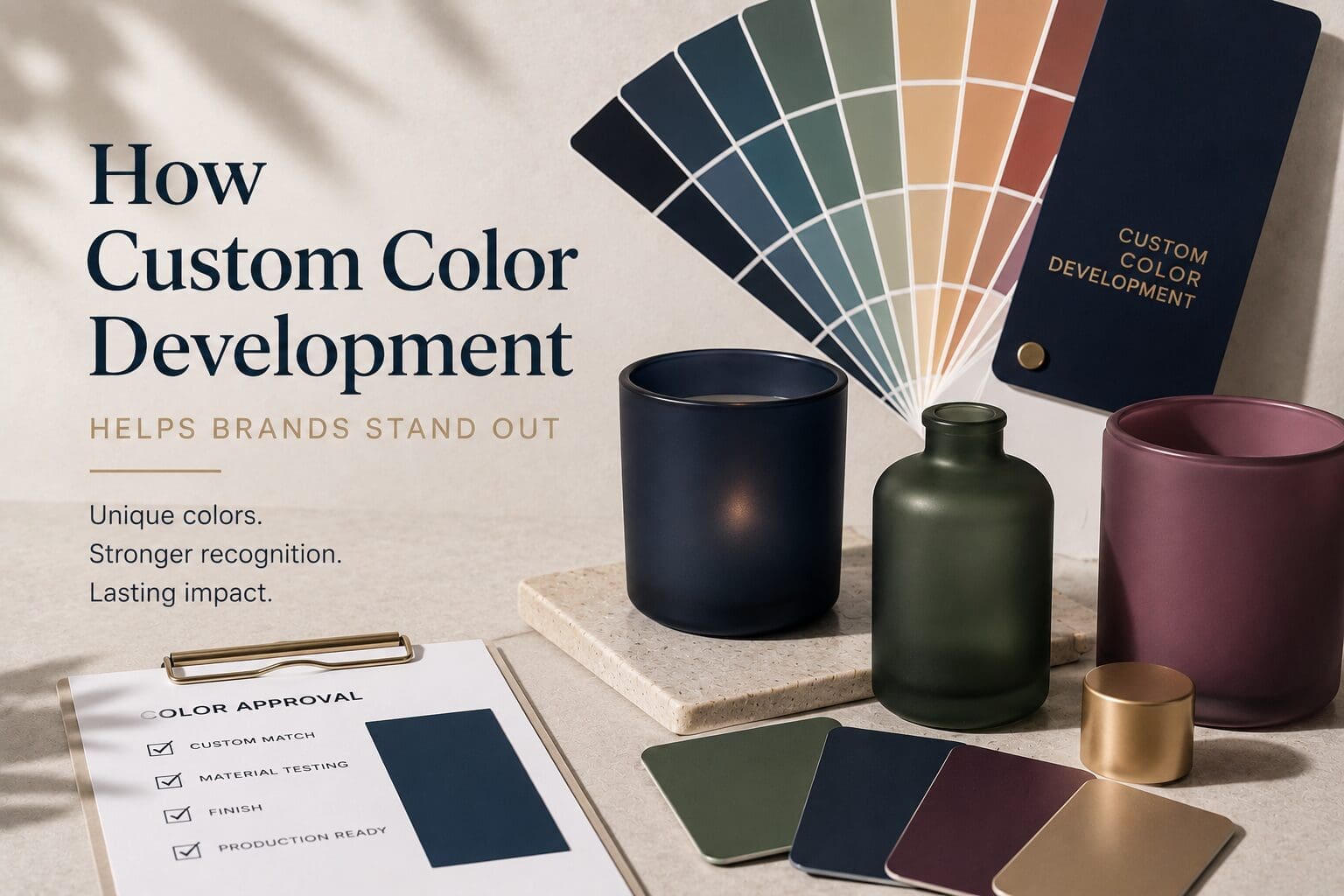
Custom color development is the process of creating a unique color specifically for a product, collection, or brand.
Rather than selecting a stock color from an existing catalog, custom color development involves adjusting pigments, coatings, finishes, and visual characteristics to achieve a precise appearance.
The goal is not simply to create a different color.
The goal is to create a color that supports the brand’s identity and remains recognizable across products, packaging formats, and production runs.
For many companies, custom colors become valuable brand assets.
Why Standard Colors Aren’t Always Enough
Standard color libraries serve an important purpose. They provide a reliable starting point for design and manufacturing.
However, they also create limitations.
If hundreds of brands have access to the same color options, achieving meaningful visual differentiation becomes more difficult.
As markets become more competitive, brands increasingly seek opportunities to create packaging that feels distinctive and memorable.
Custom color development allows brands to move beyond commonly available options and create visual identities that are harder to replicate.
The Business Value of Signature Colors
Think about some of the world’s most recognizable brands.
Many are identified by color before consumers even see a logo.
That’s because color helps create instant recognition.
When used consistently, a signature color can:
- Strengthen brand recognition
- Improve shelf visibility
- Support premium positioning
- Create consistency across product lines
- Increase memorability
- Reinforce customer loyalty
Consumers may not remember every marketing message they encounter, but they often remember how a product looked.
Over time, color becomes part of the brand story.
Custom Color Development Starts With Strategy
Successful color development begins long before production.
The strongest color choices are typically rooted in brand strategy, customer expectations, and market positioning.
Questions often include:
- What emotions should the product communicate?
- How should the brand be perceived?
- What visual gaps exist within the category?
- How will the color perform across different product formats?
- Will the color support future product expansion?
The answers help guide color selection toward options that align with long-term business goals rather than short-term trends.
Creating Colors That Work Across Multiple Products
Many brands eventually expand beyond a single product.
A candle company may introduce diffusers, room sprays, and seasonal collections. A beauty brand may launch new product categories. A fragrance company may expand into complementary lifestyle products.
A color that works beautifully on one package may perform differently on another.
That’s why custom color development often considers how colors will appear across:
- Glass containers
- Plastic packaging
- Aluminum components
- Ceramic vessels
- Secondary packaging
- Promotional materials
The objective is to create a cohesive brand experience regardless of product format.
Material Matters More Than Most Brands Expect
One of the biggest surprises during product development is discovering how dramatically materials influence color appearance.
The same color can look different depending on:
- Surface texture
- Transparency
- Gloss level
- Material composition
- Lighting conditions
A custom navy blue on frosted glass may appear significantly different than that same color on glossy aluminum.
Because of this, successful color development involves evaluating colors on actual production materials whenever possible.
Color isn’t just about the formula. It’s about how the formula interacts with the finished product.
The Importance of Custom Color Matching
Creating a custom color is only the first step.
Maintaining that color over time is equally important.
As product lines grow and production continues, brands need confidence that customers will experience the same visual identity with every purchase.
This is where custom color matching becomes essential.
Consistent color standards help ensure that products manufactured months or even years apart continue to reinforce the same brand identity.
Without consistency, even the best custom color can lose its impact.
Balancing Creativity and Manufacturability
The most effective custom colors are both visually distinctive and realistically achievable in production.
Color development is often a collaboration between designers, brand teams, and manufacturing experts who understand how coatings, materials, and decoration processes influence final appearance.
This balance helps ensure that creative concepts can be translated into repeatable, production-ready solutions.
When strategy and manufacturing work together, brands gain more confidence throughout the development process.
Building a More Recognizable Brand
Custom color development is about more than aesthetics.
It’s about creating visual assets that strengthen recognition, support differentiation, and reinforce brand identity over time.
As competition continues to increase across consumer product categories, brands that invest in unique visual identities are often better positioned to capture attention and remain memorable.
For many companies, that process starts with color.
When thoughtfully developed and consistently executed, a custom color becomes more than a design decision. It becomes part of what customers recognize, trust, and remember about the brand.