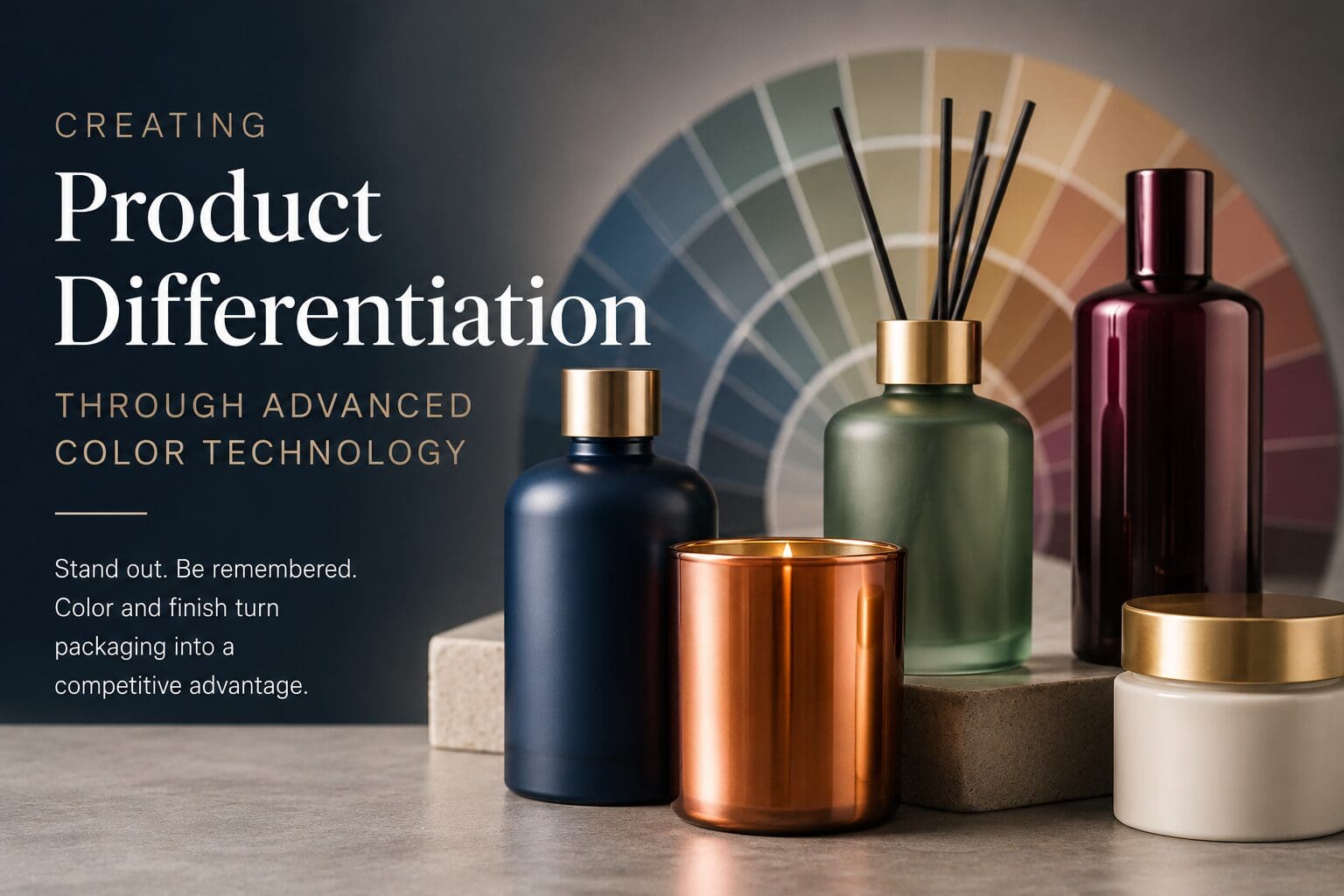
Walk down any retail aisle and you’ll notice something immediately: consumers are surrounded by choices.
Whether they’re shopping for candles, fragrances, beauty products, beverages, or home décor, customers often encounter dozens of similar products competing for attention. In many cases, product quality may be comparable, pricing may be similar, and brand messaging may overlap.
So what influences a consumer to pick one product over another?
Often, the answer starts with what they see.
Product differentiation is about creating meaningful distinctions that help a brand stand out in a crowded market. While factors like performance, fragrance, ingredients, and customer experience all contribute to differentiation, visual presentation remains one of the most powerful tools available to brands.
And increasingly, advanced color technology is helping companies create those distinctions.
What Is Product Differentiation?
Product differentiation refers to the characteristics that make a product distinct from competing alternatives.
These differences can be functional, emotional, or visual. Some brands differentiate through innovative features, while others focus on premium positioning, sustainability initiatives, or customer experience.
Visual differentiation is particularly important because it often influences the first interaction a consumer has with a product.
Before a customer reads a label or evaluates product benefits, they are already forming impressions based on color, finish, packaging, and overall presentation.
Those first impressions matter.
Why Visual Differentiation Is More Important Than Ever
Consumer attention has become one of the most valuable commodities in modern retail environments.
Online marketplaces, social media platforms, and retail shelves all create situations where brands have only a few seconds to capture interest.
When multiple products serve a similar purpose, visual design often becomes the deciding factor that encourages a consumer to learn more.
Effective visual differentiation can help brands:
- Increase shelf visibility
- Improve brand recognition
- Reinforce product positioning
- Create stronger emotional connections
- Support premium pricing strategies
- Encourage repeat purchases
For many consumer brands, packaging is no longer simply a container. It has become an extension of the product experience itself.
The Role of Color in Consumer Perception
Color is one of the fastest ways consumers process information.
Research consistently shows that people form opinions about products within seconds, and color plays a significant role in those initial judgments.
Different colors can communicate different brand characteristics:
- Deep blues may suggest trust and sophistication
- Matte black finishes often signal luxury and exclusivity
- Soft neutrals can communicate comfort and simplicity
- Vibrant colors frequently create energy and excitement
- Metallic finishes often reinforce premium positioning
The goal is not simply to choose an attractive color. The goal is to select colors that align with the experience the brand wants consumers to associate with the product.
When color strategy and brand positioning work together, products become easier to recognize and remember.
How Advanced Color Technology Creates Competitive Advantages
Many brands use color. Fewer brands use color strategically.
Advanced color technology allows companies to move beyond standard color options and create visual experiences that help products stand apart from competitors.
Today’s decorative technologies offer opportunities to create:
Specialty Finishes
Matte, satin, gloss, soft-touch, and textured finishes can dramatically change how consumers perceive the same color.
A matte navy vessel and a gloss navy vessel may communicate entirely different brand personalities despite sharing the same base color.
Metallic Effects
Metallic coatings can create depth, dimension, and visual interest that standard colors cannot achieve.
Gold, silver, bronze, and custom metallic effects are often used to reinforce premium product positioning and elevate shelf presence.
Frosted and Translucent Appearances
Frosted finishes can create a refined, modern appearance while allowing light interaction that enhances the product experience.
These effects are especially popular in candle, fragrance, and beauty packaging where visual ambiance contributes to the overall brand story.
Custom Color Development
Brands are increasingly investing in proprietary colors that become part of their visual identity.
Rather than selecting from existing color libraries, custom color development allows brands to create unique shades that support stronger recognition and differentiation.
Product Differentiation Beyond the Shelf
Differentiation doesn’t stop at retail.
Today’s consumers discover products through multiple channels, including social media, influencer content, e-commerce platforms, and digital advertising.
Products that photograph well and maintain visual consistency across channels often have an advantage.
Advanced color technology helps brands create packaging that remains distinctive whether viewed:
- On a retail shelf
- In a social media post
- In professional product photography
- In an online storefront
- In user-generated content
Consistency across these touchpoints helps strengthen brand recognition over time.
Why Differentiation Matters for Long-Term Brand Growth
Competing solely on price can be challenging in almost any market.
Strong product differentiation gives brands another path forward.
When consumers recognize a product instantly, connect with its visual identity, and associate it with a particular experience, brands begin building loyalty that extends beyond individual purchases.
Color, finish, and packaging design become part of the brand story.
Over time, these visual elements help create familiarity, trust, and preference.
Bringing Strategy and Technology Together
The most successful brands understand that differentiation is not created by accident.
It comes from intentionally aligning product design, brand positioning, and customer expectations.
Color technology is not simply about making products look different. It’s about helping products communicate something meaningful before a customer ever picks them up.
As competition continues to increase across consumer markets, brands that invest in thoughtful visual differentiation will be better positioned to capture attention, strengthen recognition, and create lasting impressions.
For many companies, that journey begins with understanding how color can become more than a design decision. It can become a competitive advantage.