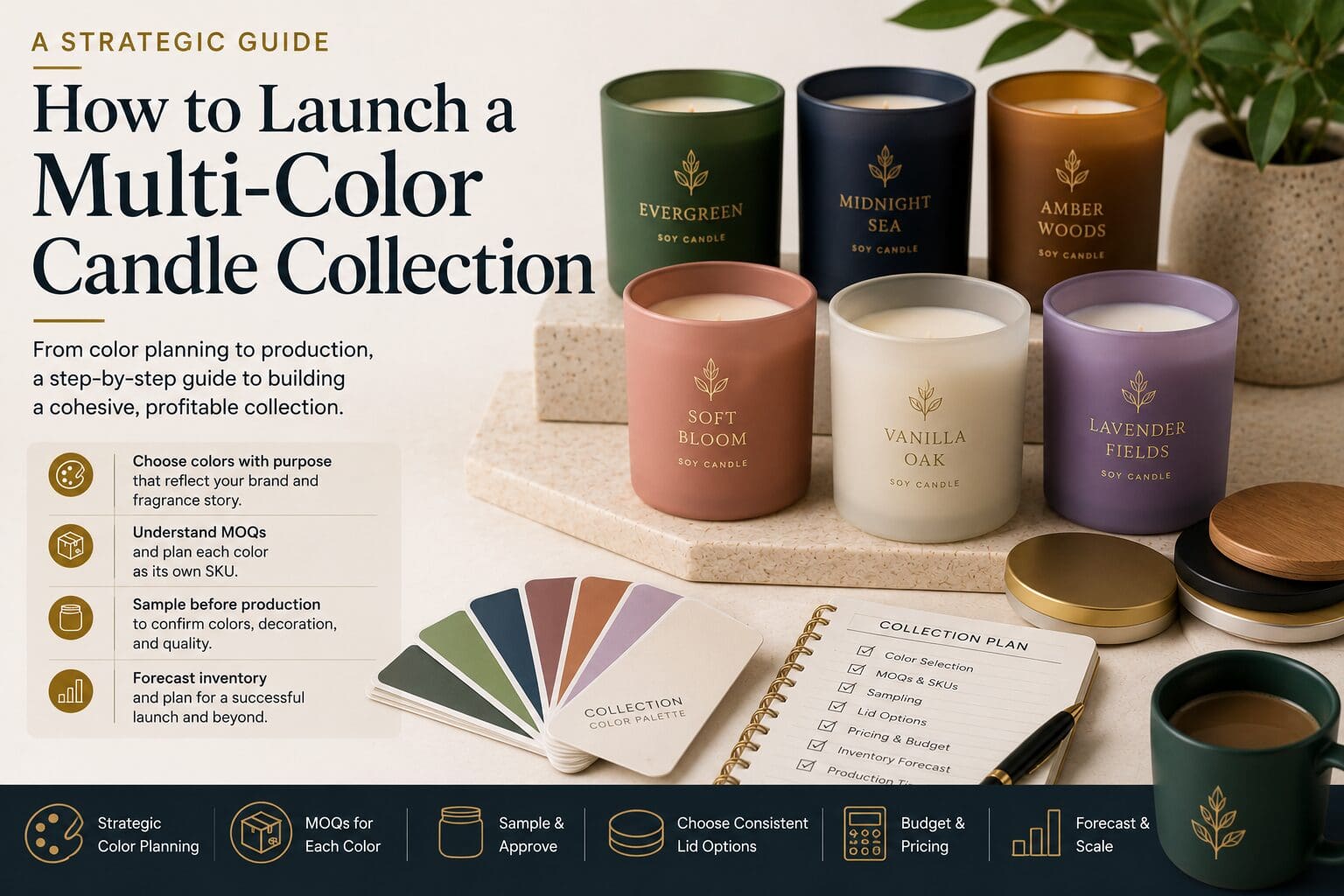
Launching a candle collection with multiple vessel colors can create a memorable customer experience, strengthen brand identity, and help differentiate fragrances within a product line.
But behind every successful collection is careful planning.
From color selection and sampling to production quantities and inventory forecasting, there are several decisions that can influence the success of a launch.
Whether you’re developing your first candle collection or expanding an existing line, understanding the planning process can help you move forward with greater confidence.
Why Multi-Color Collections Are So Popular
Many candle brands use vessel color to help tell a story.
Different colors can:
- Differentiate fragrances
- Create seasonal collections
- Support brand aesthetics
- Improve shelf appeal
- Enhance product photography
- Strengthen customer recognition
A well-designed collection often feels more intentional and memorable than a single vessel color used across every product.
Start With the Collection Strategy
Before selecting colors, determine the purpose of the collection.
Ask yourself:
- Is this a seasonal launch?
- A permanent product line?
- A limited-edition collection?
- A retailer-exclusive offering?
Your answers will help guide decisions around colors, quantities, packaging, and production planning.
Choose Colors With a Purpose
One of the most common mistakes brands make is selecting colors simply because they look attractive individually.
Instead, evaluate how colors work together as a collection.
Consider:
- Brand identity
- Fragrance themes
- Seasonal relevance
- Retail presentation
- Product photography
The strongest collections create a cohesive visual story while still allowing each fragrance to maintain its own identity.
Plan Your Collection Around SKUs
Every vessel color should be treated as its own SKU.
A SKU is a unique product configuration that may differ by:
- Color
- Decoration
- Artwork
- Vessel style
- Component selection
Understanding this early helps brands plan production more accurately and avoid inventory surprises later.
Understand MOQ Requirements
When developing a multi-color collection, it’s important to understand how minimum order quantities apply.
In most cases, each color is treated as a separate SKU and requires its own production quantity.
For example, a collection featuring:
- Emerald Green
- Navy Blue
- Amber
- Lavender
would require production planning for each individual color rather than the collection as a whole.
Reviewing MOQ requirements early helps ensure a realistic launch plan.
Sample Before Production
Sampling is one of the most valuable steps in the development process.
Physical samples allow brands to evaluate:
- Color appearance
- Decoration quality
- Lid compatibility
- Product photography
- Collection consistency
Even if colors appear perfect in digital mockups, reviewing physical samples often provides valuable insights before production begins.
Many successful brands view sampling as an investment in reducing risk and improving decision-making.
Consider Using a Consistent Lid Across the Collection
A common strategy is to use the same lid across multiple vessel colors.
Benefits include:
- Unified branding
- Simplified sourcing
- Easier inventory management
- Stronger collection presentation
For example, a collection may feature six vessel colors paired with a single matte gold lid finish.
This creates visual consistency while allowing the vessel colors to differentiate individual fragrances.
Budget Beyond the Vessel
When planning a collection, focus on the total project rather than vessel pricing alone.
Consider:
- Vessel costs
- Decoration costs
- Sampling fees
- Screen charges
- Lid costs
- Freight
- Inventory storage
A complete understanding of project costs helps brands avoid surprises and make more informed decisions.
Forecast Inventory by Fragrance
One of the most common inventory planning mistakes is assuming every fragrance will sell equally.
Instead, estimate demand for each SKU individually.
Consider:
- Historical sales
- Seasonal demand
- Retailer interest
- Marketing plans
- Customer preferences
Building forecasts by SKU often results in better inventory allocation and fewer stock challenges.
Think Beyond the Initial Launch
The most successful collections are designed with future growth in mind.
When evaluating colors and packaging, consider:
- Future fragrance additions
- Seasonal extensions
- Holiday collections
- Retail expansion
Choosing components and decoration styles that can scale with the brand helps create consistency across future launches.
Common Multi-Color Collection Questions
How many colors should I launch with?
There is no universal answer, but many brands begin with three to six vessel colors to create variety while keeping inventory manageable.
Should every fragrance have a different vessel color?
Not necessarily. Some brands use color to differentiate fragrances, while others use color to distinguish collections or seasons.
Does each color require its own MOQ?
In most cases, yes. Each color is treated as a separate SKU and requires its own production planning.
Should I sample every color?
Sampling every production color is generally recommended whenever possible.
Can I use the same lid across multiple colors?
Yes. Many brands use a single lid style across an entire collection to create consistency.
Building a Collection That Lasts
A successful candle collection is about more than selecting attractive colors.
It requires thoughtful planning around branding, production requirements, inventory strategy, and long-term growth.
By understanding how colors, SKUs, sampling, lids, and production planning work together, brands can build collections that not only look great at launch but continue to support future growth as the business evolves.
Whether you’re introducing your first collection or preparing for your next launch, taking time to plan strategically today can help create a stronger product experience tomorrow.