Choosing the right container is one of the earliest decisions in product development, and one of the most impactful.
It affects not just how your product looks, but how it performs in production, how it holds up over time, and how it is perceived by customers.
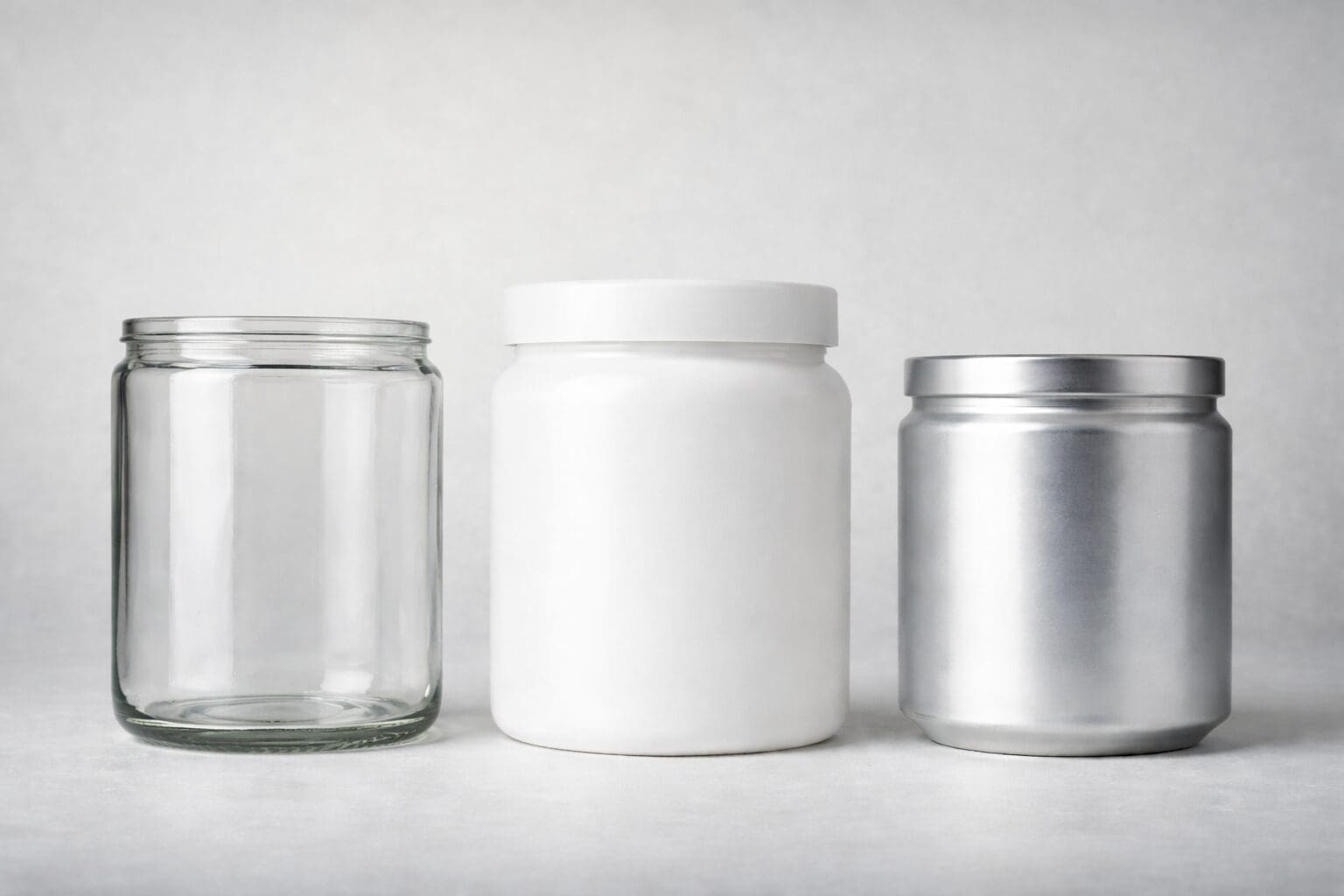
Glass, plastic, and aluminum can all be effective options. The right choice depends on how your product is used, how it will be produced, and how you plan to scale.
Start with the Product, Not the Material
Before comparing materials, it helps to step back and look at the product itself.
Key considerations:
- Will the product be exposed to heat, moisture, or friction
- How often will it be handled
- Does it require chemical compatibility
- What kind of shelf presence are you aiming for
A candle, a fragrance bottle, and a cosmetic container may all look similar, but they have very different requirements once in use.
Glass: Clarity, Weight, and Perception
Glass is widely used across candles, fragrance, and spirits for a reason.
It offers:
- A premium look and feel
- Strong compatibility with decoration methods
- Stability under heat and chemical exposure
This makes it a strong choice for:
- Candle vessels
- Perfume and fragrance bottles
- Spirits and beverage packaging
Considerations with glass:
- Weight and shipping impact
- Breakage risk
- Variation between batches
When the right container is selected, glass provides a consistent and high-quality foundation for both decoration and filling.
Plastic: Flexibility and Function
Plastic is often used in beauty, personal care, and travel-friendly products.
It offers:
- Lightweight and durable handling
- Lower risk of breakage
- Flexibility in shape and design
This makes it a good fit for:
- Sprays and personal care packaging
- Travel-size products
- Functional, high-use items
Considerations with plastic:
- Surface energy can affect decoration
- Chemical compatibility varies by material
- Perception may differ depending on the product category
Plastic can perform very well when the material and application are aligned early.
Aluminum: Durability and Clean Aesthetic
Aluminum is used across beauty, fragrance, and beverage categories, especially where durability and a modern look are important.
It offers:
- Strong resistance to damage
- Lightweight structure
- Clean, minimal appearance
This makes it a strong option for:
- Bottles and cans
- Personal care packaging
- Travel and portable products
Considerations with aluminum:
- Decoration methods differ from glass
- Surface preparation is important
- Design choices may be more limited depending on the process
What Makes a Container “Decoratable”
Not every container is equally suited for decoration.
Factors that influence this include:
- Surface energy and coating
- Shape and curvature
- Material compatibility with inks and finishes
- Consistency across batches
A container that looks right visually may still create challenges during decoration if these factors are not considered.
This is where early evaluation makes a significant difference.
Common Mistakes to Avoid
Across industries, a few patterns show up consistently:
Choosing based only on appearance
A container may look right but not perform well in production.
Not accounting for decoration early
Decoration is often treated as a later step, when it should be part of the initial decision.
Overlooking variation between batches
Small differences in materials can impact consistency at scale.
Planning only for the first run
What works for a small launch may not scale efficiently.
Planning for Scale
The best container decisions are not just about today. They account for how the product will grow.
That includes:
- Consistency across production runs
- Compatibility with decoration and filling
- Efficiency at higher volumes
- Long-term brand presentation
When these factors are aligned early, the transition from sampling to production tends to be much smoother.
Bringing It All Together
Glass, plastic, and aluminum all have a place in product packaging.
The key is not choosing the “best” material in general, but choosing the one that fits your product, your process, and your long-term direction.
Taking the time to evaluate these factors early helps reduce adjustments later and creates a more consistent result as you scale.