Choosing how to decorate your packaging isn’t just a design decision. It affects cost, production, durability, and how your product is perceived over time.
Many brands look at options like screen printing and labels individually, but the real clarity comes from looking at the full picture.
This guide brings together the key decisions so you can move forward with a clearer plan.
Step 1: Start with Your Product Goals
Before choosing a decoration method, it helps to define what matters most for your product:
- Is this a short-term test or a long-term product line?
- How important is durability during handling and use?
- What level of finish aligns with your brand?
- How often will the design change?
These answers shape every decision that follows.
Step 2: Choose the Right Decoration Method
At a high level:
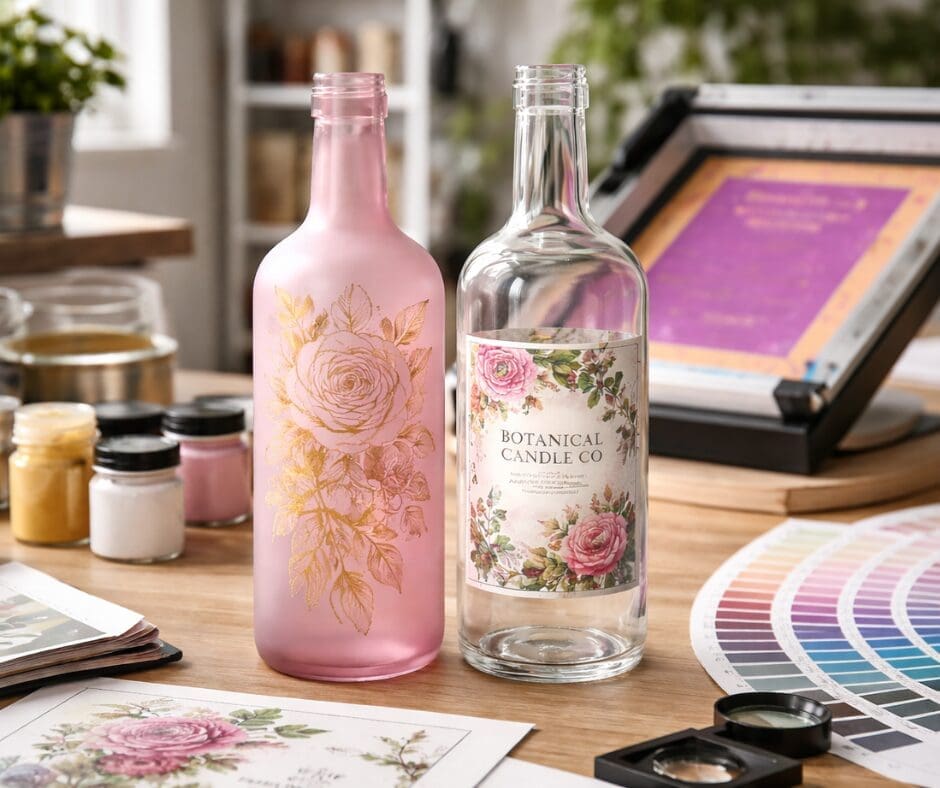
Screen Printing
- More durable and integrated into the container
- Better suited for consistent, long-term production
- More efficient at higher volumes
Labels
- More flexible for design changes
- Lower upfront cost
- Better for smaller runs or testing phases
If your product is expected to scale, it’s worth thinking beyond the first production run.
For a deeper comparison, see: Screen Printing vs. Labels: Which Is Right for Your Product Packaging?
Step 3: Understand What Can Go Wrong
Decoration issues don’t always appear right away. In many cases, they show up later during filling, shipping, or customer use.
Common risks include:
- Poor adhesion
- Scratching or wear
- Color inconsistency
- Design distortion
These are often tied to container compatibility, design choices, and production conditions.
Learn more: Why Screen Printing on Glass Fails (And How to Prevent It)
Step 4: Know What Drives Cost
Cost is not just about the decoration method. It’s influenced by several factors working together:
- Number of colors
- Design complexity
- Order volume
- Container type
- Color matching requirements
Looking at cost in isolation can lead to decisions that create more expense later.
Read more: What Actually Drives the Cost of Glass Decoration?
Step 5: Plan for Production, Not Just Sampling
One of the most common challenges is the gap between sampling and full production.
A design that looks good in a sample may behave differently when scaled.
To reduce this risk:
- Test with actual production containers
- Consider how the product will be handled and filled
- Plan for consistency across batches
Quick Decision Guide
If you need a fast starting point:
Choose Screen Printing if:
- You want a durable, long-lasting finish
- Your design will stay consistent
- You are producing at higher volumes
- Brand presentation is a priority
Choose Labels if:
- Speed and lower upfront cost matter most
- You are testing or launching a new product
- You need flexibility for design changes
- You are working with smaller quantities
A More Complete Approach
The most effective packaging decisions consider how everything works together:
- Container selection
- Decoration method
- Design execution
- Production process
When these elements are aligned early, the result is a more consistent product and fewer adjustments later.
Bringing It All Together
There isn’t a single “right” choice for every product. The goal is to choose a path that supports both your current needs and your future growth.
Taking a structured approach to these decisions helps reduce uncertainty and keeps your project moving forward with fewer surprises.
If you’re working through these decisions, it can help to look at your container, design, and production goals together.
A clear plan upfront often leads to a smoother process from sampling through production.
Packaging Decision Checklist
- What is your expected production volume?
- Will your design change frequently?
- What level of durability is required?
- Is your container compatible with decoration?
- How important is premium brand presentation?
- Are you planning for long-term scalability?