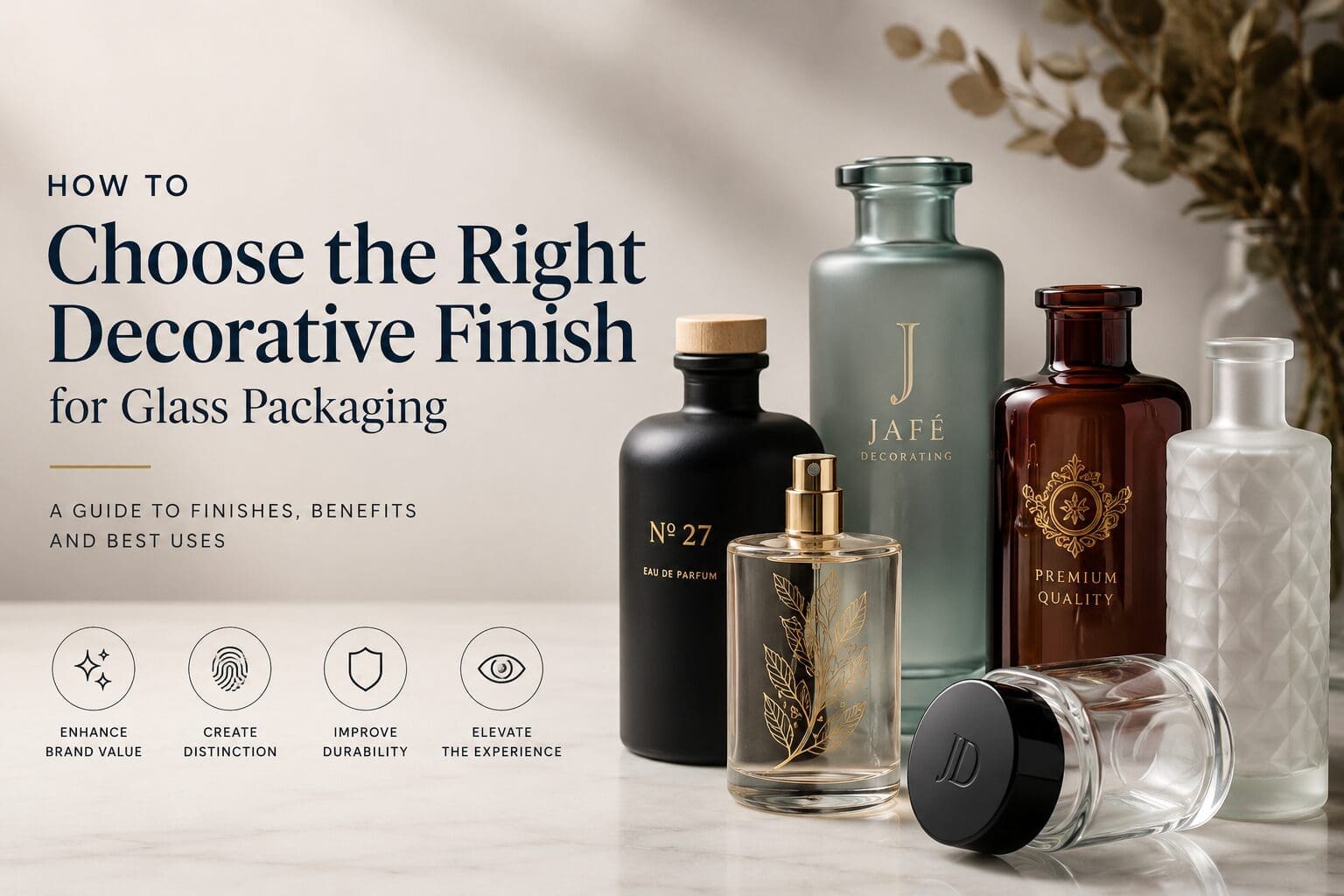
The right glass finish can make a product feel more complete, more recognizable, and more aligned with the brand behind it.
But choosing a finish is not only a design decision. It is also a production decision. The glass shape, artwork, color target, product use, and sample review process all matter.
For brands planning a decorated glass project, the best finish is the one that supports the product visually and can be reviewed clearly before production.
Start With the Product Goal
Before choosing a finish, start with the product itself.
Ask:
- What should the customer feel when they see it?
- Is the product meant to feel clean, bold, warm, premium, seasonal, minimal, or colorful?
- Will the glass be part of a larger collection?
- Does the packaging need to stand out on a shelf, online, or in a retail display?
- Should the decoration replace a label or work alongside other customer-provided components?
These answers help narrow the finish direction before artwork or sampling begins.
When Frosting Makes Sense
Frosting gives glass a soft, matte appearance. It can help a product feel calm, clean, and elevated without adding heavy color.
Frosting is often a good fit for:
- Candle vessels
- Home fragrance products
- Wellness-inspired packaging
- Minimal brand systems
- Soft seasonal collections
- Products where diffused light is part of the look
For candles, frosting can be especially effective because it changes the way the vessel catches light. The result can feel subtle, warm, and finished.
When Custom Coating Makes Sense
Custom coatings are helpful when color is a major part of the packaging direction. A coating can create a specific look across a collection, support a seasonal palette, or help a standard glass item feel more custom.
Coatings may be a good fit when a brand wants:
- A stronger color story
- A more distinctive shelf presence
- A seasonal or limited-edition finish
- A translucent, opaque, or tinted effect
- A closer match to brand colors
- A finish that supports the product’s mood or fragrance story
Because color can shift depending on glass shape, thickness, lighting, and product use, sample review is important before production.
When Screen Printing Makes Sense
Screen printing applies artwork directly to the glass surface. It can create a clean, polished look without relying on a paper label.
Screen printing works well for:
- Logos
- Collection names
- Fragrance names
- Simple graphics
- Minimal artwork
- Repeatable product lines
- Label-free packaging concepts
The best screen print artwork is clear and intentional. Fine details, tiny text, or overly complex graphics may need review before production.
Combining Finish Methods
Some projects use more than one decoration method. A coated vessel may also be screen printed. A frosted glass item may include a simple logo or collection name. A tinted effect may work with a crisp white print for contrast.
Combining methods can create a stronger final presentation, but it also makes planning more important.
Customers should be prepared to review:
- Finish color
- Artwork placement
- Print contrast
- Glass shape
- Decoration area
- Overall product appearance
A sample can help confirm that all elements work together before production.
Think About the Full Packaging System
Glass decoration is one part of the finished product. Depending on the project, a customer may also have lids, labels, boxes, inserts, or other components.
JAFE does not manufacture glass containers, labels, boxes, or packaging components. However, JAFE may be able to apply or pack customer-provided components as part of a project when appropriate.
This distinction matters. It helps keep expectations clear and makes the project easier to review.
What to Have Ready Before You Start
A decorated glass project moves more smoothly when the customer has basic information ready.
Helpful details include:
- Glass item or vessel specifications
- Desired finish direction
- Reference images or color inspiration
- Artwork files
- Brand color targets
- Product category
- Fill requirements, if the project includes candles
- Component details, if customer-provided items need to be packed or applied
- Whether the project is new or a reorder
Not every detail needs to be final at the first conversation, but the more information available, the easier it is to guide the project.
Why Sampling Matters
Sampling helps confirm how the finish looks on the actual glass item. It gives the customer and production team a chance to review color, print placement, finish quality, and overall appearance before moving into production.
For new projects, sampling is generally required before production. Reorders may follow a different path depending on the project history and requirements.
Sampling is not just a formality. It is part of making sure the final product matches the approved direction as closely as possible.
How JAFE Supports Finish Selection
JAFE helps brands move from concept to finished decorated glass or filled candle products with practical production support under one roof in Ohio.
Depending on the project, JAFE can support:
- Glass decorating
- Custom coatings
- Color matching
- Frosting
- Screen printing
- Candle filling
- Fragrance development
- Wicking
- Sampling
- Quality review
- Packing customer-provided components
The goal is to help customers choose a finish that looks right, supports the product, and can move through production with fewer surprises.
FAQ
What is the best finish for glass packaging?
There is no single best finish. The right option depends on the product, brand direction, glass item, artwork, and intended use.
Can JAFE help choose a glass finish?
JAFE can help review finish direction, decoration options, artwork, and sampling needs for a project. Final feasibility and production details should be confirmed through project review.
Can a coated glass item also be screen printed?
Many projects combine decoration methods, such as coating and screen printing. The specific approach depends on the glass, artwork, finish, and production requirements.
Does JAFE make the glass containers?
No. JAFE specializes in glass decorating and candle filling. Customers typically provide or source the glass containers.
Do I need a sample before production?
For new projects, sampling is generally required before production. It helps confirm finish, color, artwork placement, and overall appearance.