Long before a customer uses a product, they begin forming opinions about it.
Those impressions often start with color.
Whether a consumer is browsing a retail shelf, scrolling through an online storefront, or opening a package for the first time, color helps shape how they perceive a product and the brand behind it. It influences expectations, communicates personality, and creates emotional connections that can impact purchasing decisions.
For brands, color is more than a visual element. It’s a strategic tool that helps define the customer experience.
When used thoughtfully, color can strengthen brand recognition, reinforce positioning, and help create more meaningful interactions with consumers.
Why Color Matters in Customer Experience
Customer experience is often associated with product performance, customer service, and post-purchase satisfaction.
Those factors are important, but customer experience begins much earlier.
Consumers start evaluating products the moment they encounter them.
Color plays a major role in those first impressions because it communicates information quickly. Before a customer reads product details or compares features, color is already helping them interpret:
- Quality
- Brand personality
- Product positioning
- Emotional tone
- Intended audience
These impressions influence how consumers feel about a product before they ever use it.
That’s why color remains one of the most powerful tools in packaging design.
Color Creates Expectations
Every product tells a story.
Color helps establish that story before a single word is read.
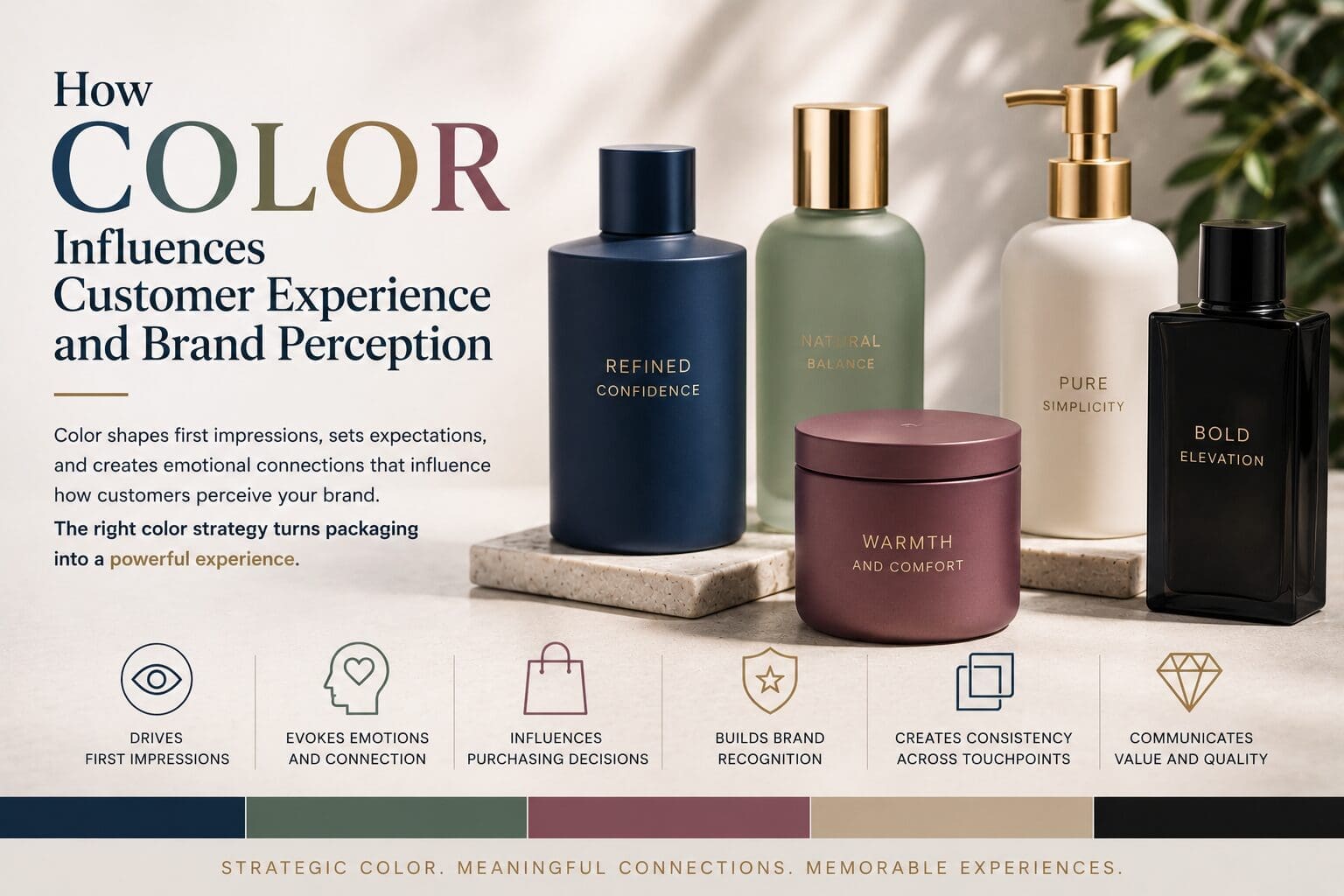
A deep navy package may suggest sophistication and confidence.
A soft neutral palette may communicate comfort and simplicity.
A vibrant color scheme may create energy and excitement.
Consumers use these visual cues to develop expectations about the experience a product will provide.
When color choices align with the product experience, customers feel a stronger sense of consistency and trust.
When they don’t align, confusion can occur.
Strategic color selection helps ensure that what customers see matches what they ultimately experience.
Color Influences Brand Perception
Brands are often remembered visually before they are remembered verbally.
Color contributes significantly to how a brand is perceived.
It helps answer questions such as:
- Is this brand premium or accessible?
- Is it modern or traditional?
- Is it playful or sophisticated?
- Is it innovative or established?
These perceptions are not formed through logos alone.
They are shaped through consistent visual experiences over time.
For this reason, many of the world’s most recognizable brands place significant importance on color strategy as part of their overall brand identity.
The Connection Between Color and Recognition
One of the most valuable benefits of color is its ability to improve recognition.
Consumers encounter brands across numerous channels, including:
- Retail environments
- E-commerce platforms
- Social media
- Product photography
- Advertising
- Influencer content
Consistent use of color helps create familiarity across all of these touchpoints.
Over time, customers begin associating specific colors with specific brands.
That familiarity strengthens trust and makes products easier to identify in competitive markets.
The stronger the recognition, the stronger the opportunity to build long-term customer relationships.
Color Helps Differentiate Products
Consumers have more choices than ever before.
In many product categories, packaging must compete against dozens of similar products for attention.
Color helps create differentiation.
Thoughtful color strategy can:
- Increase shelf visibility
- Improve memorability
- Support premium positioning
- Reinforce product collections
- Create stronger visual impact
The goal is not simply to be different.
The goal is to be recognizable, relevant, and aligned with the intended customer experience.
When color supports the overall brand story, differentiation becomes more meaningful.
Color Must Work Across Every Customer Touchpoint
Today’s customer journey is rarely linear.
A consumer may discover a product on social media, research it online, purchase it through an e-commerce platform, and receive it at home days later.
Color must perform consistently throughout that process.
Packaging colors should support:
- Digital experiences
- Product photography
- Retail presentation
- Unboxing moments
- Product collections
When color remains consistent across channels, customers experience a stronger and more cohesive brand identity.
This consistency helps reinforce confidence and trust.
Color Works Best When Combined With Material and Finish
Color does not exist in isolation.
As part of a broader packaging strategy, color works alongside material and finish to create the complete customer experience.
The same color can communicate very different messages depending on whether it appears on:
- Clear glass
- Frosted glass
- Ceramic
- Aluminum
- Matte surfaces
- Gloss surfaces
For example, a matte navy vessel may feel refined and understated, while a gloss navy vessel may feel bold and energetic.
Successful packaging strategies consider how all of these elements work together.
The goal is to create a cohesive experience rather than focusing on color alone.
Consistency Builds Trust
Trust is one of the most important outcomes of a strong customer experience.
Color helps support that trust through consistency.
When customers repeatedly encounter the same visual identity across products, packaging, and marketing materials, they develop confidence in the brand.
Consistency signals professionalism.
It communicates attention to detail.
It reassures customers that the experience they enjoyed previously will be delivered again.
Over time, these repeated positive interactions contribute to stronger loyalty and brand preference.
Creating Better Customer Experiences Through Color
The most effective packaging does more than protect a product.
It helps create experiences.
Color plays an important role in that process by shaping perception, reinforcing brand identity, and influencing how consumers interact with products from the very first impression.
When color strategy aligns with brand positioning, customer expectations, and product design, packaging becomes a powerful tool for communication and connection.
Because before customers experience what’s inside the package, they experience the color that introduces it.