When brands think about product packaging, color often gets most of the attention.
But color is only part of the story.
The finish applied to a package can dramatically influence how consumers perceive a product, interact with it, and remember it. In many cases, the finish is what transforms a package from visually appealing to truly memorable.
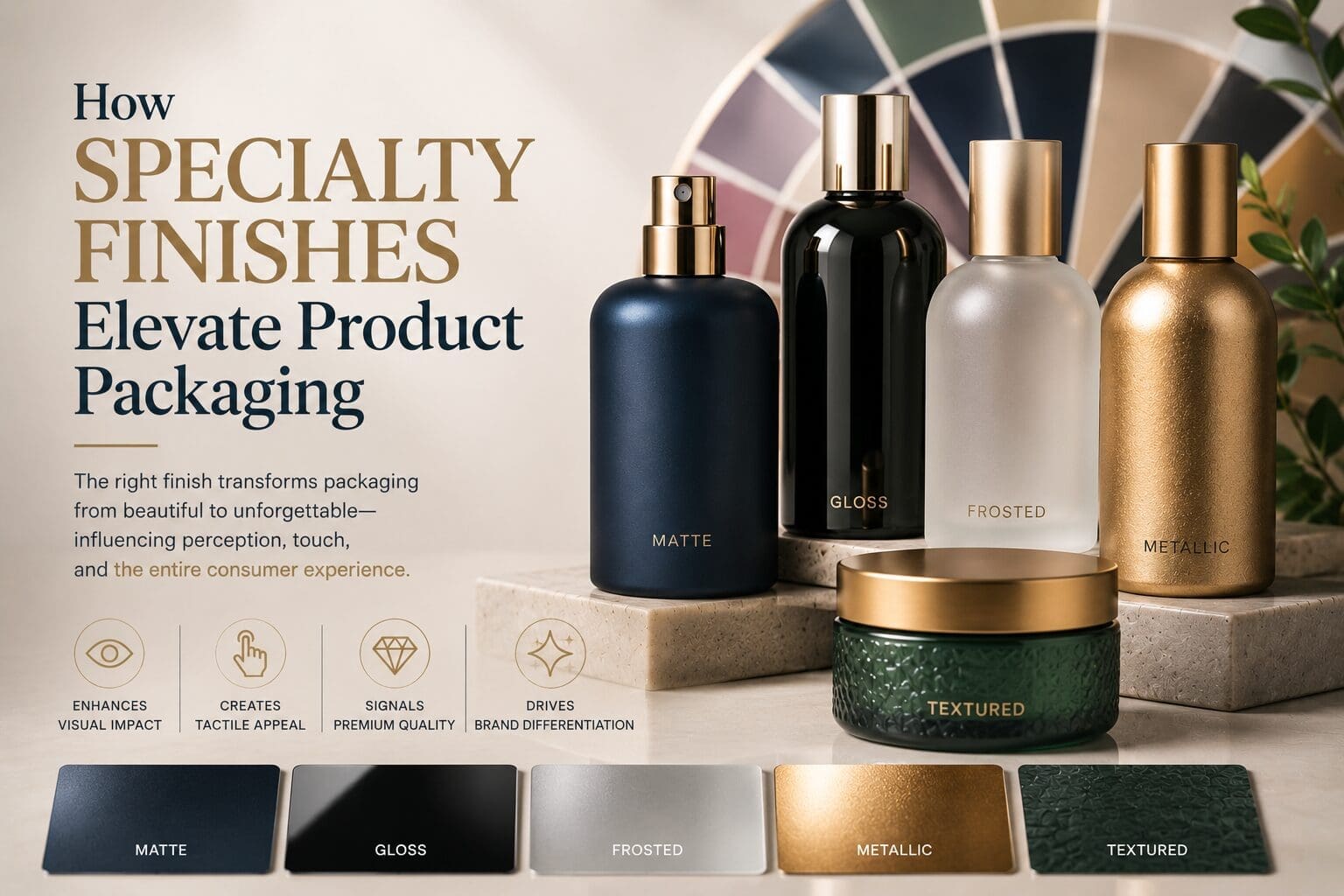
Whether it’s a soft matte candle vessel, a metallic fragrance bottle, or a frosted cosmetic container, specialty finishes help create the visual and tactile experiences that shape consumer perception.
As part of a broader CMF (Color, Material, and Finish) strategy, specialty finishes play a critical role in elevating product packaging and reinforcing brand identity.
What Are Specialty Finishes?
A specialty finish is any decorative treatment that alters the appearance, texture, or light interaction of a product’s surface.
While color determines what consumers see, finish influences how that color is experienced.
Specialty finishes can affect:
- Reflectivity
- Texture
- Depth
- Transparency
- Perceived quality
- Tactile interaction
These effects help brands create packaging that feels intentional, distinctive, and aligned with the overall product experience.
Why Finishes Matter in Consumer Product Design
Consumers rarely separate color, material, and finish when evaluating a product.
Instead, they experience them together.
A navy blue package with a high-gloss finish creates a different impression than the same navy blue package with a matte finish.
Likewise, a frosted glass vessel communicates something different than a clear, glossy vessel using the same base color.
These subtle differences influence how consumers perceive:
- Product quality
- Brand positioning
- Value
- Sophistication
- Emotional appeal
In competitive markets, those perceptions can make a meaningful difference.
Matte Finishes Create Modern Sophistication
Matte finishes have become increasingly popular across candles, beauty products, home fragrance, and luxury packaging.
One reason is their ability to communicate confidence without appearing overly flashy.
Matte finishes often feel:
- Contemporary
- Premium
- Refined
- Minimalist
- Sophisticated
Because matte surfaces diffuse light rather than reflecting it, they create a softer visual appearance that many consumers associate with elevated design.
For brands seeking a modern aesthetic, matte finishes remain one of the most effective decorative options.
Gloss Finishes Maximize Visual Impact
While matte finishes create subtlety, gloss finishes create energy.
Gloss surfaces reflect light, increase visual vibrancy, and help colors appear richer and more saturated.
Gloss finishes are often used when brands want to:
- Increase shelf visibility
- Enhance color intensity
- Create a polished appearance
- Add visual excitement
In retail environments where products compete for attention, gloss finishes can help packaging stand out from surrounding products.
The choice between matte and gloss is rarely about which is better.
It’s about which finish best supports the intended customer experience.
Frosted Finishes Add Depth and Atmosphere
Frosted finishes are especially effective for products where ambiance contributes to the overall experience.
Unlike fully opaque or highly reflective surfaces, frosted finishes interact with light in a way that creates softness and depth.
They are commonly used for:
- Candle vessels
- Diffusers
- Perfume bottles
- Beauty packaging
- Decorative glass products
Frosted effects can create a refined appearance while helping products feel more elevated and experiential.
For many premium brands, frosted finishes strike a balance between sophistication and approachability.
Metallic Finishes Reinforce Premium Positioning
Metallic finishes remain one of the most effective ways to create visual distinction.
Because metallic surfaces interact with light differently than traditional colors, they introduce movement, dimension, and perceived value.
Popular options include:
- Gold finishes
- Silver finishes
- Bronze finishes
- Champagne metallics
- Custom metallic effects
These finishes are frequently used to communicate luxury, craftsmanship, and exclusivity.
When applied strategically, metallic finishes can elevate packaging without requiring complex design changes.
Texture Creates Memorable Interactions
Consumers don’t just look at products. They touch them.
Texture introduces another layer of engagement by influencing how products feel in the hand.
Textured finishes can help create experiences that feel:
- Premium
- Crafted
- Natural
- Distinctive
- High quality
The tactile component of packaging often reinforces the visual message, creating a stronger overall impression.
Products that engage multiple senses tend to be more memorable than those relying solely on visual design.
Finishes Help Differentiate Products
In crowded product categories, packaging differentiation becomes increasingly important.
Many brands may share similar colors, similar product formats, and similar positioning.
Finish often becomes the element that creates distinction.
A unique decorative finish can help products:
- Capture attention
- Reinforce brand identity
- Increase memorability
- Support premium pricing
- Create stronger customer experiences
Because finishes influence both appearance and feel, they offer brands multiple opportunities to create differentiation.
Specialty Finishes Work Best as Part of a CMF Strategy
The most successful packaging doesn’t rely on finish alone.
Color, material, and finish should work together to support a consistent product experience.
For example:
- A matte finish may complement a luxury color palette.
- A metallic effect may reinforce premium glass packaging.
- A frosted surface may enhance a calming fragrance collection.
- A textured coating may support an artisanal brand story.
When these elements align, products feel more cohesive and intentional.
Consumers may not consciously identify every design decision, but they often recognize when a product feels thoughtfully executed.
Creating Better Consumer Experiences Through Finish
Specialty finishes do more than decorate packaging.
They influence perception, strengthen branding, and help create memorable product experiences.
As brands continue searching for ways to stand out in competitive markets, finishes offer opportunities to add depth, sophistication, and differentiation without fundamentally changing the product itself.
The most effective finishes are not chosen simply because they look attractive.
They are selected because they support the story a brand wants to tell.
When color, material, and finish work together, packaging becomes more than a container.
It becomes part of the experience.