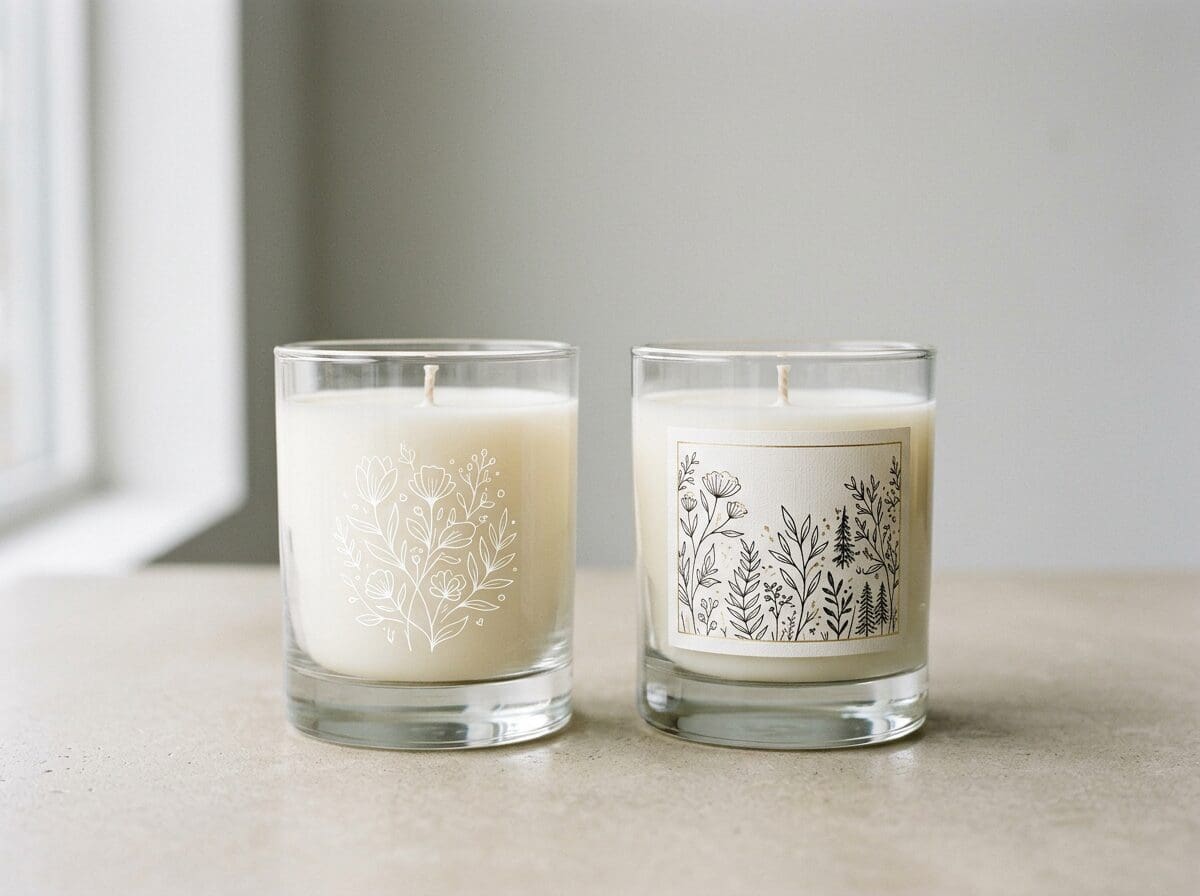
Most brands don’t struggle with design ideas. They struggle with how that design actually gets applied to the container.
Two of the most common options are screen printing and labels. Both can work well, but they lead to very different outcomes in durability, cost, brand perception, and production.
Choosing the right one early can save time, reduce rework, and help your product feel more consistent as you grow.
What Is Screen Printing on Glass?
Screen printing is a process where ink is applied directly onto the container through a mesh screen, then cured to create a durable finish.
Because the design becomes part of the container surface, it holds up well over time and through handling.
You’ll often see screen printing used for:
- Candle vessels
- Spirits bottles
- Cosmetic packaging
- Products that need a clean, long-lasting finish
What Are Labels?
Labels are printed separately and then applied to the container. They can be paper or film, and may be pressure-sensitive or shrink-applied.
They offer flexibility and are often used when brands need to move quickly or test different designs.
Screen Printing vs. Labels: Key Differences
1. Durability
Screen printing is designed to last. It resists wear, moisture, and repeated handling.
Labels can perform well, but they are more vulnerable to peeling, scratching, or edge lifting over time, especially in environments with heat or friction.
If your product will be handled often or exposed to changing conditions, this difference becomes more noticeable.
2. Brand Perception
Screen printing creates a finish that feels built into the container. It tends to look clean, consistent, and more permanent.
Labels offer more visual flexibility, including gradients and detailed artwork. Depending on the material and application, they can look polished, but they may not have the same integrated feel.
In categories like candles, spirits, and beauty, this distinction can influence how the product is perceived on the shelf.
3. Cost Structure
Screen printing typically involves higher upfront setup, especially for custom colors and screens. Once in production, the per-unit cost becomes more efficient at higher volumes.
Labels usually have lower upfront costs, making them accessible for smaller runs. However, each unit continues to carry the cost of the label itself.
The better option depends less on the first order and more on your expected volume over time.
4. Flexibility
Labels are easier to change. If you are testing new designs, launching seasonal variations, or updating SKUs frequently, labels allow you to move quickly without retooling.
Screen printing is more fixed once set up. Changes require new screens and adjustments, which can add time and cost.
5. Production Flow
Screen printing is integrated into the decoration process. Once complete, the container is ready for the next step.
Labels are applied separately, which introduces another step in production. This can affect alignment, consistency, and overall efficiency depending on how it is handled.
When Screen Printing Makes More Sense
Screen printing is often the better choice when:
- You want a consistent, elevated brand presentation
- Your design will remain stable across production runs
- You are producing at scale
- Durability matters for your product’s use and environment
When Labels Are the Better Fit
Labels can be the right approach when:
- You are testing a new product or market
- You expect frequent design changes
- You are working with smaller quantities
- You need faster turnaround without setup time
A Common Mistake to Avoid
Many brands start with labels for flexibility, then transition to screen printing as they grow.
The challenge is that not every label design translates directly to screen printing.
This can lead to:
- Redesign work
- Delays in production
- Inconsistencies between early and later versions of the product
Planning for this transition early can help you avoid those issues.
A Smarter Way to Decide
Instead of choosing based only on upfront cost, it helps to step back and consider:
- How long the design will stay in market
- Your expected production volume
- The level of durability your product needs
- The type of impression you want your packaging to create
In many cases, aligning your decoration method with your long-term direction leads to fewer adjustments later.
Bringing It All Together
Both screen printing and labels have a place in product development. The right choice depends on where you are today and where you plan to go next.
Taking the time to evaluate the tradeoffs upfront helps you build a more consistent product, reduce unnecessary changes, and support your brand as it grows.
If you’re weighing options for your next project, it can help to look at your container, design, and production goals together. A clear plan early on tends to make everything downstream smoother.