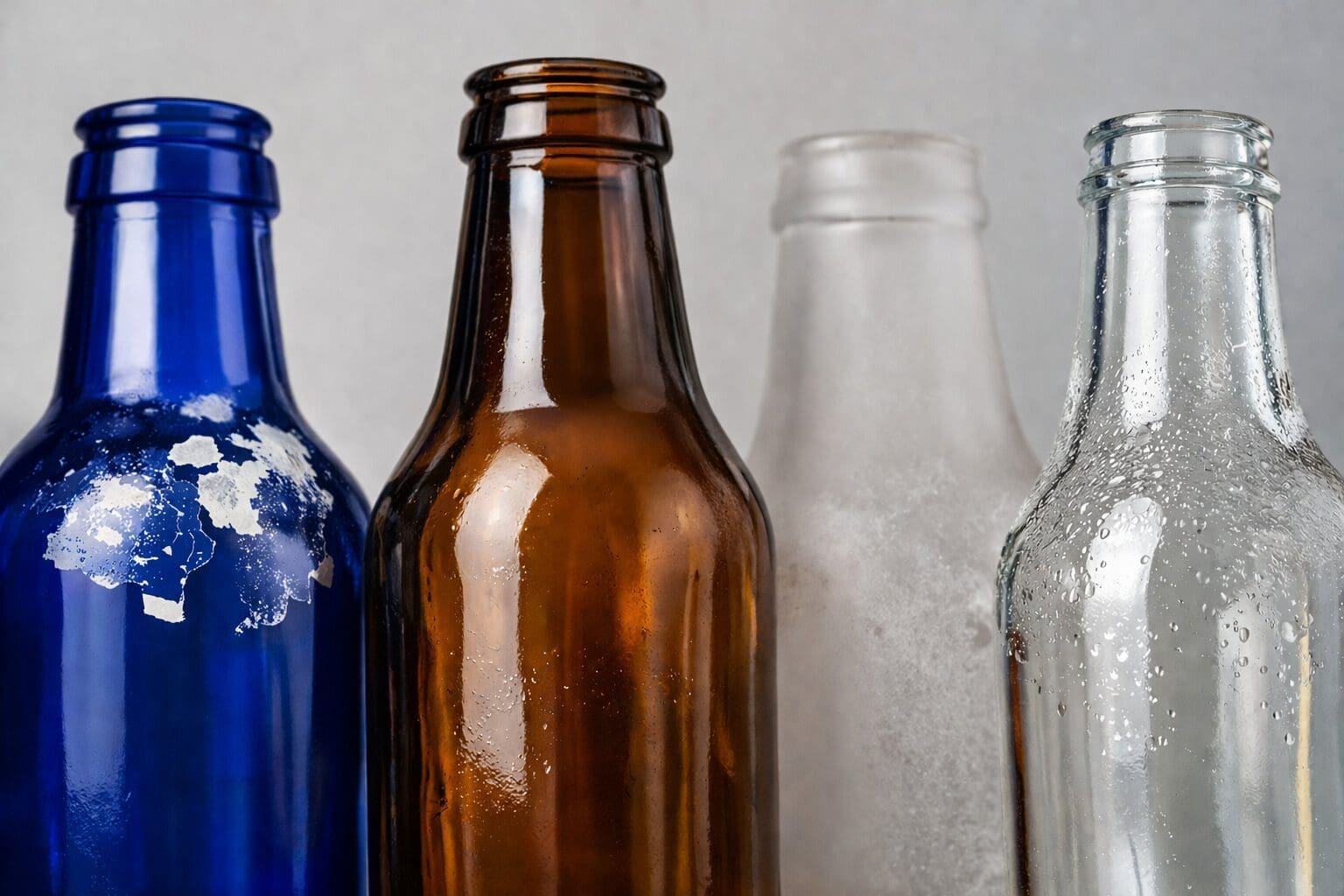
Glass decoration can be a highly consistent and reliable process when the right factors are aligned.
The issues below are some of the most common things we help brands account for early in development. They’re not random problems. They’re predictable patterns that can be prevented with the right approach.
Understanding them upfront helps reduce risk, improve consistency, and keep production running smoothly.
1. Poor Adhesion
One of the most common issues is ink not properly bonding to the glass surface.
This typically comes from surface conditions that aren’t compatible with the decoration process.
Common causes:
- Surface contamination or residue
- Low surface energy
- Incompatible coatings
How it’s addressed:
- Use containers known to work well with decoration
- Test adhesion on actual production containers
- Evaluate surface conditions before printing
2. Inconsistent Color
Color may appear correct in sampling but shift slightly during production.
This is usually tied to how materials and conditions interact at scale.
Common causes:
- Variations in glass tint
- Lighting differences
- Ink application consistency
How it’s addressed:
- Allow time for proper color matching
- Review samples under multiple lighting conditions
- Establish acceptable consistency ranges early
3. Misalignment or Distortion
Design placement can vary, especially on curved or irregular surfaces.
This is typically a result of how the container and artwork interact.
Common causes:
- Container shape variation
- Setup and positioning factors
- Artwork placed too close to edges or curves
How it’s addressed:
- Design with container geometry in mind
- Keep critical elements within safe print areas
- Validate alignment during sampling
4. Scratching or Wear
Even when adhesion is correct, prints can show wear depending on how the product is handled.
This usually becomes visible after filling, packing, or shipping.
Common causes:
- Incomplete curing
- Friction during handling
- Environmental exposure
How it’s addressed:
- Ensure curing conditions are properly controlled
- Test durability after filling and handling
- Align decoration method with end-use conditions
5. Designs That Don’t Translate to Production
Some designs look strong digitally but don’t reproduce cleanly in screen printing.
This is a common gap between design and manufacturing.
Common causes:
- Fine lines or excessive detail
- Gradients not suited for the process
- Artwork not optimized for screen printing
How it’s addressed:
- Use vector artwork
- Simplify where needed for clarity
- Review designs with production in mind
6. Batch Variation in Glass
Even consistent suppliers can produce slight variation between batches.
These differences can influence how decoration performs.
Common causes:
- Surface variation
- Minor dimensional differences
- Manufacturing tolerances
How it’s addressed:
- Account for variation during testing
- Maintain consistency in sourcing where possible
- Monitor results across production runs
7. Issues That Appear After Filling
A product can perform well during decoration and still show issues after filling.
This is where real-world conditions come into play.
Common causes:
- Heat exposure (especially with candles)
- Interaction with product contents
- Handling during filling and packing
How it’s addressed:
- Test decorated containers after filling
- Consider end-use conditions early
- Align decoration with product type
A More Reliable Approach
When container selection, design, and production are aligned early, glass decoration becomes a highly consistent and repeatable process.
Most issues don’t come from the process itself. They come from misalignment between materials, design, and production.
Addressing that alignment upfront is what prevents problems before they start.
Quick Takeaways
- Most glass decoration issues are predictable and preventable
- Consistency depends on alignment between container, design, and process
- Testing should reflect real production conditions
- Small decisions early have a large impact at scale
Closing
Glass decoration is a proven and reliable method when the right considerations are built in from the beginning.
Understanding these common issues helps create a smoother path from concept to production, with fewer adjustments along the way.