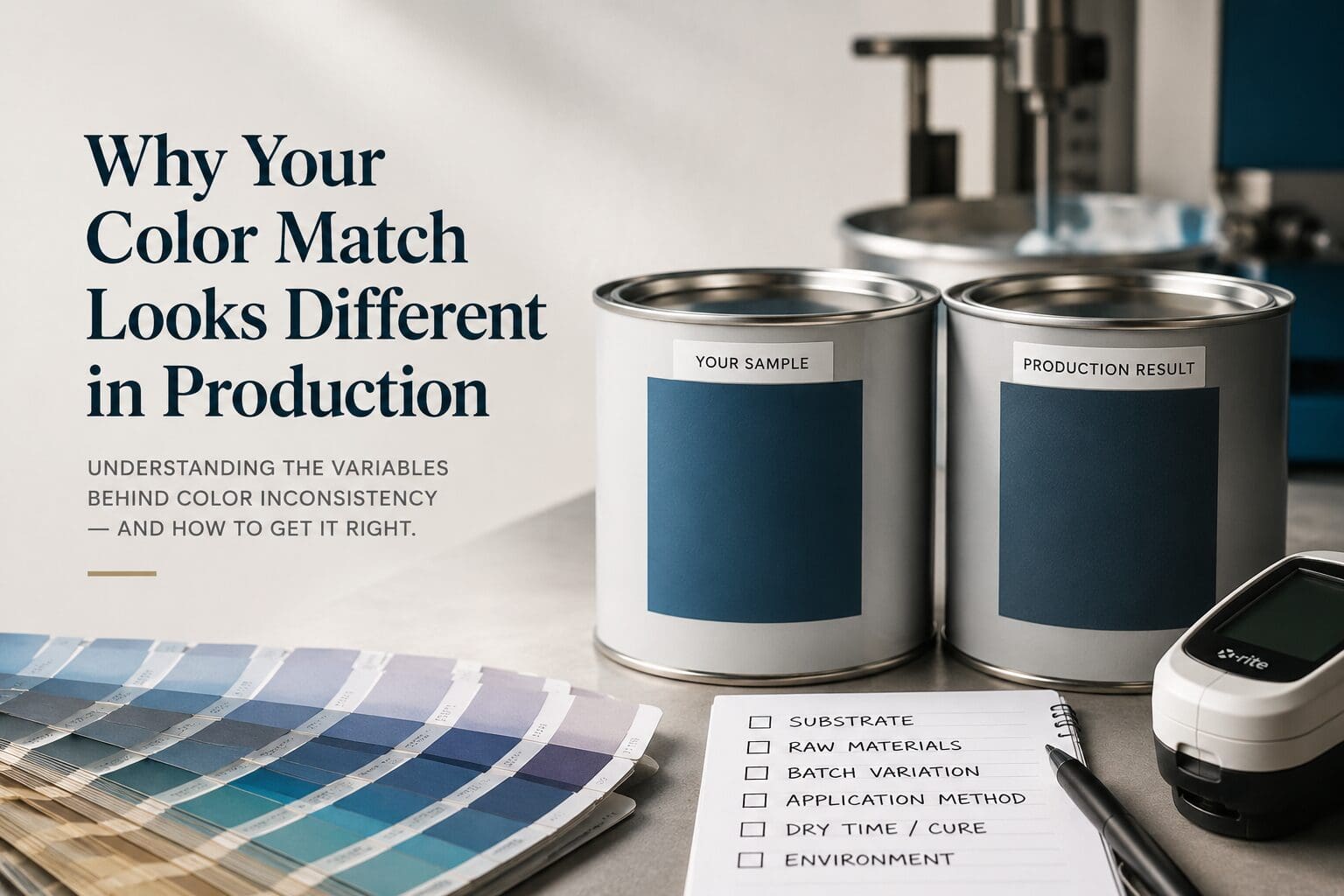
Color matching is one of the most important steps in packaging development.
It is also one of the most misunderstood.
A color can look correct during sampling, then appear slightly different once production begins. This is a common experience across industries, not a sign that something has gone wrong.
Understanding why this happens helps set clearer expectations and leads to more consistent results over time.
Why Color Does Not Always Stay the Same
Color is not defined by the paint or coating alone. It is influenced by multiple factors working together.
Changes in any of these can affect how the final color appears, especially when moving from sampling into production.
1. The Material Underneath the Color
The surface the color is applied to plays a major role in how it appears.
For example:
- Clear glass vs tinted glass
- Frosted vs coated surfaces
- Different plastic materials
Even small differences in the base material can shift how color is perceived.
Consistent results depend on working with materials that behave predictably across runs.
2. Lighting Conditions
Color can appear different depending on the lighting environment.
A sample viewed under controlled lighting may look different in:
- Natural daylight
- Retail lighting
- Indoor environments
This is one of the most common reasons color appears to change.
Evaluating color under multiple lighting conditions helps create a more reliable expectation of how it will appear in real use.
3. Application Process
How the paint or coating is applied affects how color appears.
Factors include:
- Coating thickness
- Number of passes
- Curing conditions
Even when controlled, slight variation can occur between sampling and full production.
Consistency comes from applying the same process conditions across runs, not just matching a color visually once.
4. Batch Variation
At scale, small variations between batches can influence color.
This may come from:
- Glass differences
- Material variation
- Production conditions
These differences are usually subtle but can become noticeable across larger quantities.
Managing these variables is part of maintaining consistency over time.
Design Expectations vs Process Reality
Some colors are more sensitive than others.
Light tones, very specific brand colors, or highly saturated shades can be more difficult to match consistently across different conditions.
This is not a limitation of one process. It reflects how materials, coatings, and environment interact.
Setting expectations around this early helps avoid adjustments later.
How to Get More Consistent Results
While some variation is expected, consistency can be improved by focusing on process, not just appearance.
Review color under multiple lighting conditions
This helps align expectations with how the product will actually be seen.
Test on actual production materials
Samples should reflect the same container and conditions used in production.
Allow time for color matching and approval
This step helps establish a reliable standard before scaling.
Work from defined standards, not just visual reference
Consistent benchmarks make it easier to maintain color across runs.
A More Reliable Approach
Color matching is not about achieving a single fixed result. It is about achieving a consistent result within real production conditions.
When material, lighting, and application are aligned and controlled, color becomes much more predictable from run to run.
Bringing It All Together
Color variation between sampling and production is not unusual.
It reflects how multiple factors interact across materials, environment, and scale.
When those factors are accounted for early and managed consistently, the result is a more reliable and repeatable outcome.
Quick Takeaways
- Color is influenced by material, lighting, and application
- Samples and production conditions are not always identical
- Small variation is normal at scale
- Consistency comes from controlling process conditions
- Clear standards improve repeatability
Closing
Color plays a key role in how a product is perceived.
Understanding how it behaves in production, and how to manage it consistently, helps ensure the final result stays aligned with the original intent across every run.