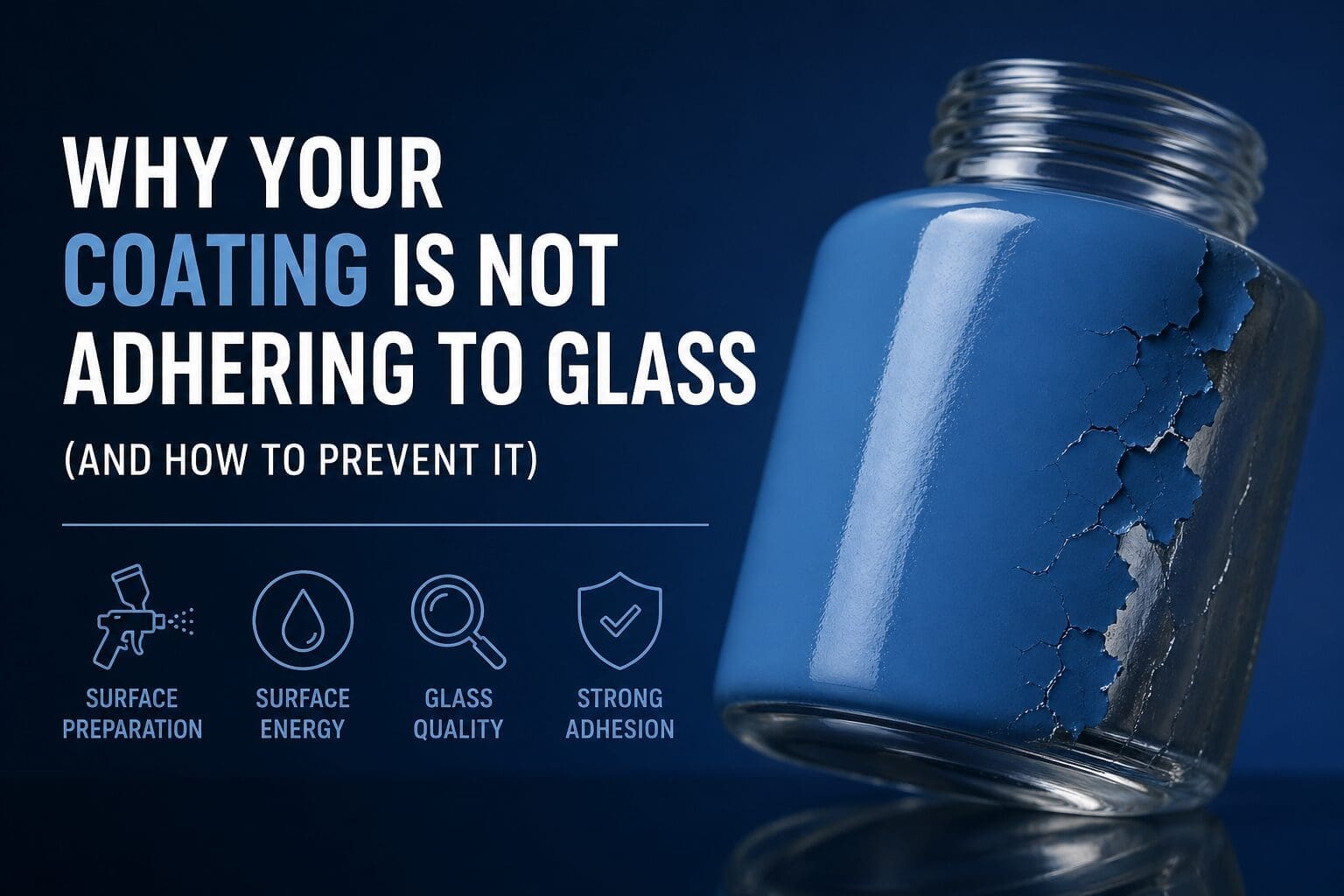
Coating adhesion is one of the most important factors in glass decoration.
When it works correctly, the finish is durable and consistent. When it does not, issues like scratching, peeling, or uneven coverage can appear.
Across the industry, adhesion challenges are not unusual. They are typically the result of how materials, surface conditions, and process interact.
Understanding those factors helps prevent issues before they show up in production.
Why Adhesion Issues Occur
Coating does not bond to glass automatically. It depends on how the surface and process are aligned.
When that alignment is off, adhesion becomes inconsistent.
1. Surface Energy of the Glass
Glass surfaces can vary in how well they allow coatings to bond.
If surface energy is too low, the coating may not fully adhere.
What influences this:
- Type of glass
- Surface condition
- Residue or contamination
How to address it:
- Use containers known to support decoration
- Ensure surfaces are clean and properly prepared
- Evaluate adhesion during early testing
2. Invisible Coatings or Treatments
Some glass containers include coatings that are not visible but affect adhesion.
These can interfere with how paint bonds to the surface.
What influences this:
- Protective coatings
- Manufacturing treatments
- Surface additives
How to address it:
- Confirm whether the container has any surface treatments
- Test coating performance on actual production containers
- Align coating method with container specifications
3. Inconsistent Surface Conditions
Even when using the same container type, variation can occur between batches.
These differences can affect how coatings perform.
What influences this:
- Batch variation
- Supplier differences
- Handling before decoration
How to address it:
- Maintain consistency in sourcing
- Test across multiple batches when possible
- Monitor results during production
4. Application and Curing Conditions
How the coating is applied and cured has a direct impact on adhesion.
Even small changes in process can affect durability.
What influences this:
- Coating thickness
- Application method
- Curing temperature and time
How to address it:
- Keep process conditions consistent
- Validate curing for the specific material and coating
- Test durability under real conditions
5. Product Use and Environment
Adhesion is also affected by how the product is used after decoration.
Heat, friction, and exposure can all influence performance.
What influences this:
- Candle heat
- Handling during filling and shipping
- Environmental exposure
How to address it:
- Test decorated containers after filling
- Consider end-use conditions early
- Align coating selection with product requirements
How to Get More Reliable Adhesion
Adhesion improves when the focus shifts from reacting to issues to controlling the process.
That includes:
- Evaluating container compatibility early
- Testing under production conditions
- Maintaining consistent application and curing
- Accounting for variation across batches
When these factors are managed together, adhesion becomes much more predictable.
A More Reliable Approach
Coating adhesion is not about a single step. It is the result of how materials, surface conditions, and process work together.
When those elements are aligned from the beginning, the result is a durable and consistent finish across production runs.
Quick Takeaways
- Adhesion depends on surface, material, and process
- Invisible coatings can affect performance
- Consistency across batches matters
- Application and curing must be controlled
- Testing should reflect real use conditions
Closing
A well-adhered coating is the result of alignment, not chance.
Understanding the factors that influence adhesion helps ensure a more reliable and consistent outcome from sampling through production.