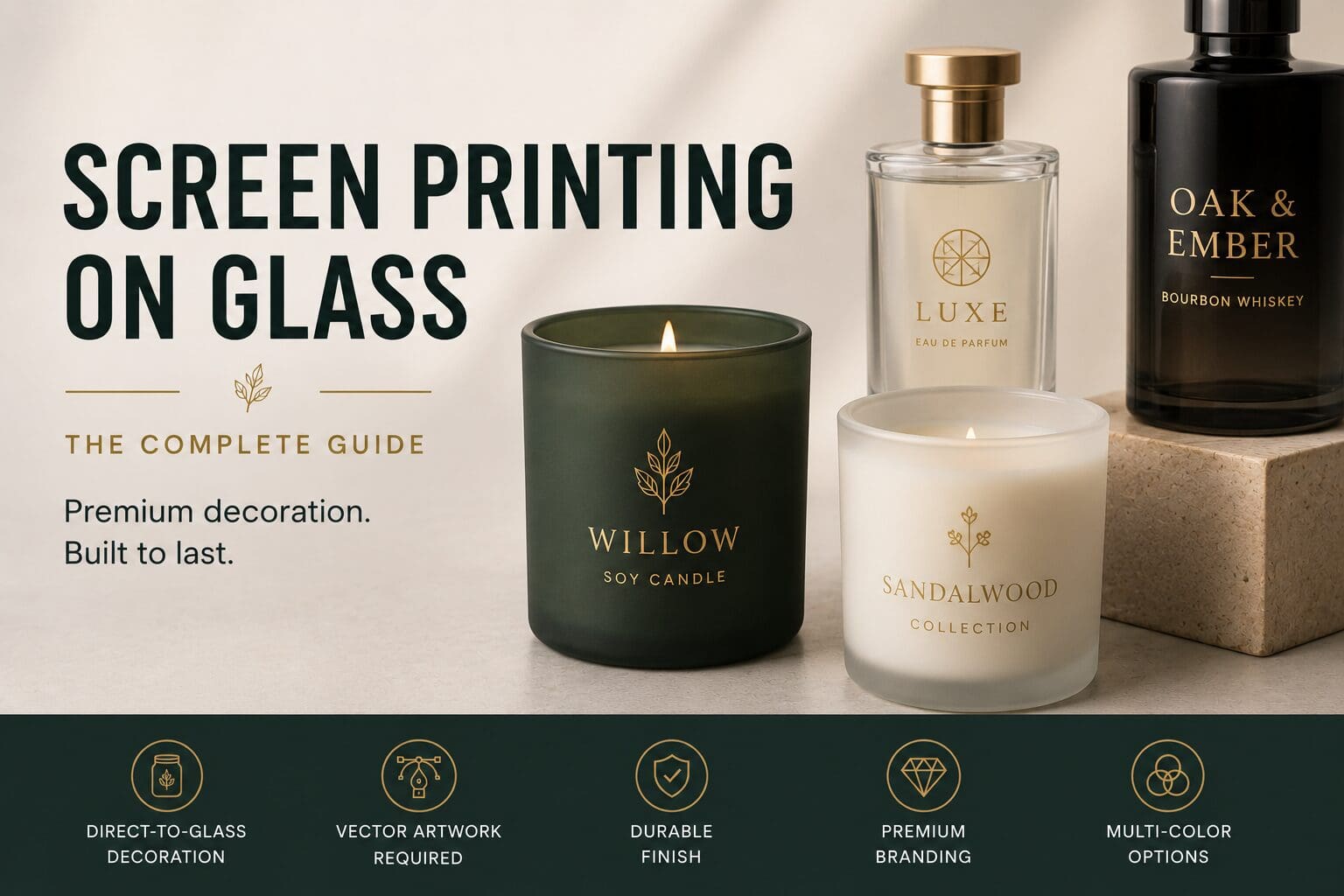
Screen printing is one of the most popular and durable decoration methods used on glass containers. From candle vessels and perfume bottles to spirits packaging and cosmetic containers, screen printing allows brands to apply logos, artwork, text, and decorative elements directly to the glass surface.
For brands looking to create a premium appearance without relying on labels, screen printing offers a clean, professional solution that becomes part of the finished package.
In this guide, we’ll explain how screen printing on glass works, when to use it, artwork requirements, and what brands should know before starting a project.
What Is Screen Printing on Glass?
Screen printing is a decoration process that transfers ink through a mesh screen directly onto the surface of a glass container.
Each screen is created from the approved artwork and used to apply the design to the vessel with precision and consistency.
The result is a permanent decoration that becomes part of the container rather than a separate label applied afterward.
Screen printing is commonly used for:
- Brand logos
- Fragrance names
- Product information
- Decorative graphics
- Measurement markings
- Premium packaging designs
Why Do Brands Choose Screen Printing?
Many brands choose screen printing because it creates a more integrated and premium appearance than traditional labels.
Benefits include:
- Professional appearance
- Excellent durability
- Consistent reproduction
- Clean presentation
- Premium shelf appeal
- Compatibility with multiple container types
Because the decoration is applied directly to the container, the finished product often feels more refined and intentional.
What Types of Glass Containers Can Be Screen Printed?
Screen printing can be used on many types of glass packaging, including:
Candle Vessels
One of the most common applications.
Used for:
- Brand logos
- Fragrance names
- Collection graphics
- Decorative artwork
Perfume Bottles
Used to create premium branding directly on the bottle surface.
Spirits Bottles
Often used for:
- Logos
- Product information
- Decorative accents
Cosmetic and Beauty Packaging
Used for:
- Product identification
- Branding
- Design elements
Container suitability depends on the specific vessel design, surface characteristics, and decoration requirements.
Is Screen Printing Durable?
Yes.
One of the primary advantages of screen printing is durability.
Unlike labels that can peel, wrinkle, or lift over time, screen printing is applied directly to the container surface.
This helps create a decoration that maintains its appearance throughout the product’s lifecycle when used as intended.
Durability requirements may vary depending on the application, environment, and handling conditions.
How Many Colors Can Be Screen Printed?
Screen printing can accommodate multiple print colors depending on the artwork and project requirements.
Each print color typically requires its own screen and production setup.
The number of colors used often depends on:
- Artwork complexity
- Budget
- Container size
- Design goals
Many brands achieve strong visual impact using a single print color combined with vessel decoration such as spray coating or frosting.
What Artwork Files Are Required?
Vector artwork is typically required for screen printing.
Common vector file formats include:
- AI
- EPS
- Vector PDF
Vector artwork allows designs to be scaled without losing quality and helps ensure accurate screen creation.
Raster image formats such as JPG and PNG are generally not suitable for production screen creation unless converted to vector artwork.
What Is a Screen Charge?
Custom screen printing projects typically require a $50 screen charge per design and screen location.
The screen charge covers the creation of the production screen used during the printing process.
Additional screens may be required for:
- Multiple print colors
- Multiple print locations
- Artwork revisions
- Different vessel sizes
Once created, screens may often be reused for future orders using the same artwork and specifications.
Can Screen Printing Be Combined with Other Decoration Methods?
Yes.
Many premium packaging projects combine screen printing with other decoration methods.
Common combinations include:
Screen Printing + Spray Coating
One of the most popular options.
The vessel receives a custom color coating before the artwork is screen printed directly onto the decorated surface.
Screen Printing + Frosted Finishes
Creates a soft, elevated appearance often used for luxury candle and fragrance collections.
Combining decoration methods allows brands to create more distinctive packaging while maintaining a cohesive look.
Screen Printing vs Labels
Both methods have their place, but they serve different purposes.
Screen Printing
Benefits:
- Premium appearance
- Direct-to-container decoration
- Strong durability
- Professional presentation
Labels
Benefits:
- Lower setup costs
- Faster artwork changes
- Suitable for short runs
Many brands choose screen printing when they want a more permanent, elevated packaging solution.
Common Screen Printing Questions
What is screen printing on glass?
Screen printing is a process that applies ink directly to the glass surface using a custom mesh screen created from approved artwork.
Is screen printing permanent?
Screen printing is designed to be a durable decoration method that becomes part of the finished container.
What artwork format is required?
Vector artwork such as AI, EPS, or vector PDF files is typically required.
What is a screen charge?
A screen charge is the cost associated with creating the production screen used during printing. JAFE’s standard screen charge is $50 per design and screen location.
Can screen printing be combined with spray coating?
Yes. Many projects combine custom spray coating with screen printing to create a premium finished appearance.
Creating Premium Glass Packaging
Screen printing remains one of the most effective ways to create professional, branded packaging that stands out on shelves and online.
By applying artwork directly to the container surface, brands can create a more refined appearance while maintaining durability and consistency throughout production.
Whether you’re decorating candle vessels, perfume bottles, spirits packaging, or beauty containers, screen printing offers a proven solution for creating packaging that reflects the quality of your brand.