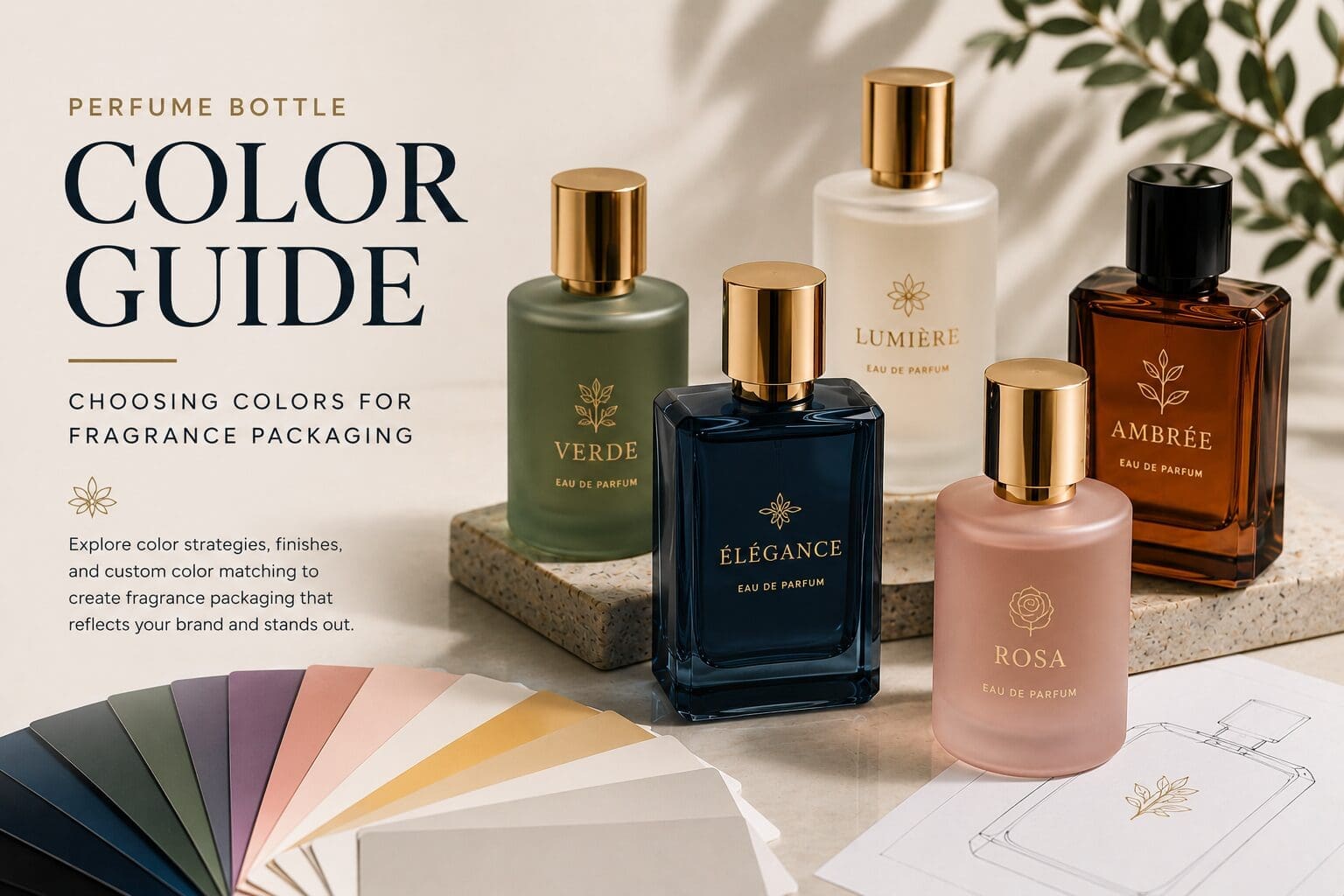
Color is one of the most powerful tools available in fragrance packaging.
Before customers experience a fragrance, they see the bottle. Color influences perception, communicates brand identity, and helps shape expectations about the product inside.
Whether you’re launching a signature fragrance or developing an entire collection, thoughtful color selection can help create stronger shelf presence, better brand recognition, and a more memorable customer experience.
In this guide, we’ll explore how fragrance brands can approach color strategically when developing custom perfume packaging.
Why Color Matters in Fragrance Packaging
Consumers often form impressions within seconds.
Color can communicate:
- Luxury
- Freshness
- Warmth
- Sophistication
- Energy
- Elegance
- Minimalism
The right color helps create alignment between the packaging and the fragrance experience.
Start With Your Brand Identity
Before selecting bottle colors, consider your overall brand positioning.
Ask yourself:
- Is the brand modern or traditional?
- Is the fragrance positioned as luxury or accessible?
- Does the collection emphasize minimalism or bold expression?
- What emotions should customers associate with the product?
- How should the packaging differentiate from competitors?
Color choices should support the broader brand story.
Color Should Support Your Brand Story
There is no universally “correct” color for fragrance packaging.
The best color is the one that supports your brand identity, product positioning, and customer expectations.
Some brands prefer minimal, neutral palettes. Others use bold colors to create shelf impact. Many collections combine multiple colors while maintaining a cohesive visual identity.
Rather than selecting colors based on industry trends, fragrance brands should focus on how color supports the overall customer experience.
Building a Color Strategy for a Collection
When developing a fragrance collection, consider:
- Brand identity
- Target audience
- Retail environment
- Collection structure
- Product differentiation
- Long-term scalability
The goal is to create a color system that feels intentional and recognizable across the entire collection.
Many fragrance brands use consistent bottle shapes and decoration methods while allowing color to differentiate individual fragrances.
Transparent vs Opaque Colors
When using spray coating, brands often choose between transparent and opaque finishes.
Transparent Colors
Transparent coatings allow light to pass through the bottle.
Benefits include:
- Visible product
- Added depth and dimension
- Elegant appearance
- Enhanced interaction with light
Transparent finishes are often used when brands want to maintain the beauty of the glass while adding color.
Opaque Colors
Opaque coatings provide full color coverage.
Benefits include:
- Strong visual impact
- Complete color control
- Bold shelf presence
- Distinctive appearance
Opaque finishes are often selected when color is a primary part of the brand identity.
Matte vs Gloss Finishes
Finish selection is often just as important as color.
Matte Finishes
Matte finishes create:
- Soft appearance
- Modern styling
- Reduced reflections
- Sophisticated visual texture
Gloss Finishes
Gloss finishes create:
- Increased color vibrancy
- Reflective surfaces
- Strong visual impact
- Enhanced color depth
Many fragrance brands compare both finishes during sampling before making a final decision.
Frosted Finishes
Frosted finishes remain a popular option for fragrance packaging.
Benefits include:
- Soft diffusion of light
- Premium appearance
- Elegant texture
- Contemporary styling
Frosted effects can be combined with custom colors and decoration methods to create unique packaging solutions.
Custom Color Matching for Fragrance Packaging
One of the advantages of spray coating is the ability to develop custom colors that align with your brand.
Many fragrance brands use:
- Pantone references
- Brand standards
- Physical color samples
- Existing packaging components
Custom color matching allows packaging to become a direct extension of the brand rather than relying on standard color options.
This flexibility helps brands maintain consistency across products, marketing materials, and future launches.
Testing Colors Through Sampling
Colors often appear differently on:
- Computer screens
- Digital renderings
- Printed proofs
- Physical glass
Sampling provides an opportunity to evaluate color under real-world conditions before production begins.
Reviewing physical samples can help brands make more confident decisions and ensure the final package aligns with their vision.
Questions to Ask Before Finalizing a Color
Before approving a bottle color, consider:
- Does the color support the fragrance story?
- Does it align with the brand identity?
- Will it stand out in its intended retail environment?
- Does it work across future collection expansions?
- Does it complement the selected decoration method?
- Does it create the customer experience you want?
Answering these questions can help create a stronger final package.
Common Perfume Bottle Color Questions
Can perfume bottles be custom colored?
Yes. Spray coating can be used to create a wide variety of custom colors and finishes.
Can colors be matched to brand standards?
In many cases, yes. Custom color matching can often be achieved using approved references or physical samples.
Are matte finishes popular for fragrance packaging?
Yes. Matte finishes remain a popular choice for premium fragrance brands because they create a soft, sophisticated appearance.
Can transparent and opaque colors both be used?
Yes. Both options offer unique visual characteristics and can be selected based on brand goals and packaging objectives.
Should every fragrance use a different color?
Not necessarily. Some brands use color to differentiate products, while others maintain a consistent color palette across an entire collection.
Creating Packaging That Supports the Fragrance Experience
Color is more than a design choice. It is a communication tool that helps shape customer expectations and strengthen brand identity.
By carefully considering color strategy, finish selection, collection planning, and brand positioning, fragrance brands can create packaging that supports their vision and stands out in a competitive marketplace.
Whether you’re developing a single fragrance or an entire collection, thoughtful color development can help transform packaging into a meaningful part of the customer experience.