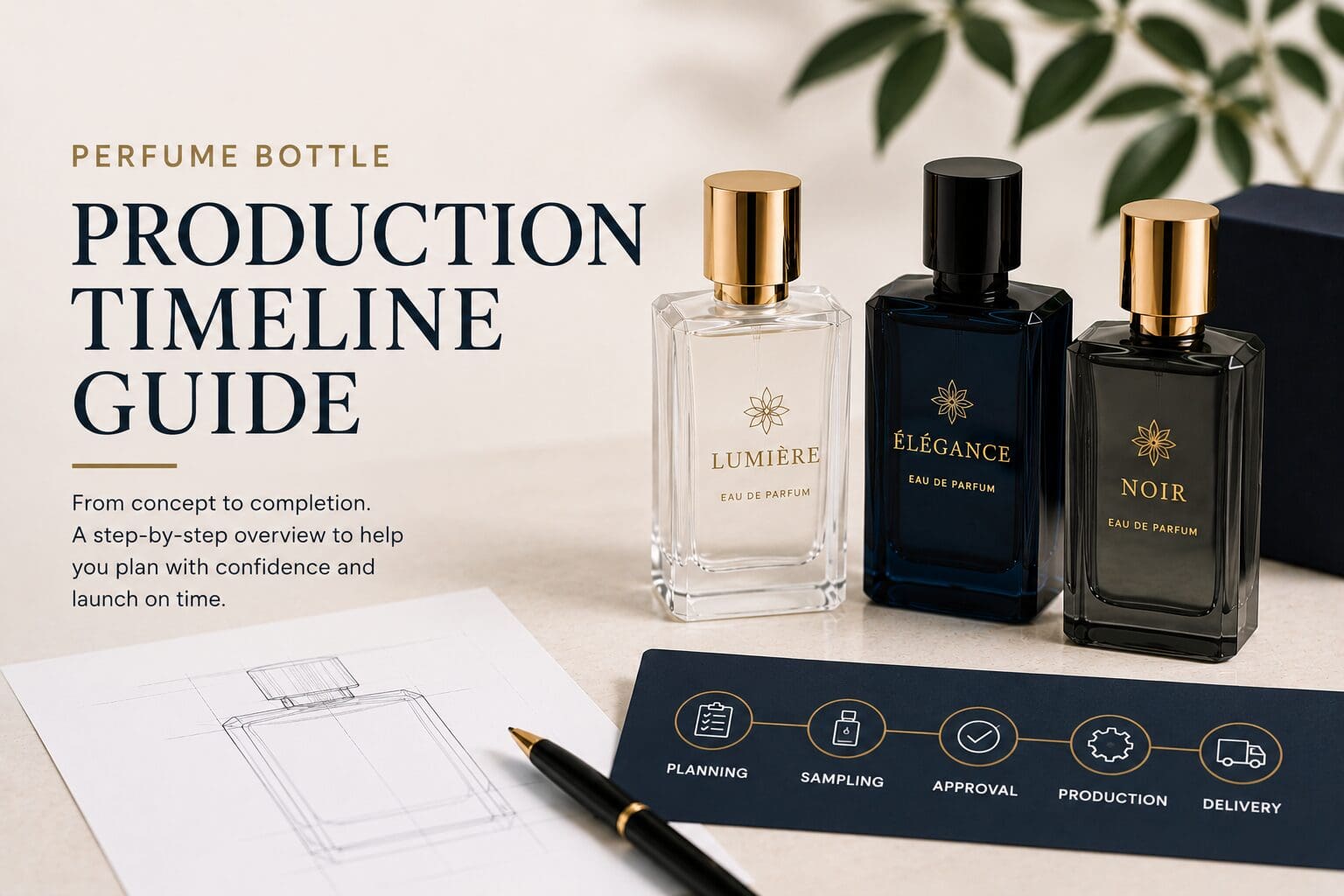
One of the most common questions fragrance brands ask during packaging development is:
“How long will my project take?”
The answer depends on several factors, including artwork readiness, sampling requirements, decoration complexity, approval timelines, and production scheduling.
Understanding the stages involved in fragrance packaging development can help brands plan launches more effectively and avoid unnecessary delays.
In this guide, we’ll walk through the typical steps involved in developing custom perfume bottle packaging and explain what can influence project timelines.
Why Production Planning Matters
Successful fragrance launches rarely happen by accident.
Packaging development involves multiple stages that often build upon one another. Delays during one phase can affect everything that follows.
Planning ahead helps brands:
- Reduce launch pressure
- Improve inventory planning
- Coordinate marketing efforts
- Manage approvals more efficiently
- Create more realistic launch timelines
Stage 1: Project Planning
Every project starts with defining the packaging requirements.
This often includes:
- Bottle selection
- Decoration goals
- Color requirements
- Quantity estimates
- Launch objectives
The more information available during the planning stage, the easier it becomes to evaluate the project and move forward efficiently.
Helpful Information to Gather
- Bottle specifications
- Estimated quantities
- Decoration preferences
- Timeline goals
- Artwork availability
Stage 2: Artwork Preparation
Artwork is one of the most important production requirements.
For screen printing projects, vector artwork is typically preferred.
Common file formats include:
- AI
- EPS
- Vector PDF
Submitting production-ready artwork early can help reduce revisions and keep projects moving.
Common Causes of Delay
- Missing artwork files
- Unoutlined fonts
- Low-resolution images
- Artwork revisions
Stage 3: Sampling
Many fragrance brands choose to review samples before moving into production.
Sampling allows teams to evaluate:
- Color development
- Decoration quality
- Artwork placement
- Component compatibility
- Overall presentation
Physical samples often help brands make more confident decisions before committing to production quantities.
Stage 4: Sample Review and Approval
Once samples are received, internal review begins.
This stage may include:
- Brand approvals
- Team feedback
- Retail review
- Marketing review
Approval speed often depends on the number of stakeholders involved.
Questions to Review
- Is the color correct?
- Is artwork placement acceptable?
- Does the packaging support the brand vision?
- Are any revisions needed?
Stage 5: Production Scheduling
After approvals are complete, projects move into production planning.
Production scheduling may consider:
- Project requirements
- Production capacity
- Decoration processes
- Material availability
Scheduling helps coordinate resources and establish production priorities.
Stage 6: Production
Once production begins, decoration and finishing processes are completed according to approved specifications.
Depending on the project, this may include:
- Screen printing
- Spray coating
- Custom color applications
- Multi-step decoration processes
The complexity of the project can influence production requirements.
Stage 7: Shipping and Delivery
After production is completed, products are prepared for shipment.
Shipping timelines may vary based on:
- Destination
- Shipment size
- Transportation method
- Scheduling requirements
Planning for freight early helps support a smoother launch process.
Factors That Influence Production Timelines
Every project is different.
Common timeline variables include:
Artwork Readiness
Production-ready artwork often helps accelerate development.
Sampling Requirements
Projects that require multiple sample rounds may require additional planning time.
Decoration Complexity
Projects involving multiple decoration methods may require additional coordination.
Number of SKUs
Collections with multiple bottle colors, fragrances, or artwork variations often involve more planning than single-SKU projects.
Approval Speed
Internal reviews can significantly influence project timelines.
How to Keep Your Project Moving
Several steps can help improve efficiency.
Prepare Artwork Early
Production-ready artwork reduces revision cycles.
Plan Quantities in Advance
Accurate forecasting supports smoother project planning.
Consolidate Feedback
Gathering stakeholder feedback efficiently can help accelerate approvals.
Build Buffer Time
Allowing extra time for review and adjustments helps reduce launch stress.
Common Production Timeline Questions
How long does custom fragrance packaging take?
Project timelines vary depending on artwork, sampling requirements, approvals, production complexity, and scheduling considerations.
Does sampling add time to a project?
Yes. Sampling is an important step that should be included when planning launch timelines.
Can artwork delays affect production?
Yes. Production-ready artwork often helps projects move more efficiently through development.
Do multiple SKUs affect timelines?
They can. Additional colors, artwork variations, and product configurations may require additional planning.
When should I begin planning my launch?
As early as possible. Building realistic timelines into the planning process creates more flexibility and reduces last-minute pressure.
Building a Successful Launch Timeline
The most successful fragrance packaging projects begin with thoughtful planning.
By understanding the stages involved in artwork preparation, sampling, approvals, production, and shipping, fragrance brands can make more informed decisions and create realistic launch schedules.
Whether you’re preparing for your first fragrance launch or expanding an established collection, proactive planning helps create a smoother path from concept to production.