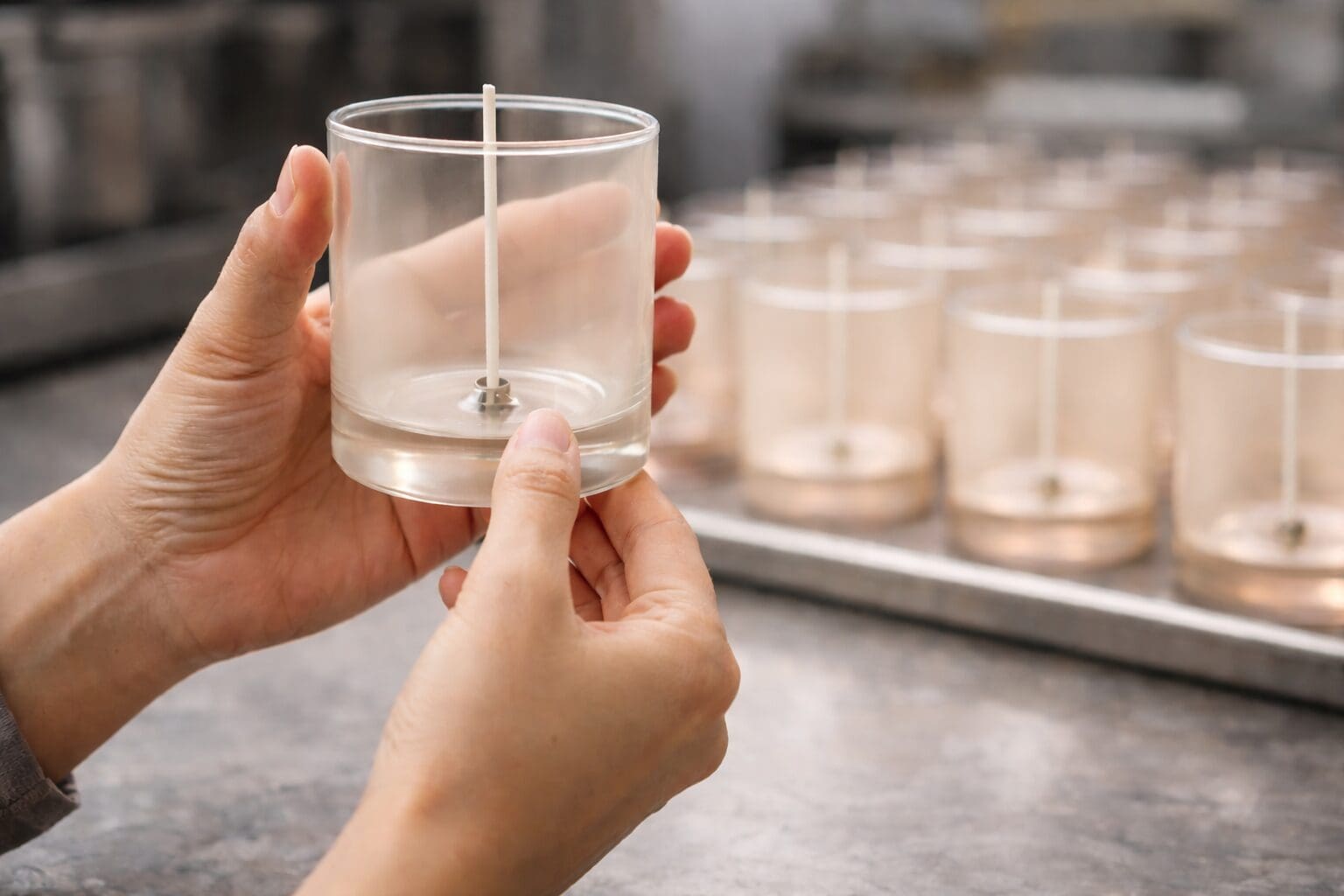
Wick installation is often treated as a minor step in candle production. In reality, it is one of the easiest places for misalignment between brands and decorating partners to create delays, rework, or unexpected limitations.
Before committing to wick installation as part of a decorating workflow, it helps to ask a few direct questions. These questions are not about catching a partner off guard. They are about understanding boundaries, responsibilities, and fit.
Why these questions matter
Wick installation sits at the intersection of decoration, hardware, and filling. Decisions made at this stage affect how flexible a project can be later.
Clear answers upfront help brands:
- Avoid assumptions about compatibility
- Understand where responsibility begins and ends
- Prevent last-minute changes that slow production
- Choose partners whose processes match their needs
1. What sustainers do you support?
This is one of the most important questions to ask early.
Not all sustainers work with all installation equipment or processes. Some partners support a wide range. Others work within a narrower, controlled set.
Understanding which sustainers are supported tells you:
- How much flexibility you will have in wick selection
- Whether your current wick hardware is compatible
- How standardized the partner’s process is
A clear answer here is a good sign. Vague answers often lead to downstream issues.
2. Who owns the wick inventory?
Wick ownership affects more than purchasing. It affects consistency, quality control, and accountability.
When asking this question, listen for clarity around:
- Who sources the wicks
- How wicks are supplied and stored
- What happens to unused material
Partners who clearly define wick ownership tend to have more controlled and repeatable installation processes.
3. How do you confirm wick and hardware compatibility?
Compatibility is not theoretical. It is physical.
A good decorating partner should be able to explain:
- How wick fit is evaluated
- When compatibility is confirmed in the process
- What criteria determine whether a project can move forward
If compatibility checks happen late, flexibility decreases. If they happen early, expectations stay aligned.
4. What happens if something does not fit?
This question reveals how a partner handles boundaries.
Some partners allow last-minute workarounds. Others stop the process until specifications are aligned.
Neither approach is universally right. What matters is knowing which approach you are signing up for.
Clear answers here help you plan timelines and avoid surprises.
5. Do you provide wick testing or burn validation?
Wick installation and wick testing are not the same thing.
Some brands assume installation includes performance evaluation. In most production environments, it does not.
Asking this question clarifies:
- Who owns burn performance decisions
- Where testing responsibility lives
- Whether installation is purely a preparation step
Knowing this upfront prevents incorrect expectations later.
How JAFE approaches these questions
At JAFE, we believe wick installation works best when expectations are clearly defined.
We support a controlled set of hardware, confirm compatibility before production begins, and clearly separate installation from testing and performance decisions. Our goal is to support customer-filled candle projects by preparing decorated glass for filling without introducing hidden variables.
That approach is not right for every project. It is designed for brands that value clarity, repeatability, and well-defined processes.
Choosing the right partner
The right decorating partner is not the one who says yes to everything. It is the one whose process aligns with how you build candles.
Asking these questions early helps you make that determination before timelines and tooling are locked in. That clarity is often what keeps projects moving smoothly from decoration through filling.