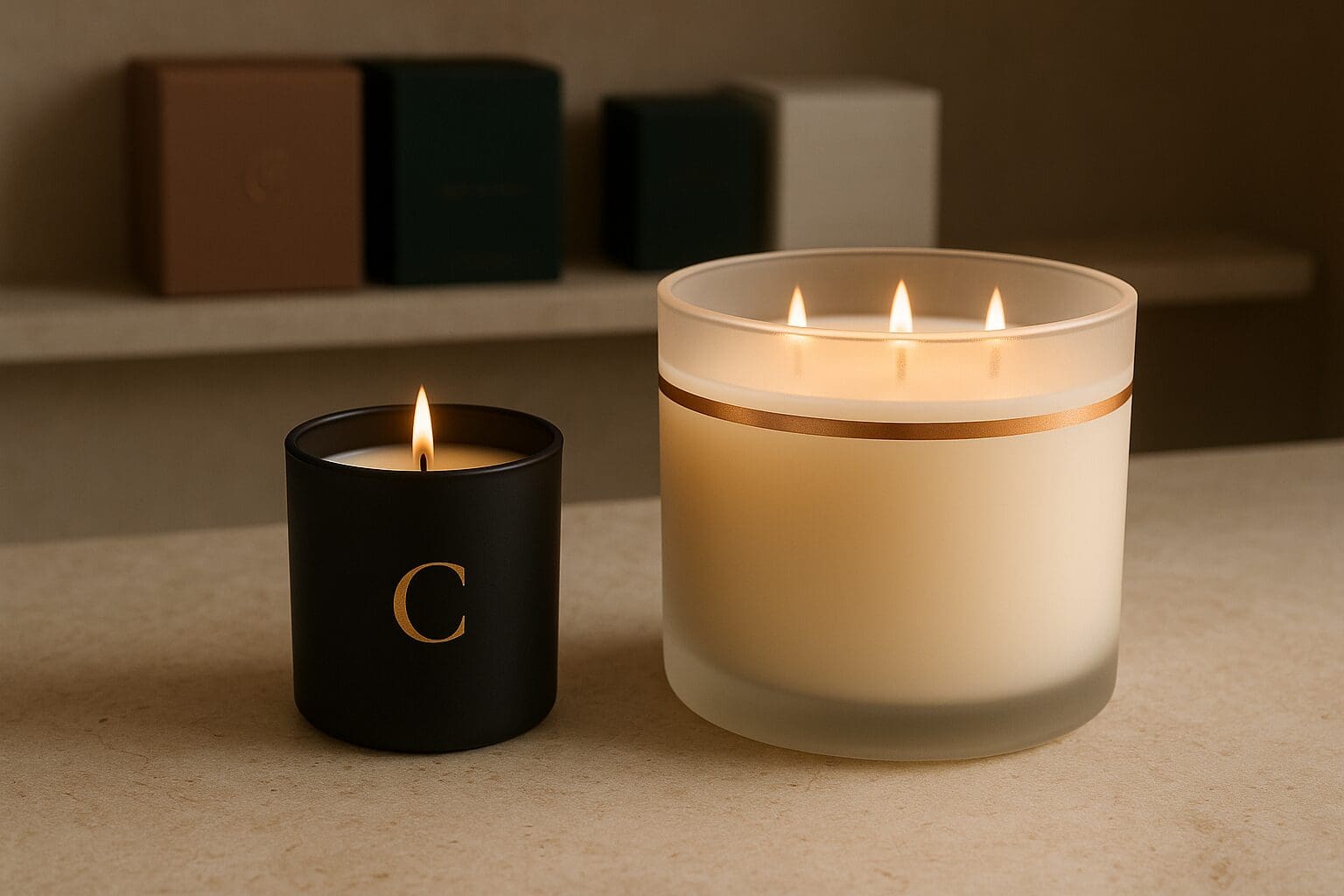
In the candle market, size is more than a matter of volume; it’s a strategic design choice that can influence how consumers perceive value, quality, and even scent experience. From petite votives to oversized statement jars, the size of your candle container shapes brand identity and impacts buying behavior.
How Size Shapes Consumer Perception
Small Candle Jars
Smaller candle jars, like 4–6 oz vessels, often signal approachability and affordability. They’re perfect for gift sets, seasonal launches, or as entry points for new customers discovering your brand. In luxury candle jars, smaller sizes can create a sense of exclusivity, especially when paired with premium finishes like matte coatings or metallic screen printing.
From a technical perspective, smaller jars heat up faster, which can intensify fragrance throw in the short term but may shorten total burn time. Wick sizing and wax formulation need to be carefully calibrated to avoid overheating and tunneling. When producing decorated glassware for smaller jars, precision is key. Even a slight variation in screen printing registration is more noticeable on a reduced surface area.
Large Candle Jars
Larger jars, such as 12–20 oz vessels, communicate abundance and long-lasting value. They appeal to consumers looking for a centerpiece candle that delivers both scent and visual impact. Larger jars allow more design space for decorative glassware techniques, from multi-color glass screen printing to specialty coatings that enhance premium positioning.
Technically, larger jars require careful wick placement, sometimes multiple wicks, to ensure even burning across the full diameter. The greater wax volume extends burn time and can improve scent diffusion, but it also means more material weight, which affects packaging durability and shipping considerations. When applying decorative finishes, larger jars may require adjusted curing times or specialized handling to ensure coatings remain consistent over the entire surface.
Best Practices for Selecting Candle Jar Size
- Match Size to Purpose
- Small jars for discovery sets, gifts, or seasonal promotions.
- Large jars for signature scents or high-impact brand statements.
- Consider Consumer Lifestyle
- Urban consumers with limited space may prefer smaller jars.
- Larger jars resonate in markets where home décor and extended burn times are priorities.
- Balance Price Point and Perceived Value
- Ensure packaging quality. Whether matte-finished candle containers or decorated perfume bottle–inspired designs, make sure it supports the retail price.
- Design for Consistency
- Maintain brand recognition by carrying decorative elements like color palette, finish, and logo placement across all sizes.
- Account for Production & Logistics
- Smaller jars require precise decoration placement due to reduced surface area.
- Larger jars may need reinforced packaging for shipping, especially with heavier luxury glass.
How Size Impacts Sales Strategy
Offering multiple sizes can expand your customer base. Smaller jars can act as trial products, encouraging consumers to return for larger sizes once they’ve found a favorite scent. Conversely, large jars can drive higher single-purchase revenue and position your brand in the premium space.
In the fragrance-inspired candle market, creating a visual link between jar sizes. For example, matching a small matte black jar to a large metallic gold jar in the same scent family can encourage customers to buy both as part of a layered home fragrance experience.
The Takeaway
Candle jar size is more than a packaging decision. It’s a marketing tool with technical considerations. By understanding how consumers perceive size and strategically aligning jar dimensions with your brand’s goals, you can influence purchasing decisions, improve performance, and strengthen your market position.
At JAFE Decorating, we help brands design candle containers, from compact jars to oversized statement pieces, that balance visual appeal, regulatory compliance, and production efficiency, all under one roof.