Glitter Glass Coating
Captured Sparkle. Brilliant Dimension.
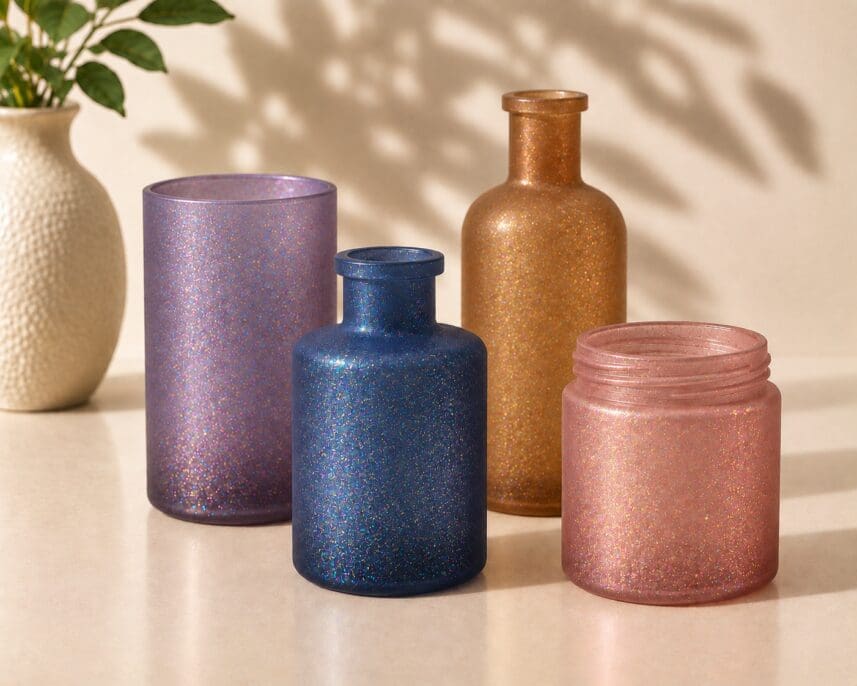
A Guide to Glitter Glass Finishes for Decorative Packaging
Glitter introduces light-catching particles into decorated glass, creating a surface that sparkles and shifts as the container moves through different lighting conditions. Rather than relying on a smooth reflective surface, the finish creates thousands of individual points of light across the glass.
From subtle shimmer to more expressive sparkle, Glitter combines color and reflective detail to give packaging a distinctive visual energy.
Combined with custom color, the effect can range from subtle and refined to bold and highly expressive, giving brands another way to create glass that feels visually substantial and distinctive.
What Is Glitter?
Glitter is a specialty decorative glass technique that incorporates reflective particles into the finished surface of a container.
As light reaches those particles from different directions, individual points across the surface brighten, disappear, and reappear. This creates a dynamic appearance that changes as either the container, viewer, or light source moves.
The overall effect can vary depending on the selected color, particle appearance, coverage, and underlying coating, allowing Glitter to range from relatively refined to intentionally bold.
What Makes Glitter Unique?
Glitter creates reflection at the particle level.
Unlike Colored Chrome, where the surface produces broad mirror-like reflections, Glitter breaks reflected light into individual points across the container.
Those points continuously change in intensity as the viewing angle and lighting change, creating movement even when the underlying color remains consistent.
The result is a finish that feels dimensional, expressive, and highly responsive to light.
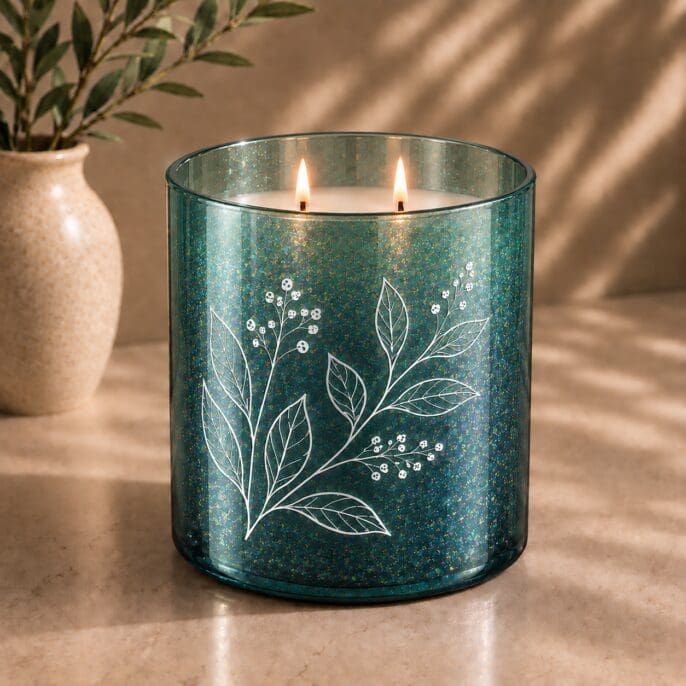
Why Designers Choose Glitter
- Distinctive light-catching appearance
- Visible sparkle and movement
- Custom color possibilities
- Strong interaction with light
- High visual depth
- Adjustable visual intensity
- Strong shelf differentiation
- Compatibility with additional decoration
- Excellent potential for seasonal and statement packaging
Reflectivity
High ★★★★☆
Light Transmission
Variable ★★★☆☆
Visual Depth
High ★★★★☆
Surface Texture
Textured ★★★★☆
Fingerprint Visibility
Low ★★★★☆
Print Compatibility
Good ★★★★☆
Color Flexibility
Excellent ★★★★★
How Glitter Interacts With Light
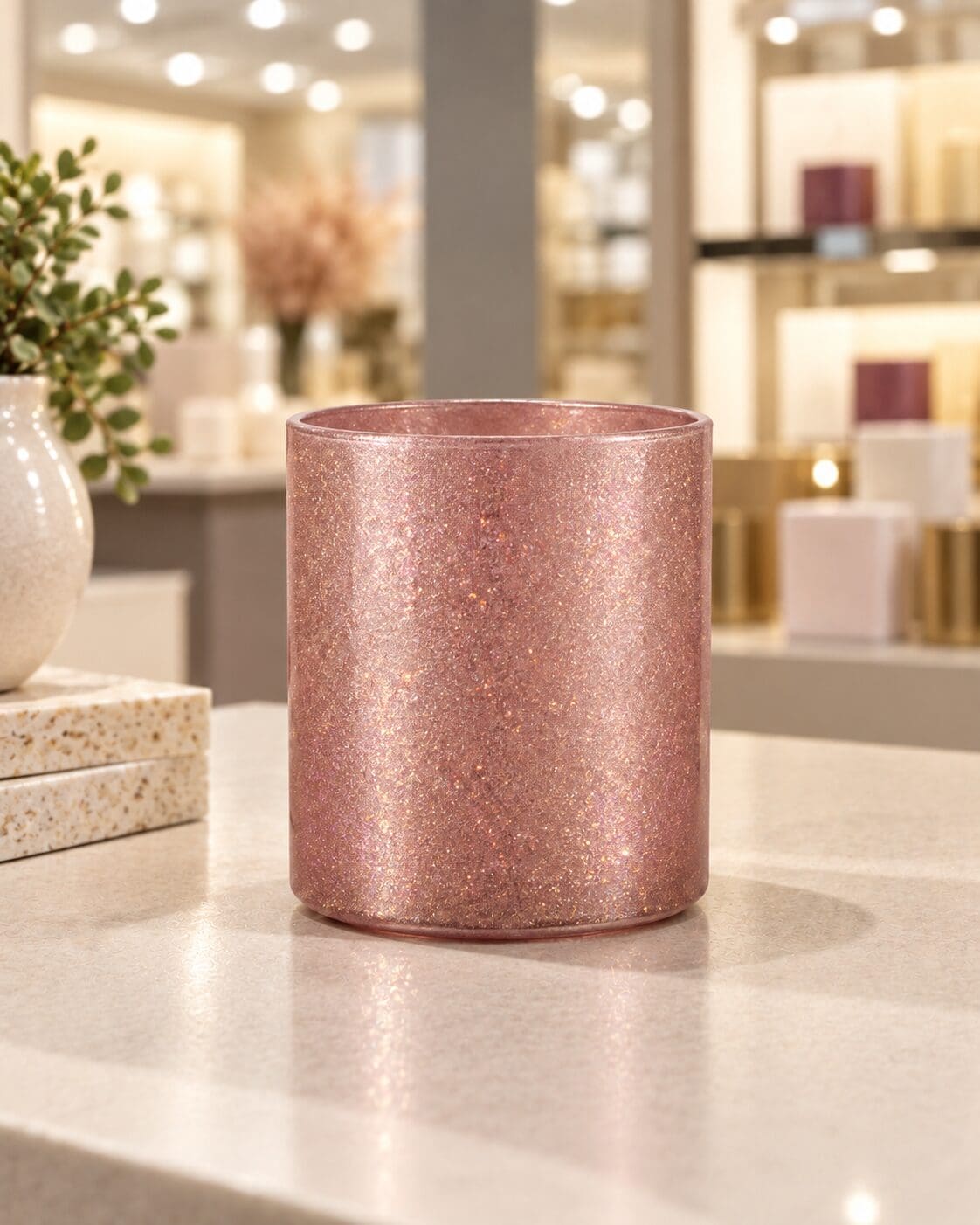
RETAIL LIGHTING
Bright overhead lighting activates individual reflective particles across the container, making the sparkle immediately noticeable.
As a consumer moves past the product, different particles catch the light, creating visual movement that can help the package attract attention on shelf.
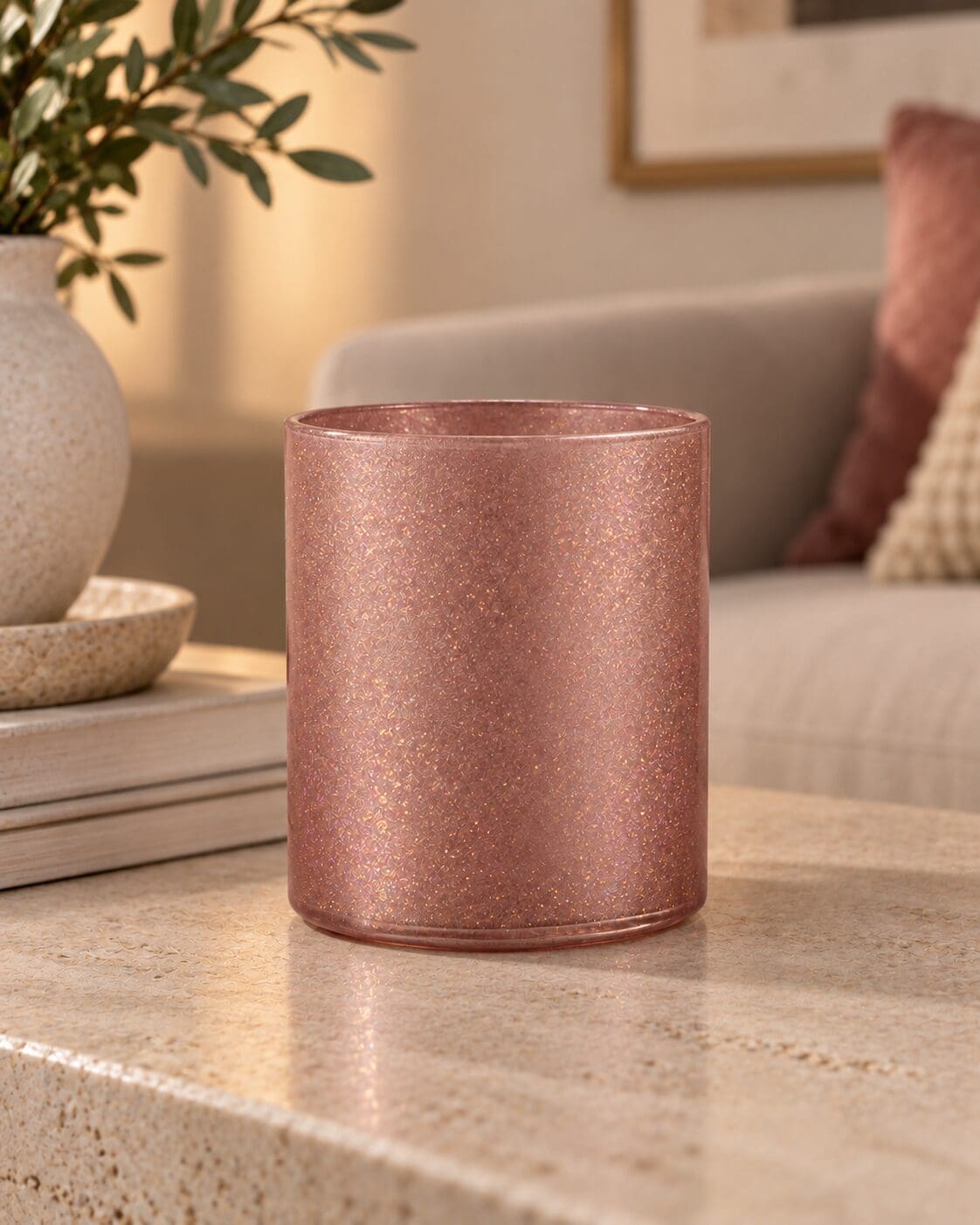
HOME LIGHTING
Under softer ambient lighting, Glitter becomes more subdued.
Rather than producing continuous sparkle, individual particles appear intermittently as they catch available light. The underlying color becomes more prominent while the glitter provides smaller moments of reflection.
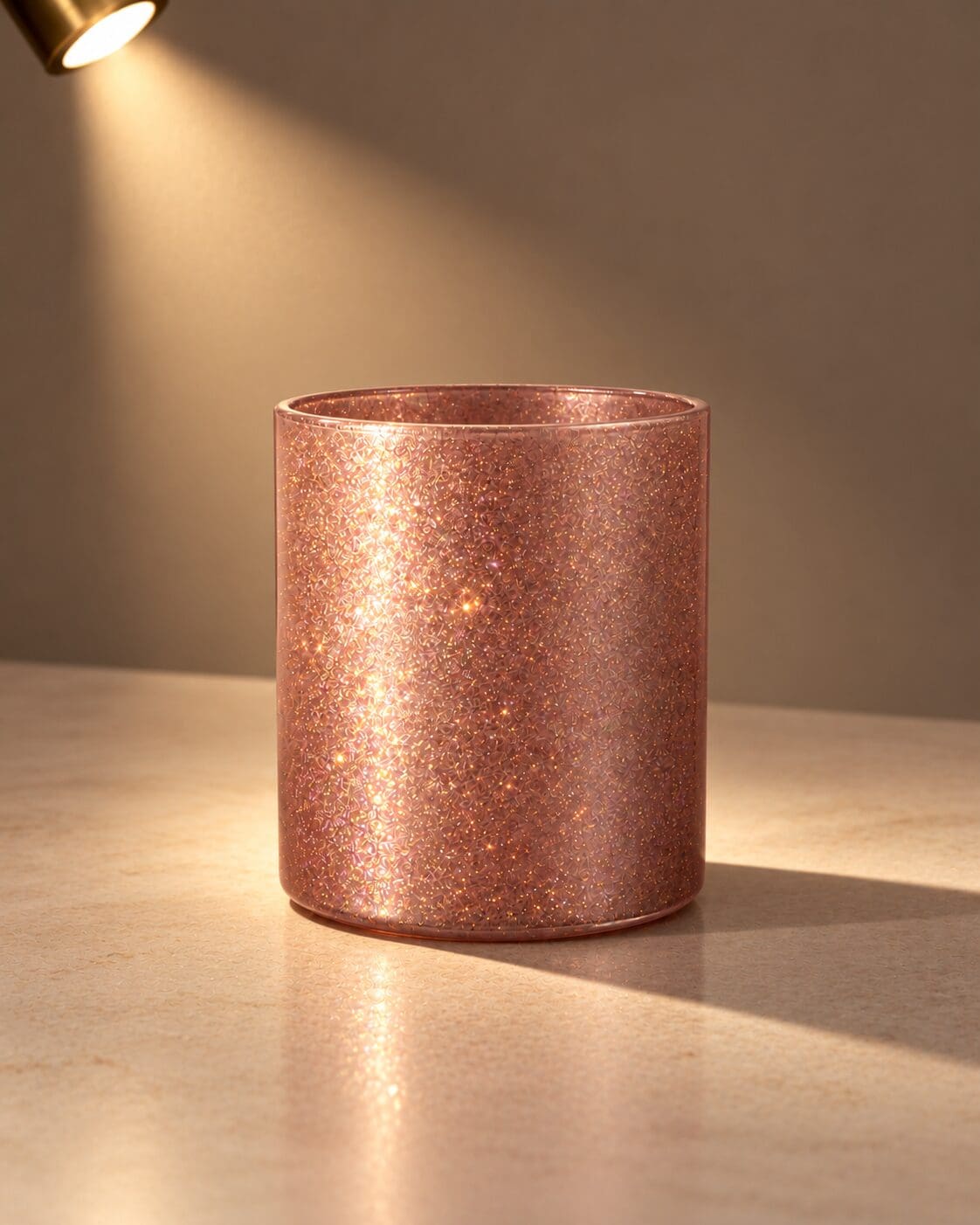
DIRECTIONAL SPOTLIGHT
Focused lighting creates the most concentrated sparkle.
Particles positioned toward the light source produce bright individual highlights while surrounding areas remain more subdued, creating strong contrast and emphasizing the dimensional character of the finish.
Color Flexibility
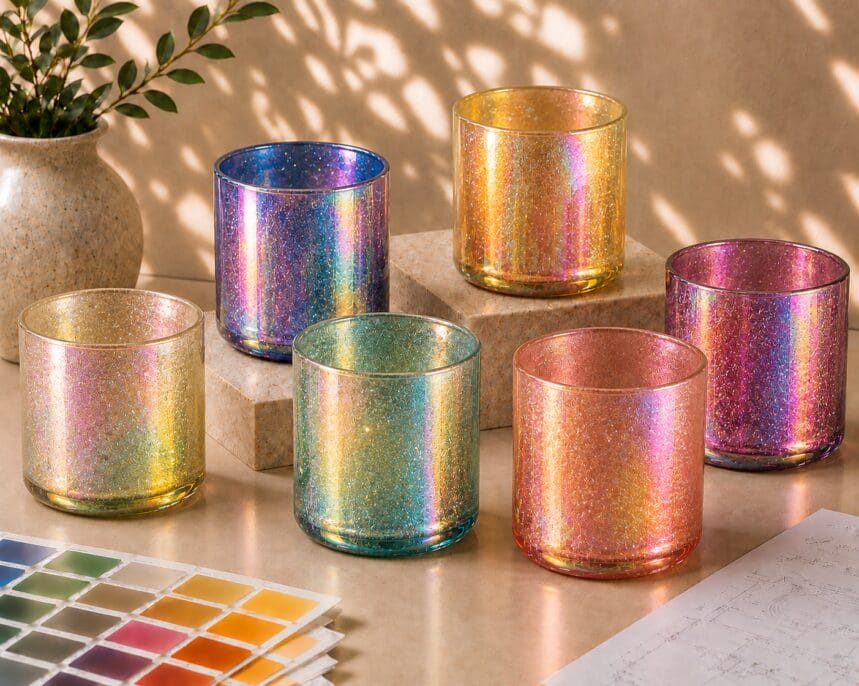
Glitter isn’t limited to silver, gold, or traditional metallic palettes.
Custom color provides the foundation of the finish, while the glitter effect introduces an additional layer of visual interest. This allows the technique to move from sophisticated and understated to bright and expressive.
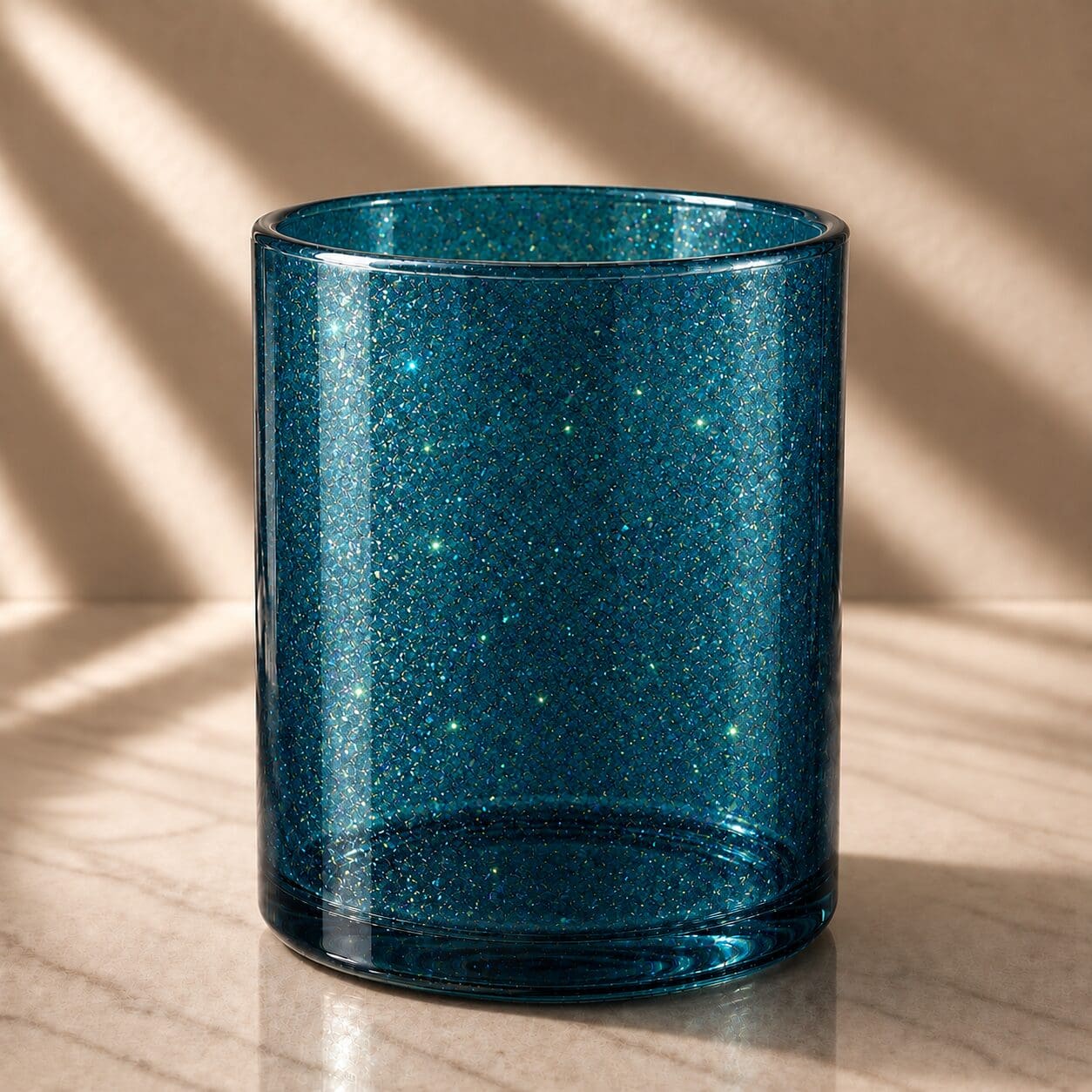
Peacock Blue
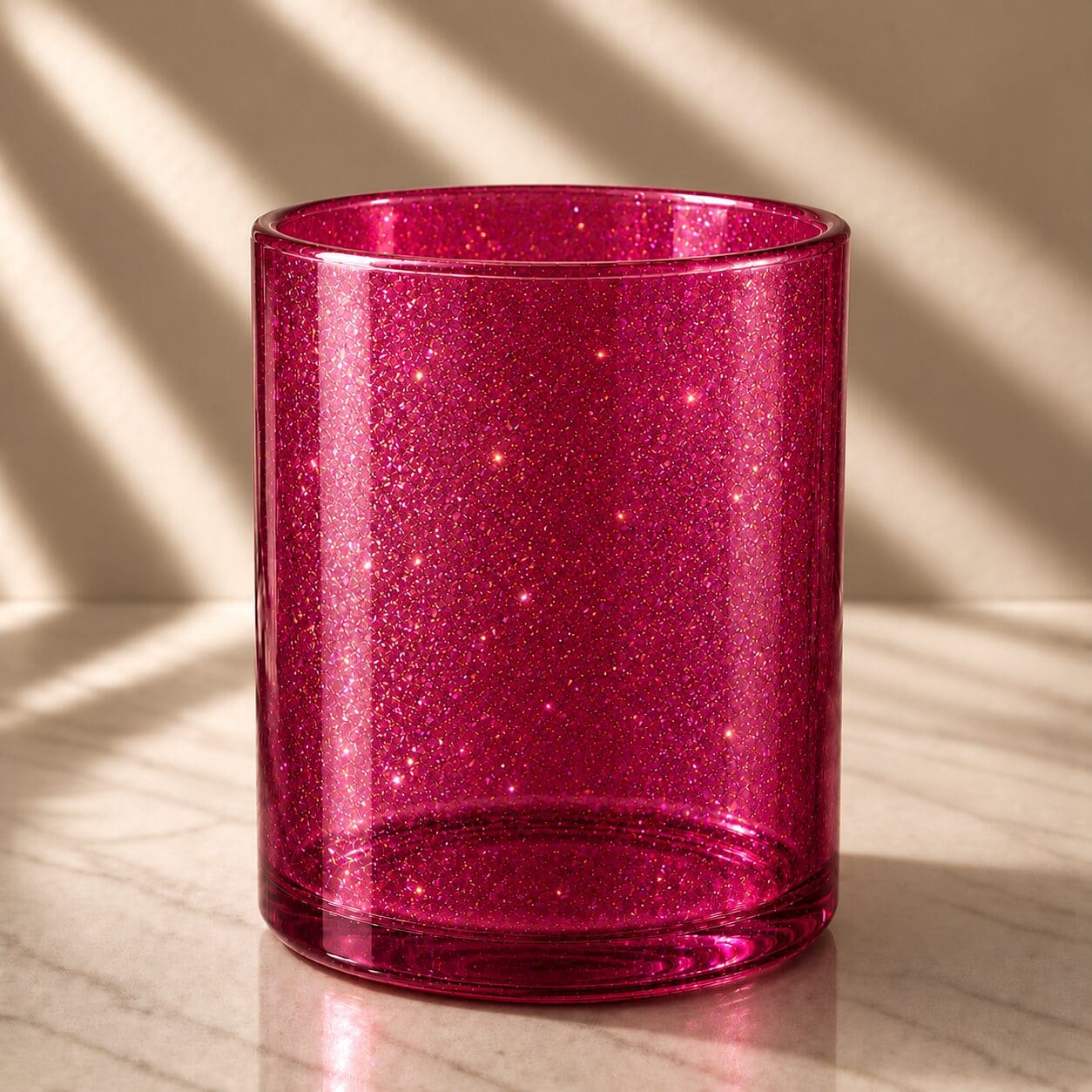
Dragon Fruit
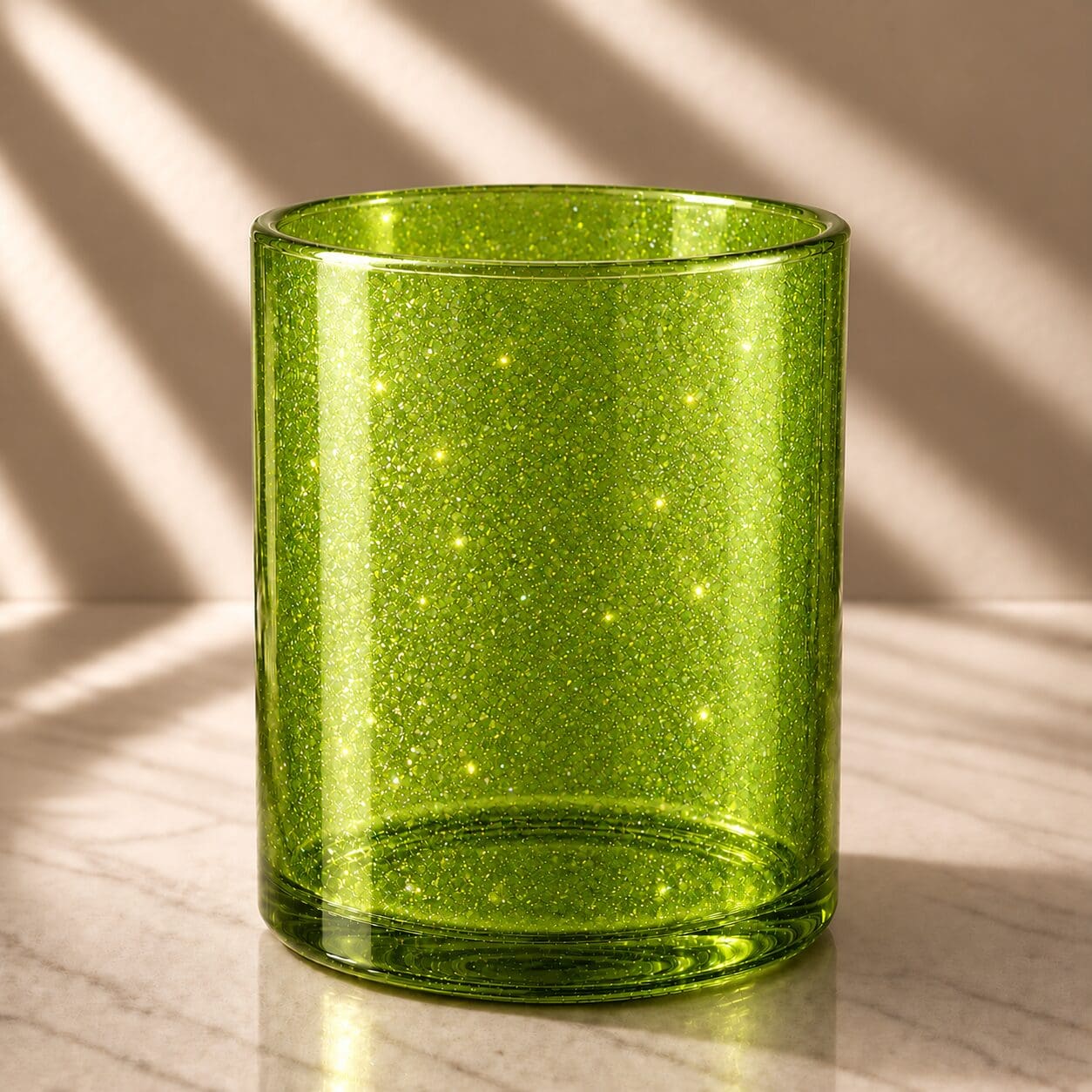
Lime
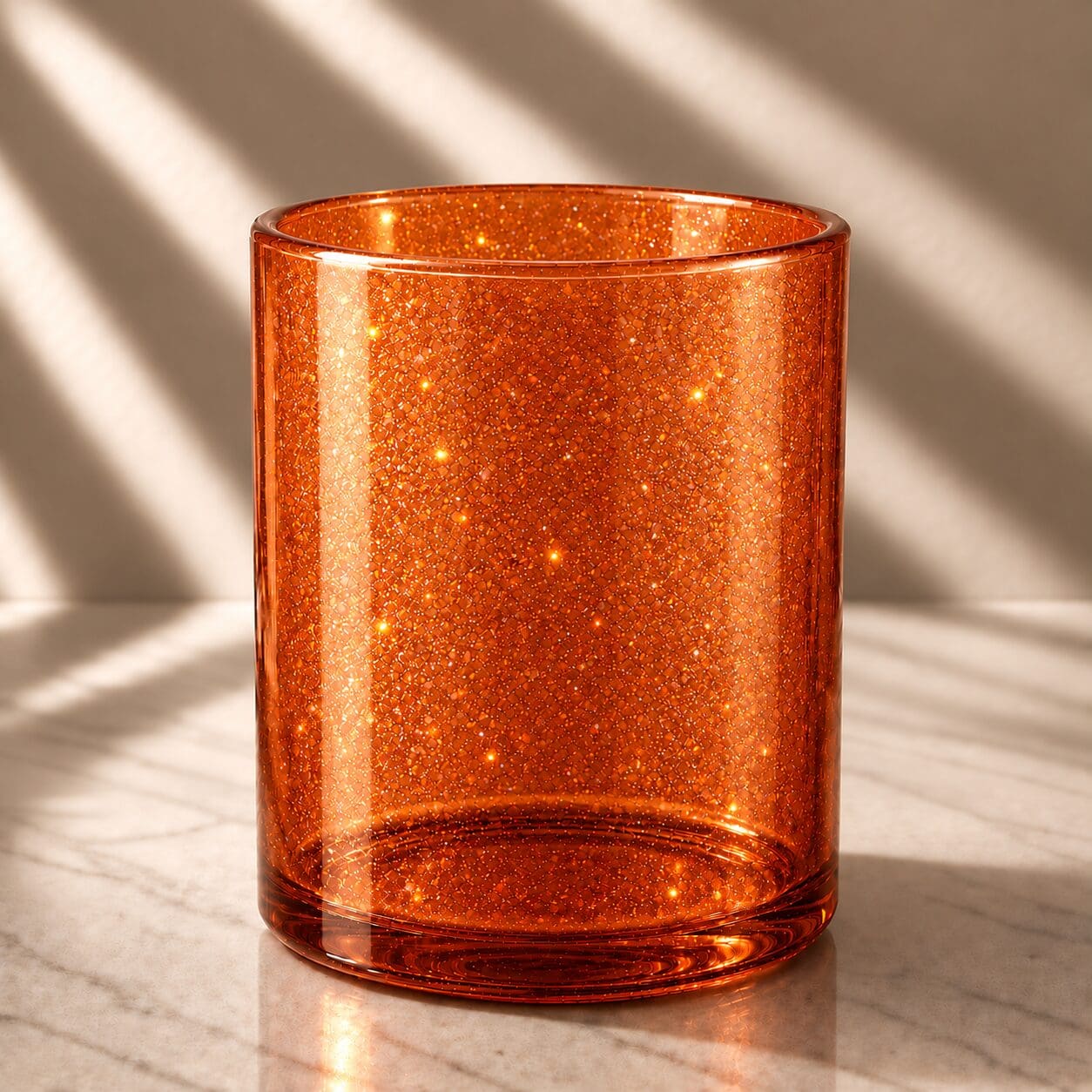
Tangerine
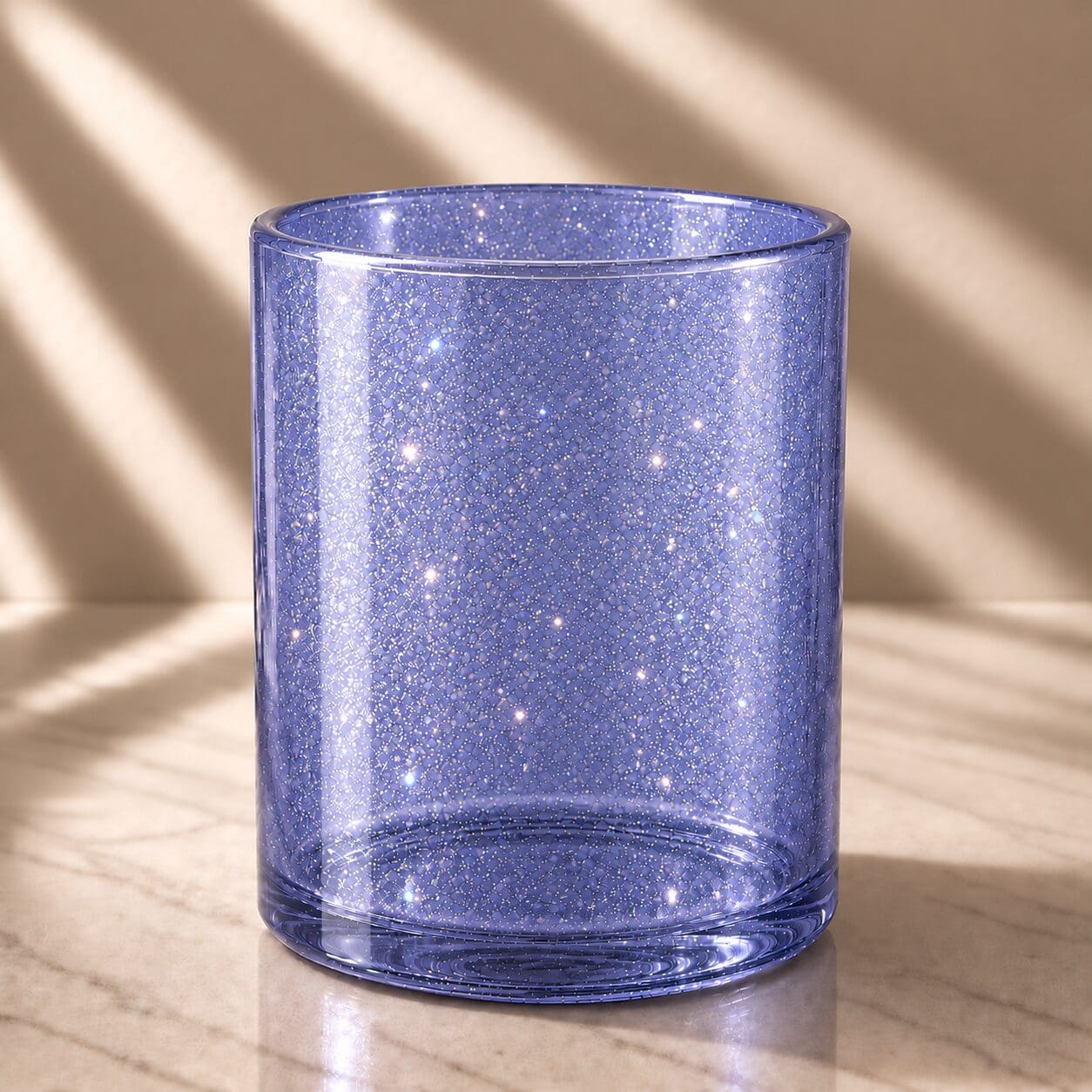
Periwinkle
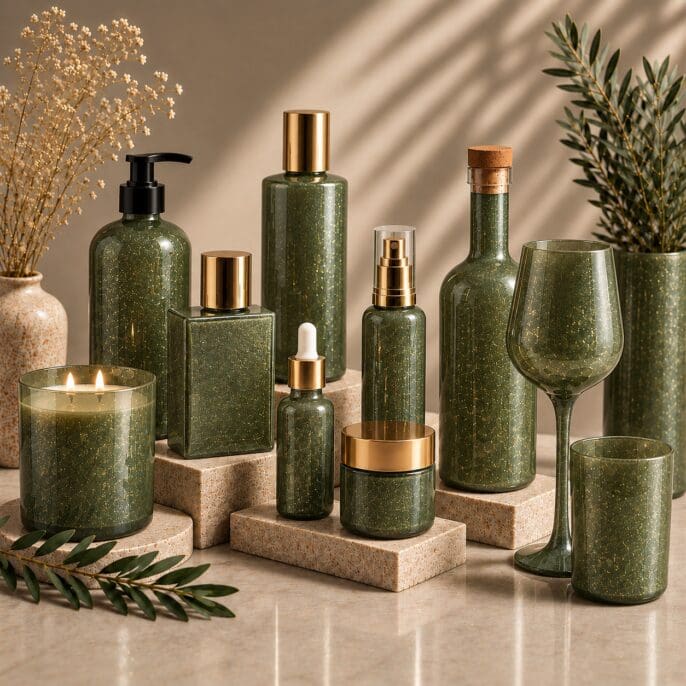
Common Applications
- Home fragrance
- Perfumery and fragrance
- Beauty and cosmetics
- Spirits and wine
- Beverage packaging
- Drinkware
- Decorative glassware
- Holiday collections
- Seasonal packaging
- Limited-edition launches
Decorative Techniques That Pair Well With Glitter
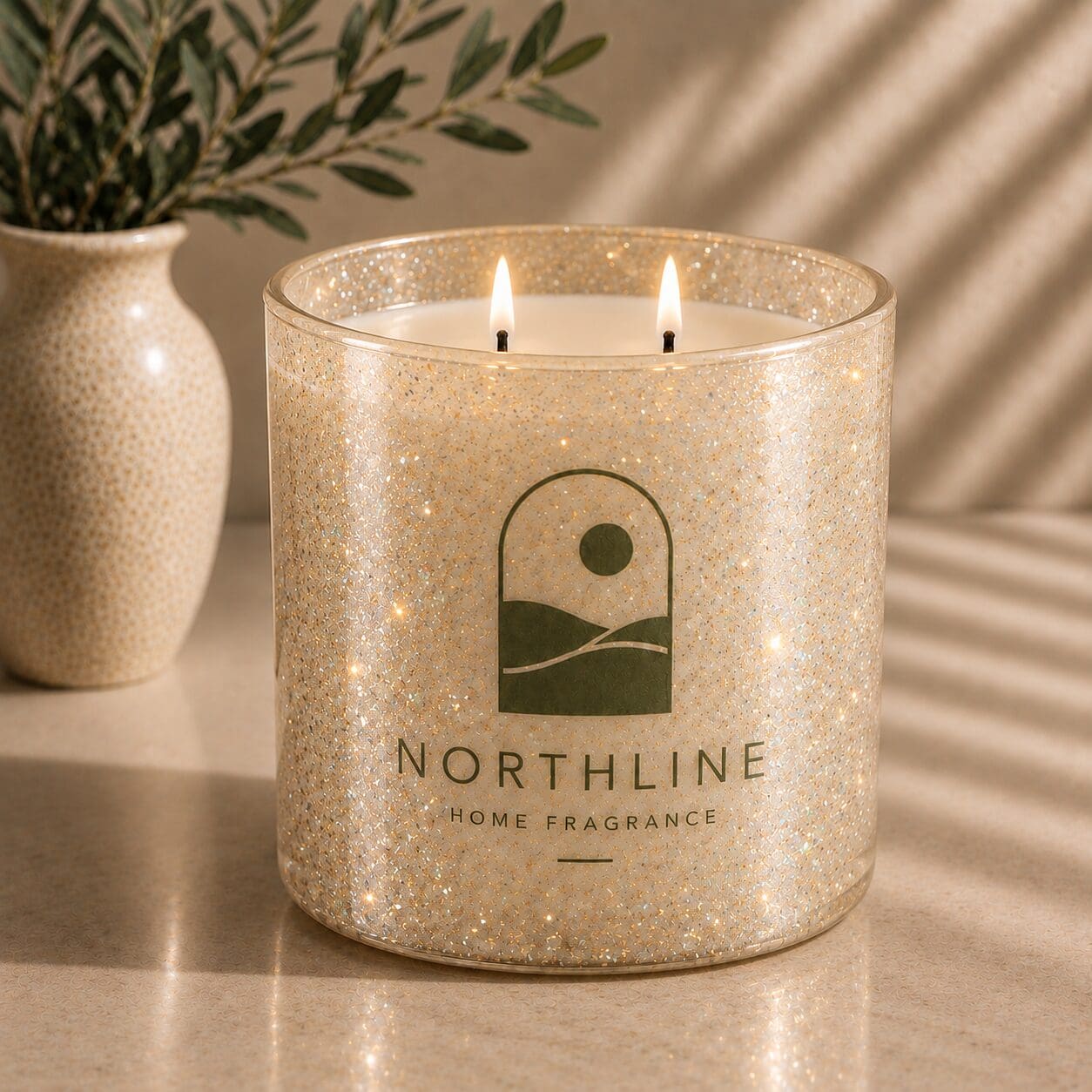
Screen Print
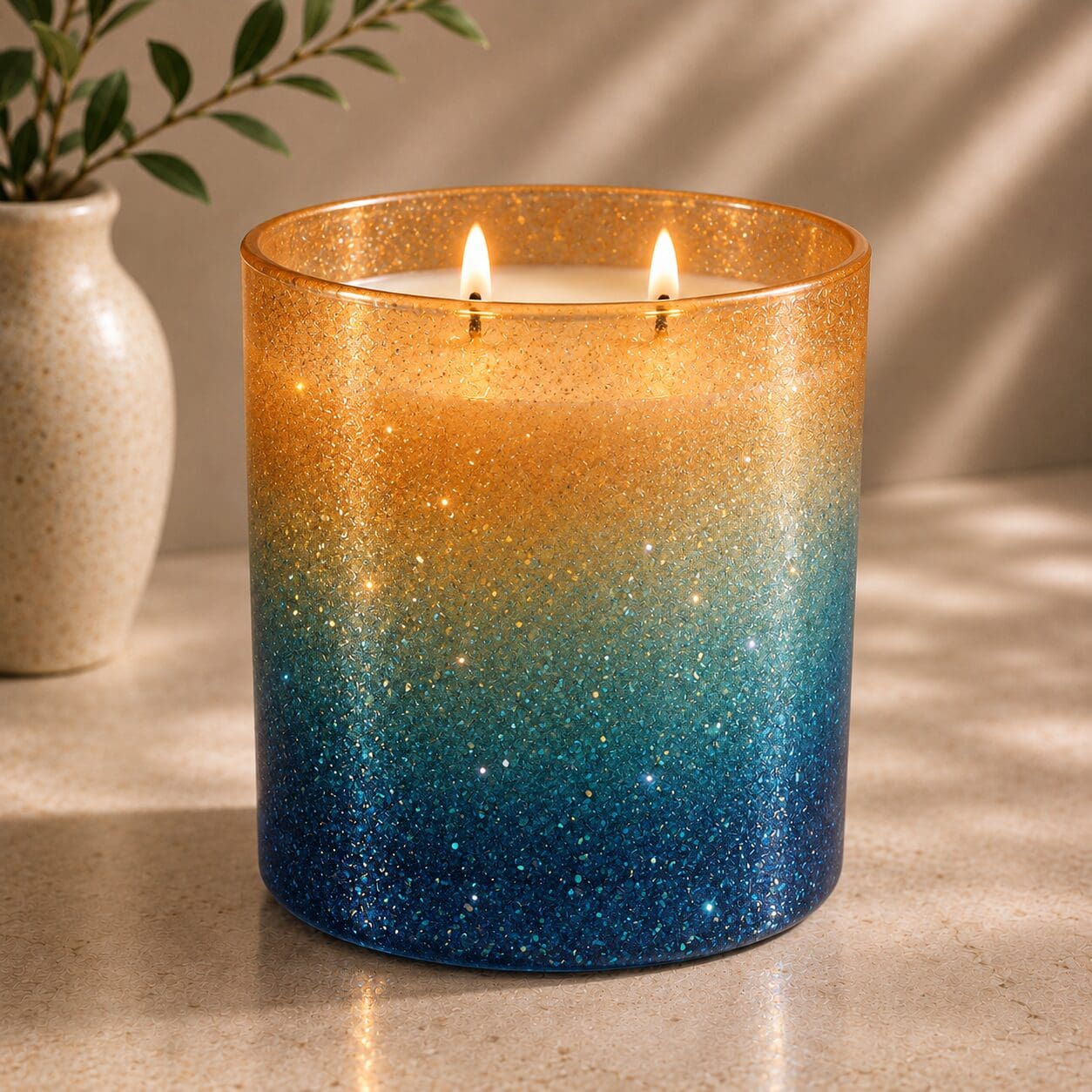
Two-Color Ombre
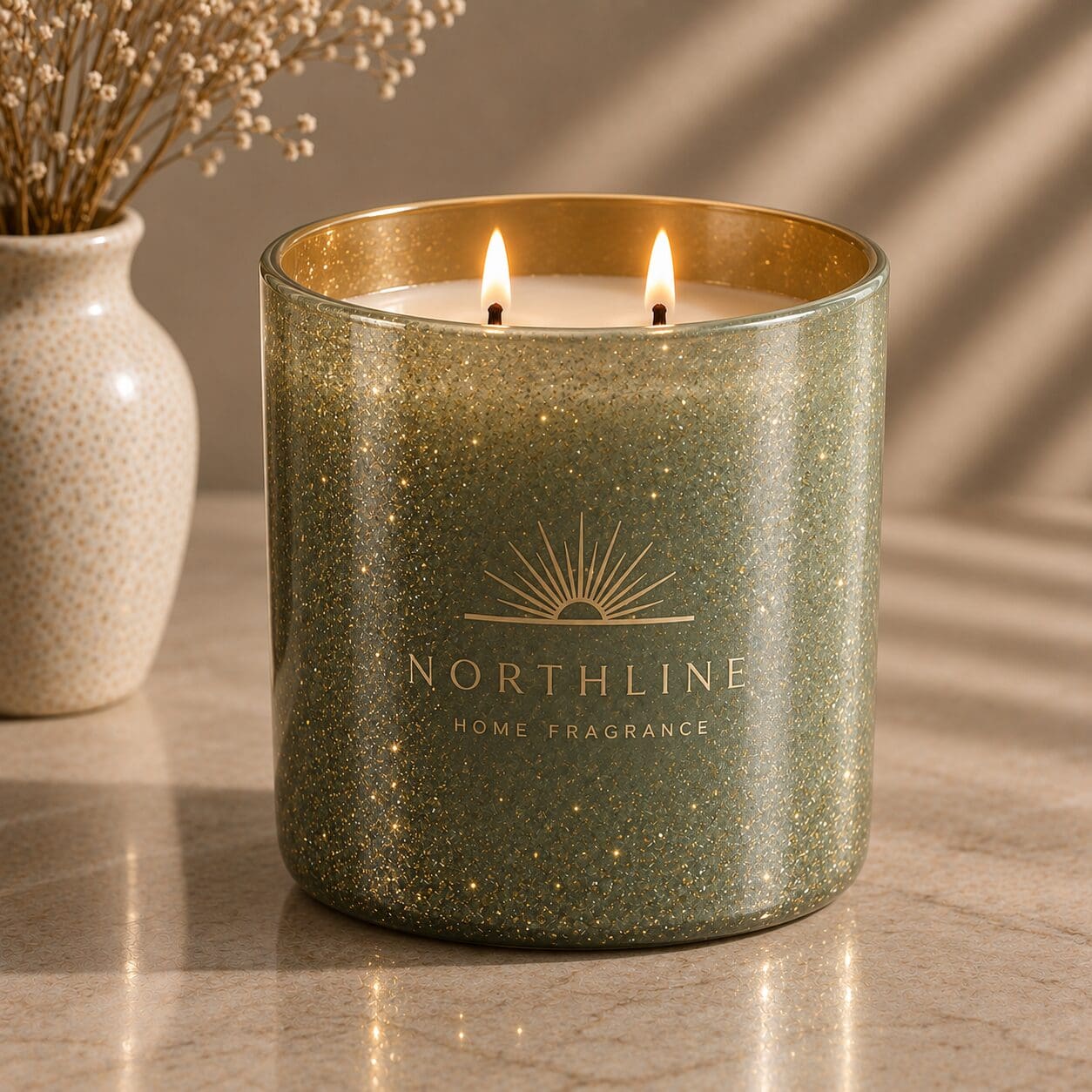
Matte Metallic Printing
Manufacturing Considerations
The appearance of Glitter depends on the relationship between color, particle distribution, coverage, and lighting.
- Particle distribution contributes to the overall appearance.
- Glitter intensity should be evaluated on the actual container.
- Color and reflective particles should be developed together.
- Lighting conditions significantly influence perceived sparkle.
- Container geometry affects where highlights appear.
- Additional decoration should be evaluated against both illuminated and non-illuminated areas of the surface.
- Fine printed details may require additional consideration against a visually active background.
- Photography may not fully capture how the particles respond as the container moves.
- Production sampling is recommended to establish the desired overall effect.
Some visual variation is inherent to a particle-driven finish and contributes to its dimensional character.
Frequently Asked Questions
Compare Other Finishes
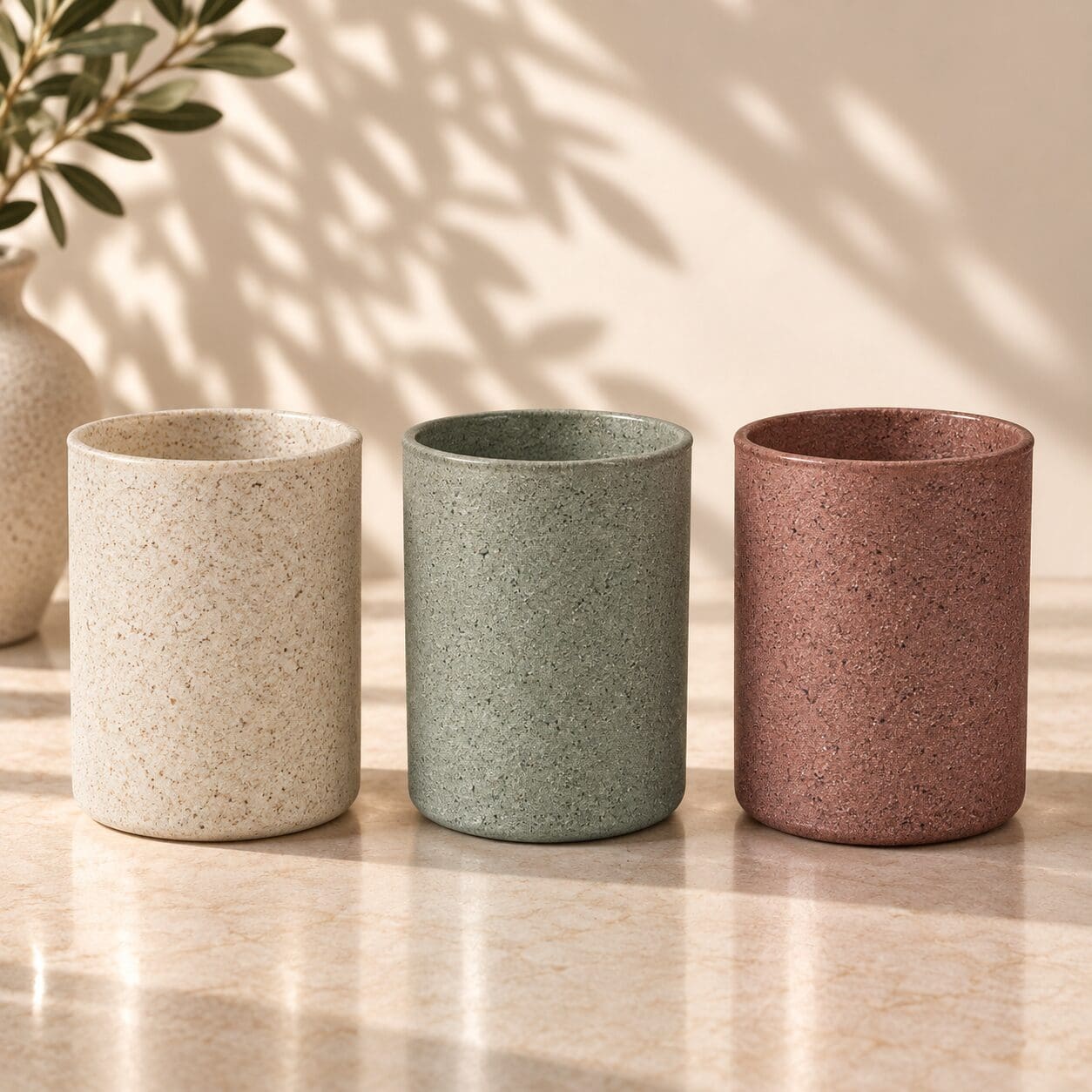
Granite
Introduces granular, material-driven texture without making sparkle the defining characteristic.
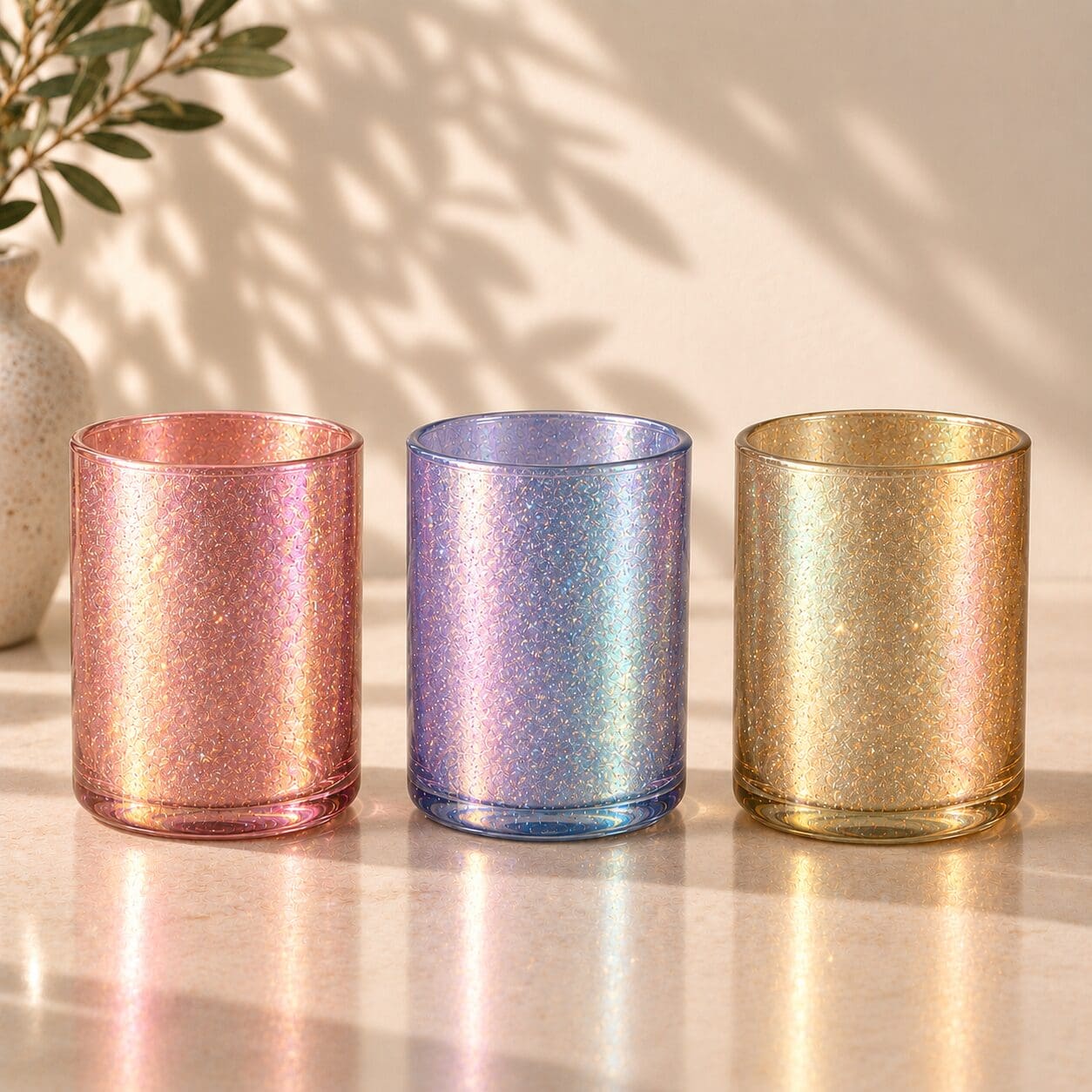
Glitter
Uses reflective particles to create visible sparkle and changing points of light across the surface.
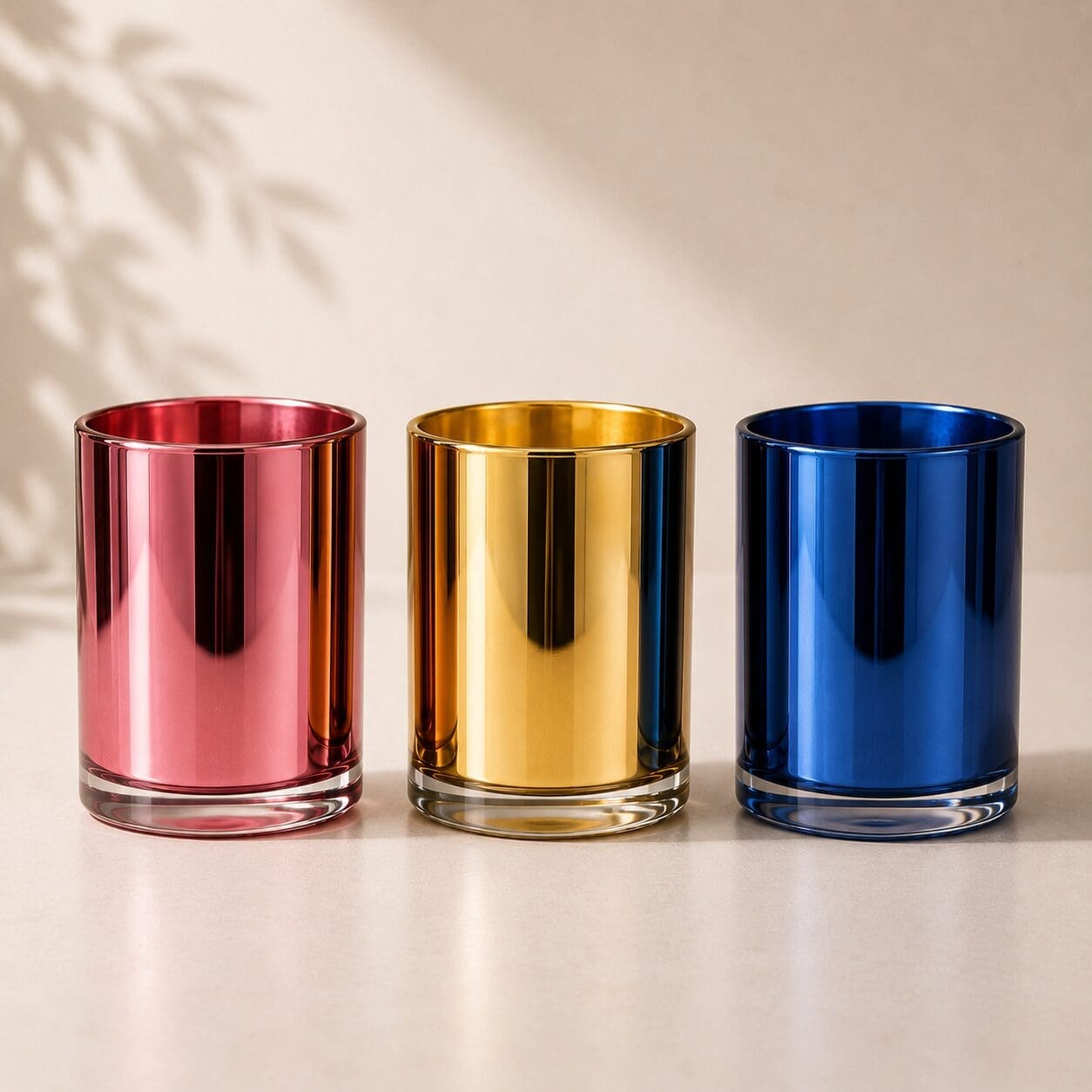
Colored Chrome
Creates broad, mirror-like metallic reflection rather than individual reflective points.
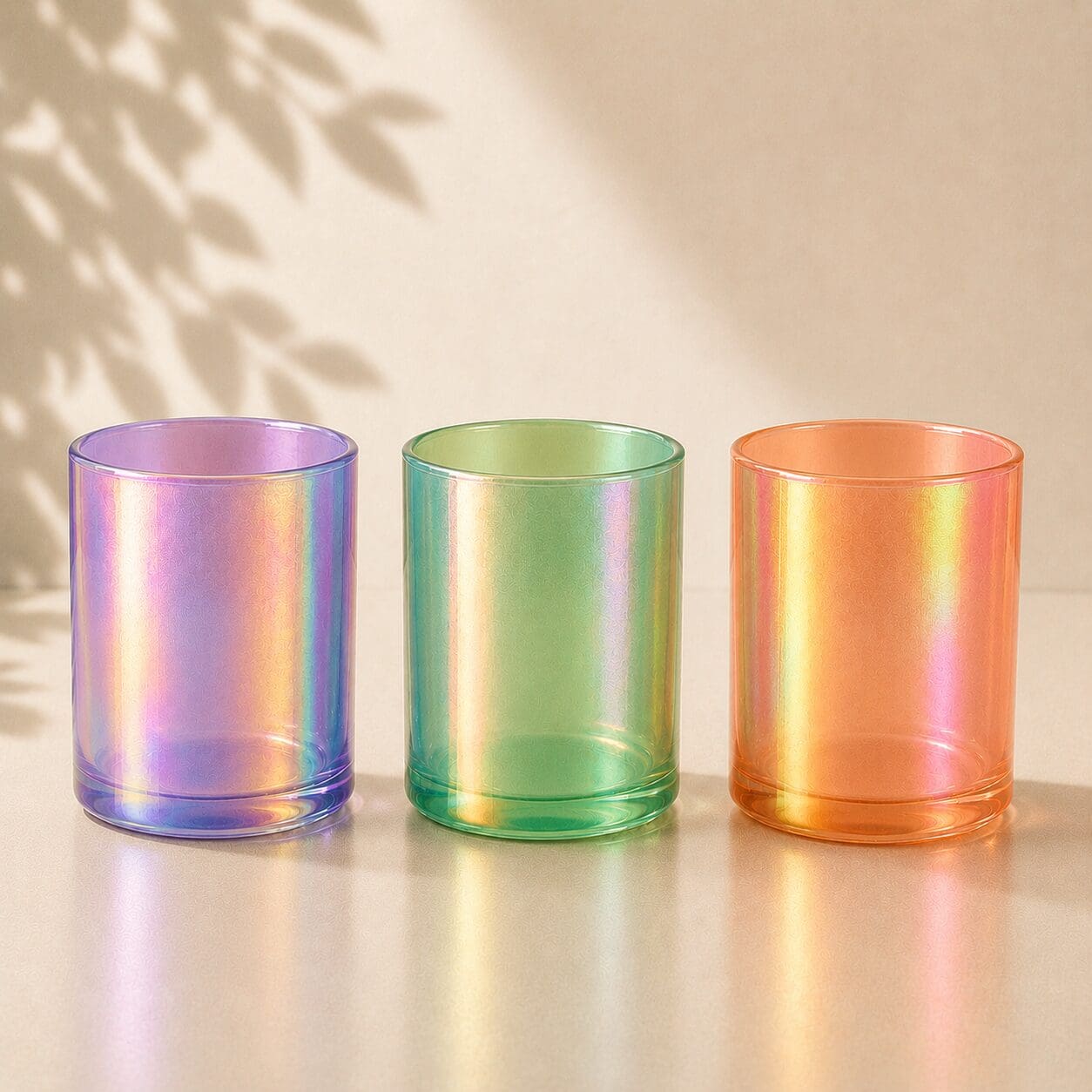
Dichroic
Creates shifting color as viewing angle and lighting change rather than particle-driven sparkle.
Which Finish Is Right for You?
| If you’re looking for… | Choose… | Why |
|---|---|---|
| Organic, granular texture | Granite | Creates material-driven surface variation without prominent sparkle. |
| Visible sparkle and movement | Glitter | Uses reflective particles to create changing points of light. |
| Mirror-like metallic impact | Colored Chrome | Produces broad, highly reflective metallic surfaces. |
| Shifting color and perspective | Dichroic | Changes perceived color with lighting and viewing angle. |
Ready to Explore Glitter?
Looking for a finish that comes alive in the light?
Glitter combines custom color, reflective particles, and changing points of light to create a dimensional glass surface with sparkle built directly into the finish.
Request a sample or connect with our decorating specialists to explore Glitter for your next project.