Dichroic Glass Coating
Shifting Color. Dynamic Dimension.
A Guide to Dichroic Glass Finishes for Decorative Packaging
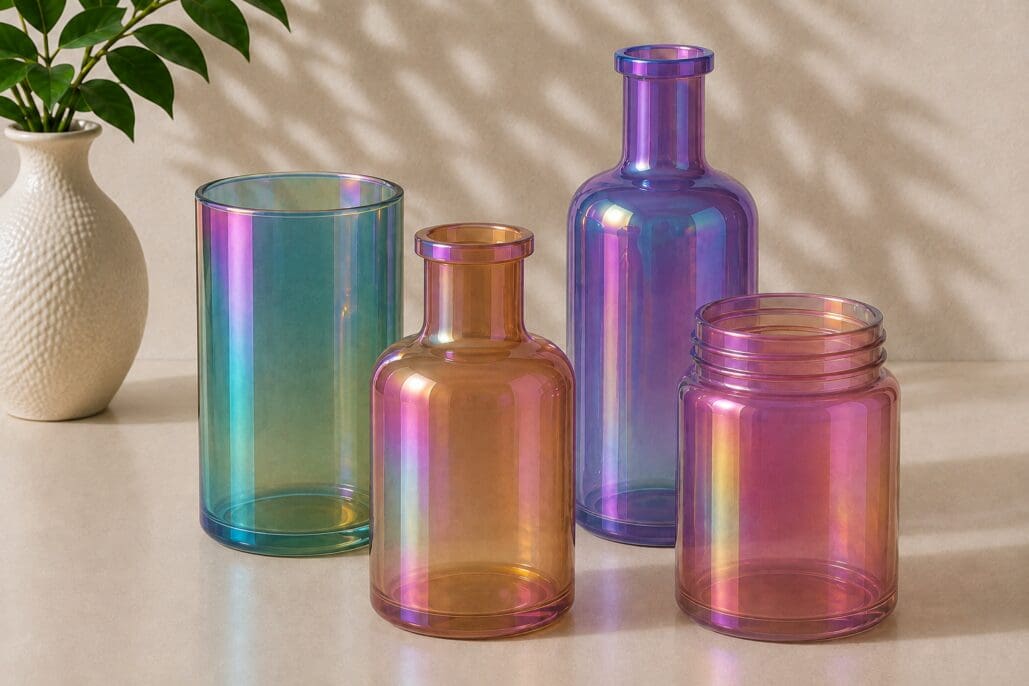
Dichroic transforms glass with a dynamic finish that changes in appearance as light, viewing angle, and surrounding color shift. Rather than presenting one static color, the surface can reveal multiple hues and reflective effects as the container moves through its environment.
With variations in transparency and coverage possible, Dichroic gives brands a distinctive way to make the glass itself part of the visual experience.
Ideal for candles, home fragrance, beauty, spirits, and beverage packaging, Transparent Gloss delivers a polished, premium appearance that feels vibrant, modern, and timeless.
What Is Dichoric?
Dichroic is a specialty decorative glass technique that creates a color-shifting, light-responsive appearance across the surface of the container.
Unlike a conventional single-color coating, which is designed to maintain a relatively consistent color, Dichroic changes based on how the surface is viewed and illuminated. One angle may emphasize one hue while another reveals a different color or reflective effect.
The final appearance can also vary in transparency and coverage depending on how the technique is developed, creating opportunities ranging from more luminous effects to stronger, more visually dominant surfaces.
The result is a finish that appears bright, clean, and dynamic from every angle. As lighting conditions change, Transparent Gloss responds with brilliant reflections and increased color intensity, making it one of the most visually expressive decorative finishes available.
What Makes Dichroic Unique?
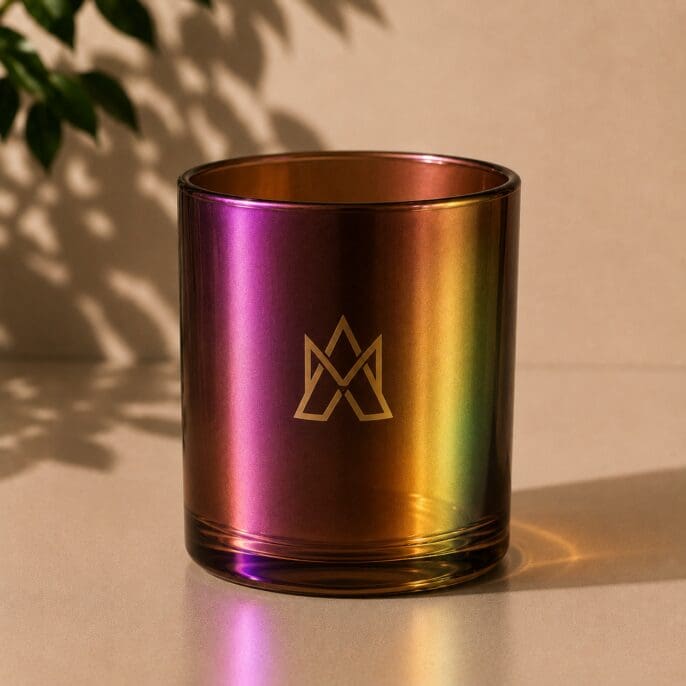
Dichroic introduces something traditional color coatings cannot: color that changes with perspective.
The finish responds to viewing angle, surrounding light, and the environment reflected across the glass. Instead of experiencing one fixed color, the viewer can see different hues emerge as either the container or viewing position changes.
This creates a surface that feels active rather than static. The result is a finish with movement, dimensionality, and visual discovery built directly into the glass.
Because significant light can travel through the coating, color develops additional depth while the glossy surface creates crisp highlights and reflections.
The result is a finish that feels bright, dimensional, and polished, with transparency and shine working together rather than competing with one another.
Why Designers Choose Dichroic
Dichroic is often selected because it offers:
- Color-shifting visual effects
- Different appearances across viewing angles
- Strong interaction with surrounding light
- Exceptional visual depth
- Variable transparency and coverage
- Reflective surface characteristics
- Distinctive shelf presence
- Compatibility with additional decoration
- A highly recognizable specialty finish
Reflectivity
High ★★★★☆
Light Transmission
Variable ★★★☆☆
Color Shift
Exceptional ★★★★★
Visual Depth
Exceptional ★★★★★
Surface Texture
Smooth ★☆☆☆☆
Print Compatibility
Excellent ★★★★★
Color Flexibility
Specialized ★★★★☆
How Dichroic Interacts With Light
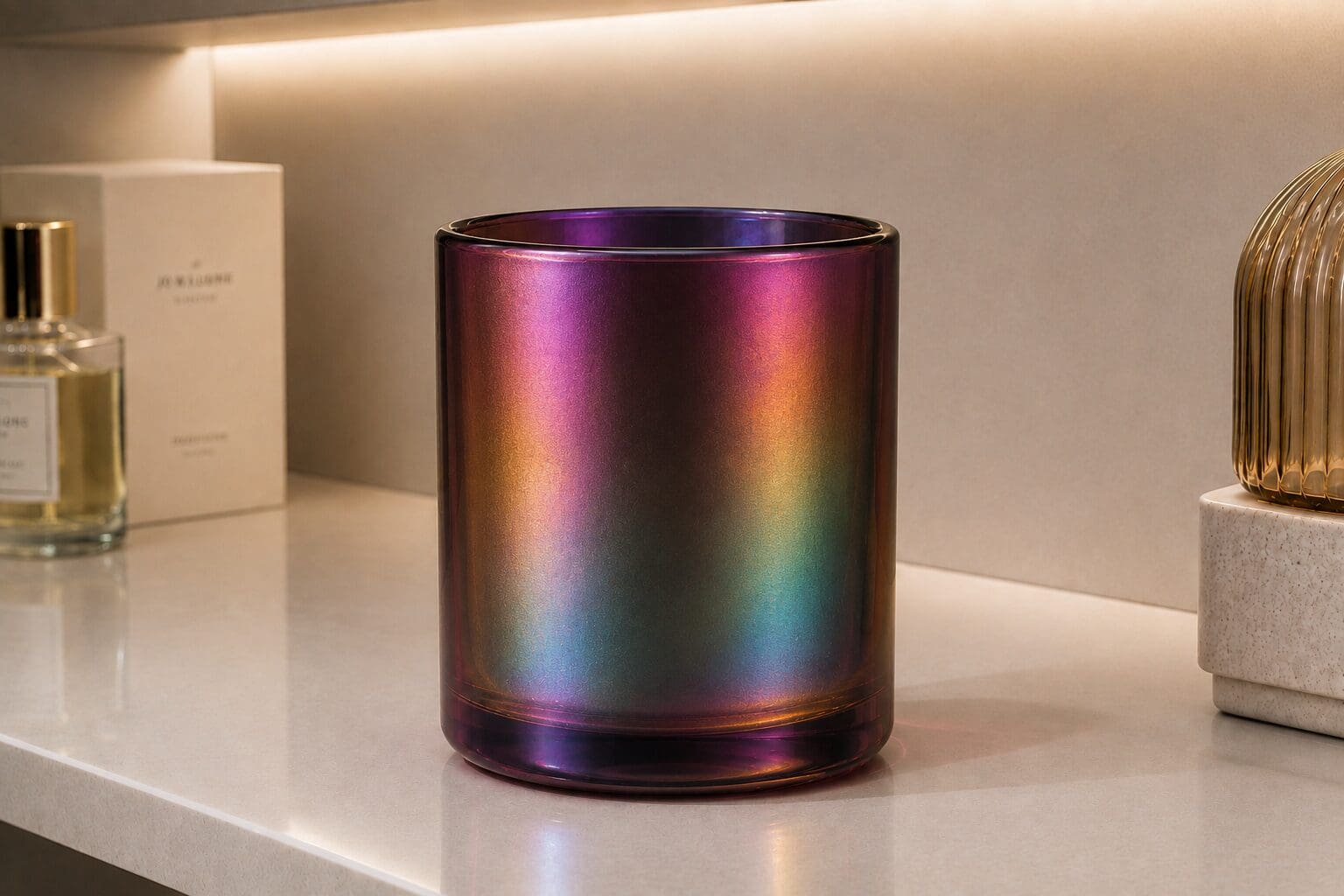
RETAIL LIGHTING
Bright overhead lighting enhances the finish’s reflective surface while showcasing the richness and clarity of transparent color. Products appear vibrant, polished, and highly dimensional.
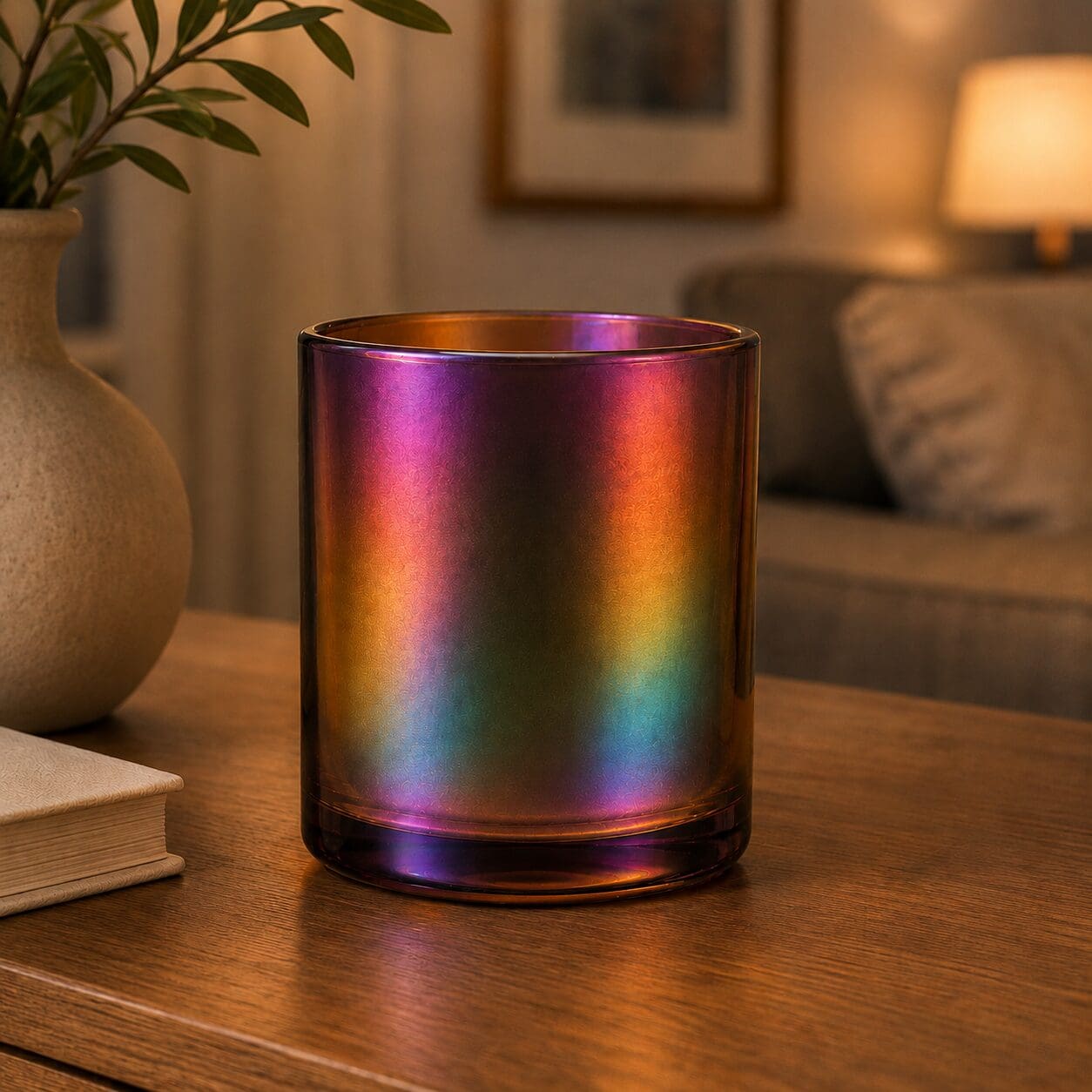
HOME LIGHTING
Softer ambient lighting can make the effect feel more subtle and atmospheric. Color shifts remain visible, but reflections become less pronounced and deeper tones may become more prominent.
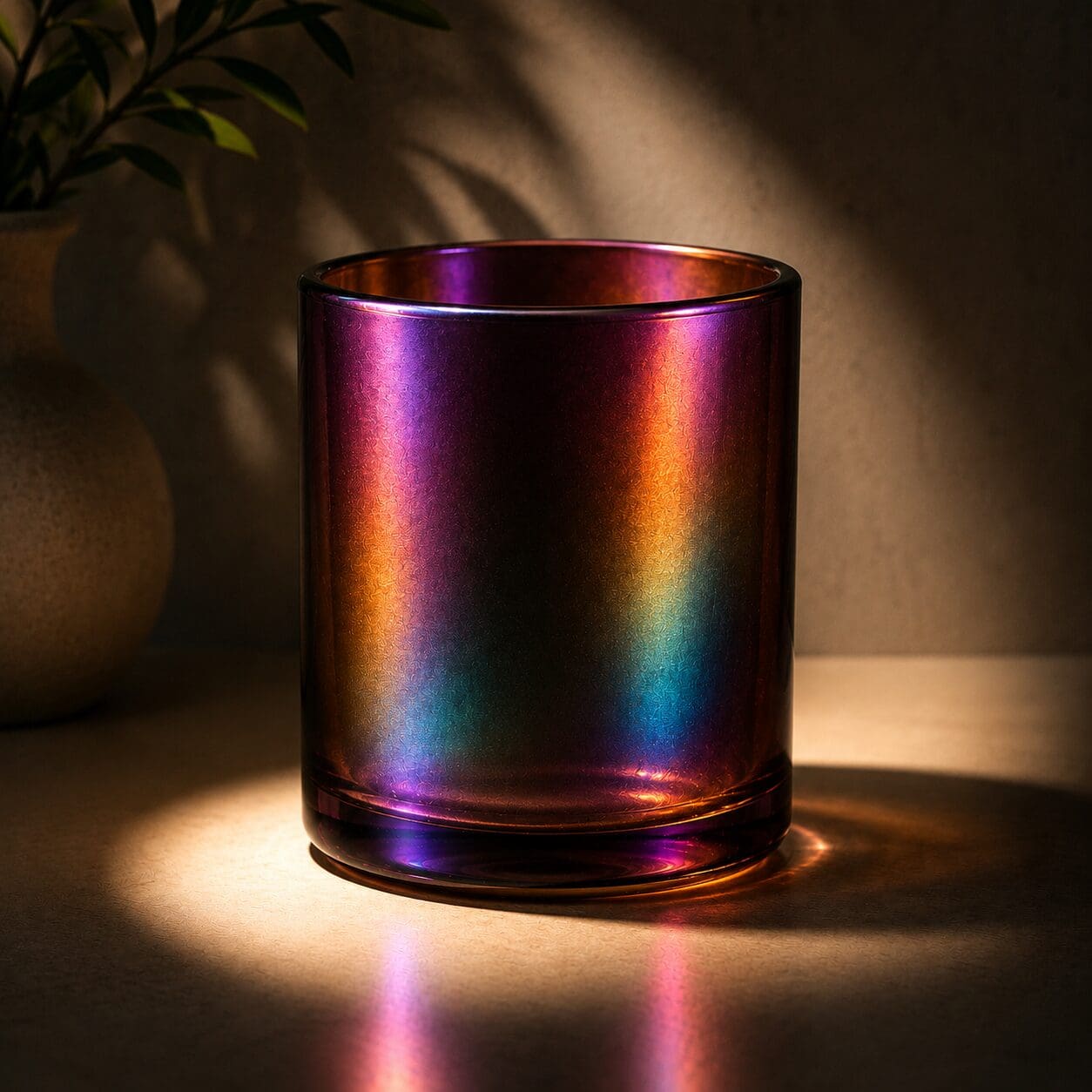
DIRECTIONAL SPOTLIGHT
Focused lighting creates the most dramatic interaction between highlight, reflection, and color shift. Different areas of the surface can reveal contrasting hues simultaneously, emphasizing the dimensional character of the finish.
Color Flexibility
Dichroic color behaves differently from a traditional single-color coating.
Rather than selecting only one static shade, the desired effect is developed around how multiple colors interact and shift across the surface.
Its glossy surface enhances color saturation while preserving clarity, allowing brands to create packaging that feels bright, premium, and visually distinctive.
The underlying glass, lighting environment, viewing angle, transparency, and additional decoration can all influence the final perceived color.
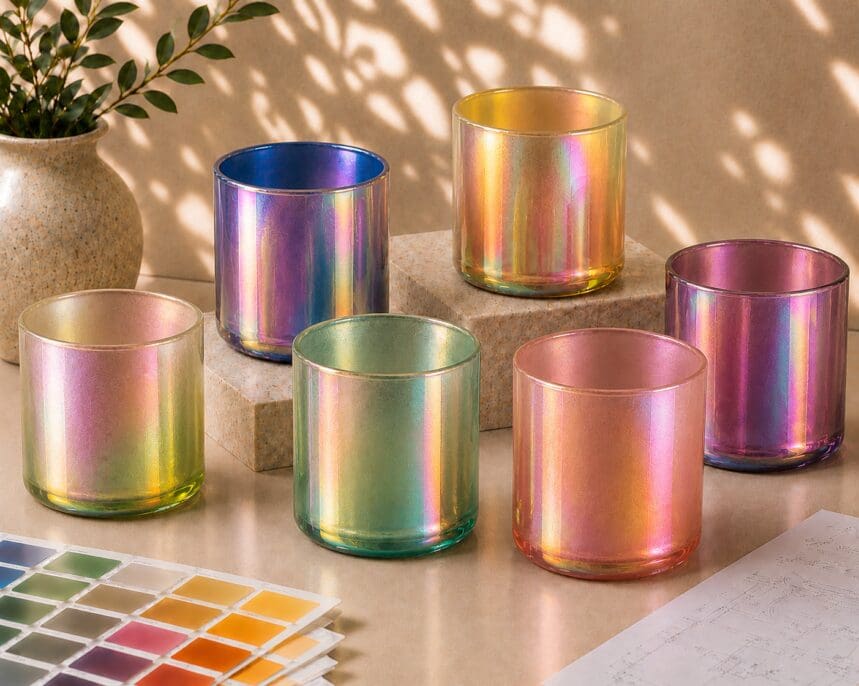
Because of this dynamic behavior, physical sampling is especially important when developing a Dichroic concept.
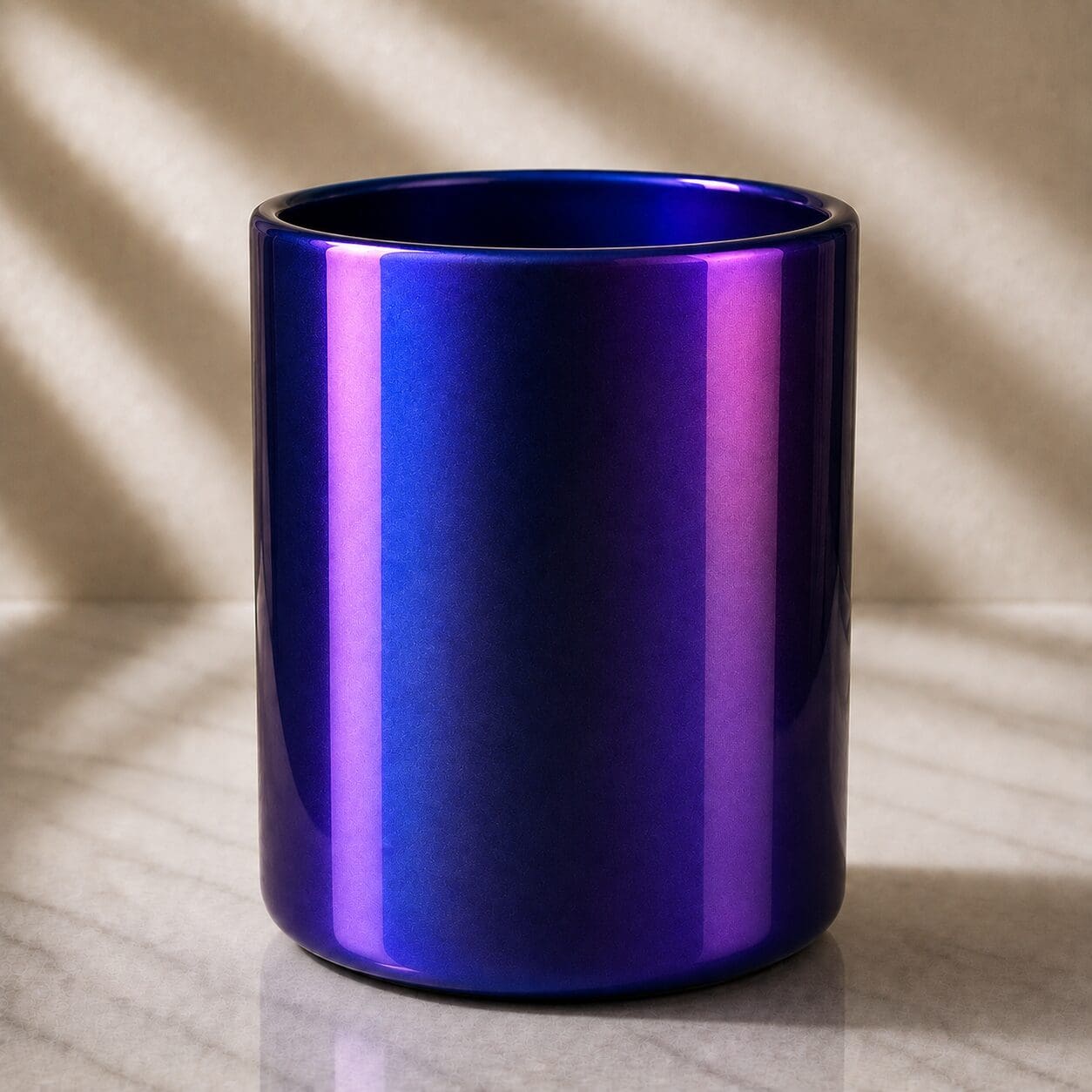
Blue to Violet
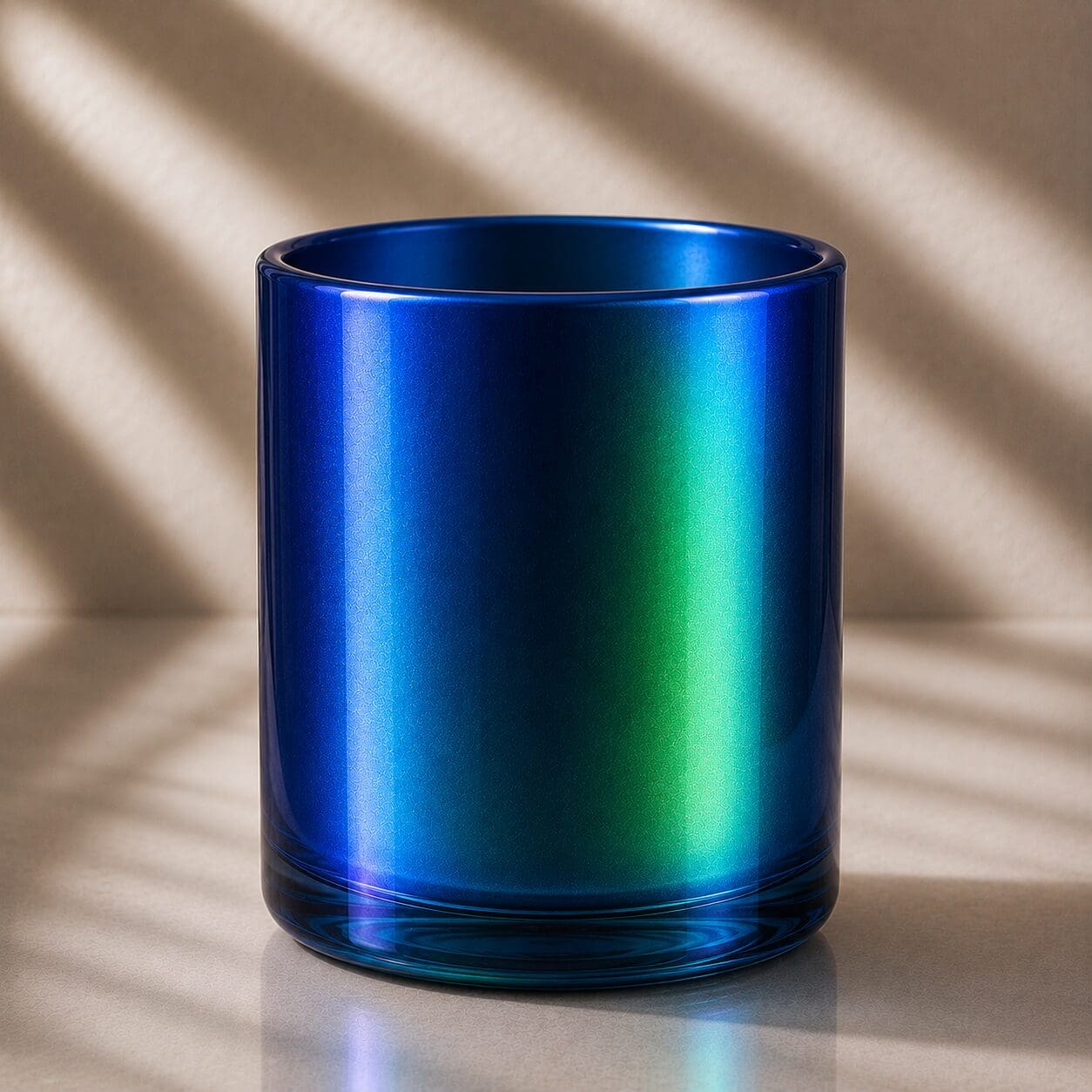
Blue to Green
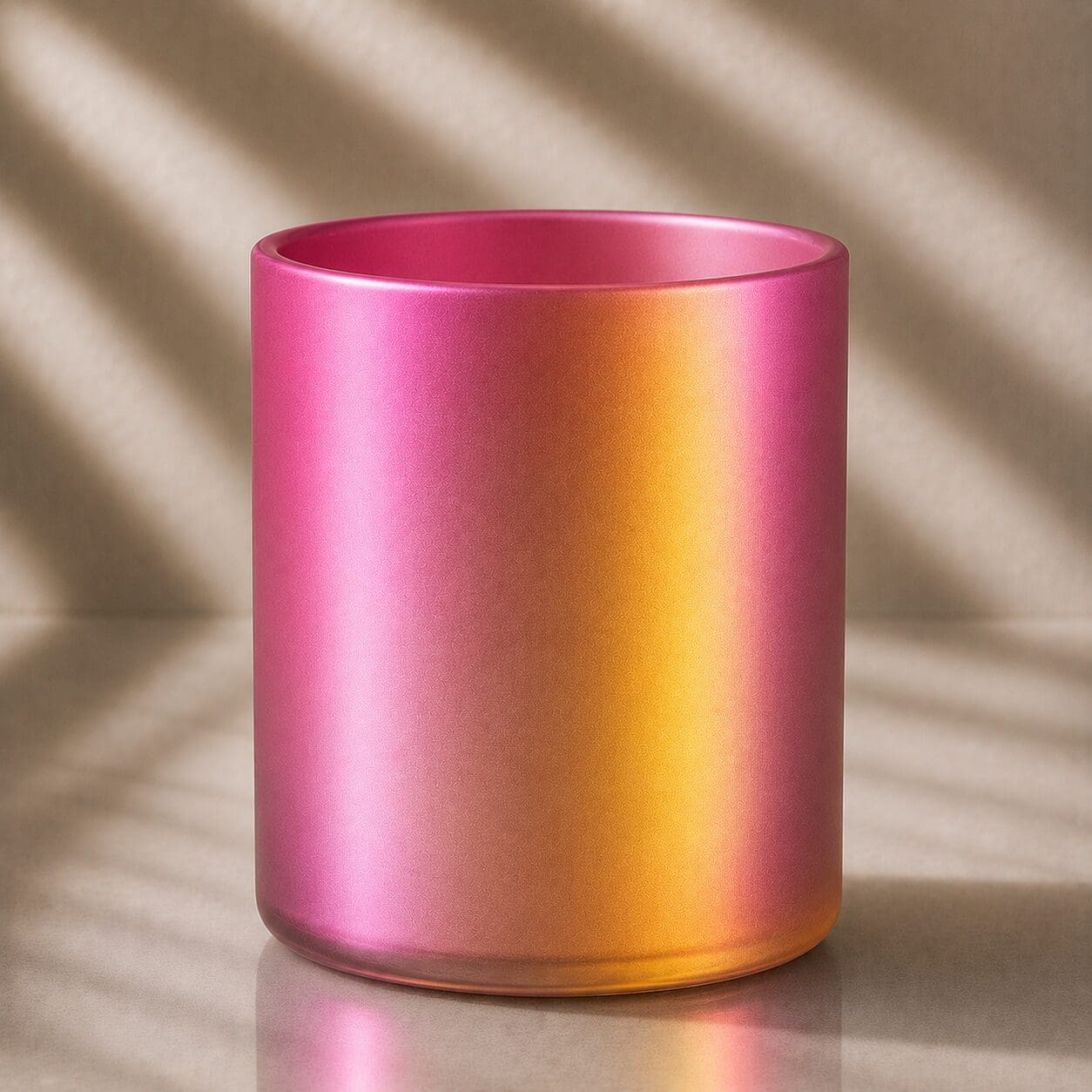
Pink to Gold
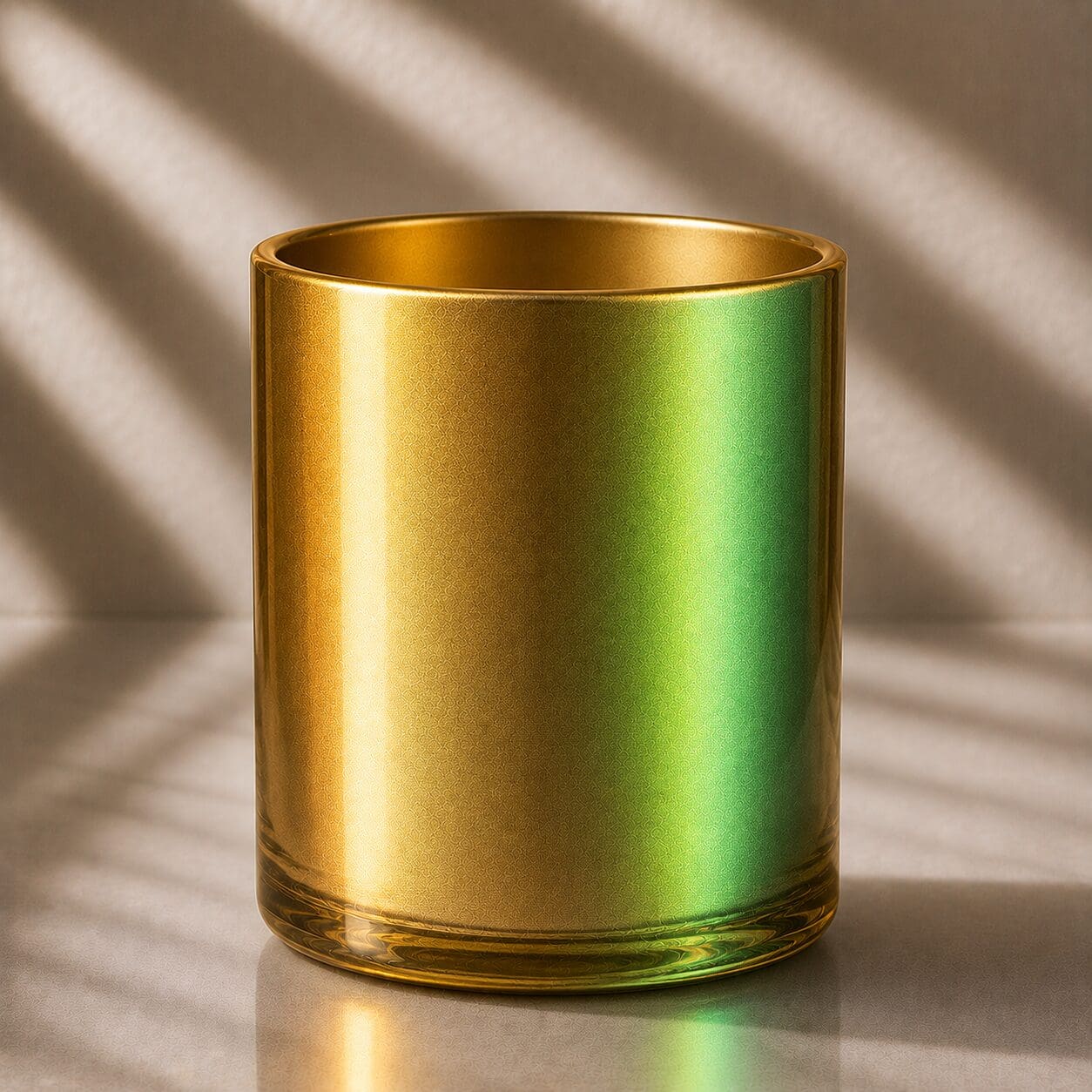
Gold to Green
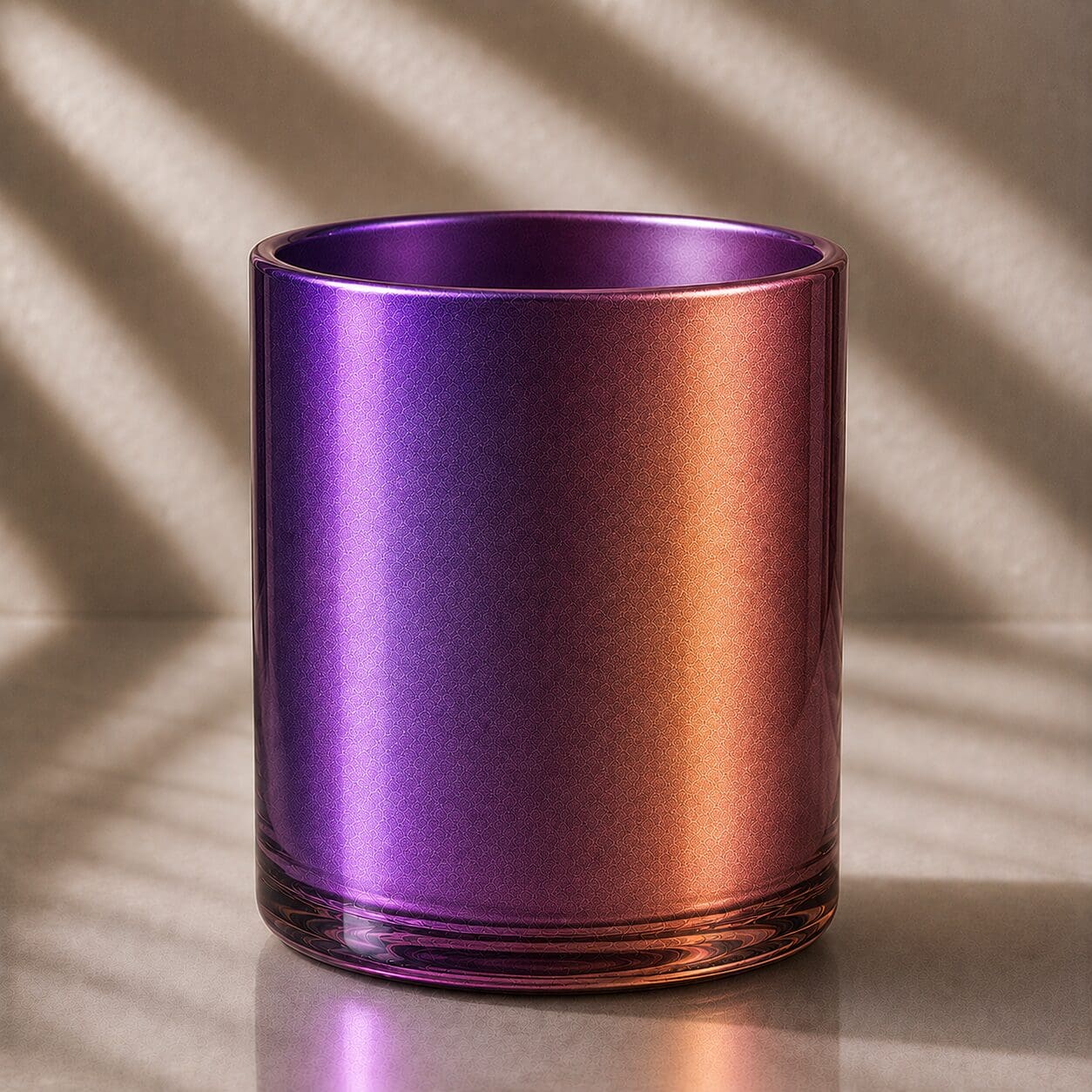
Violet to Copper
Common Applications
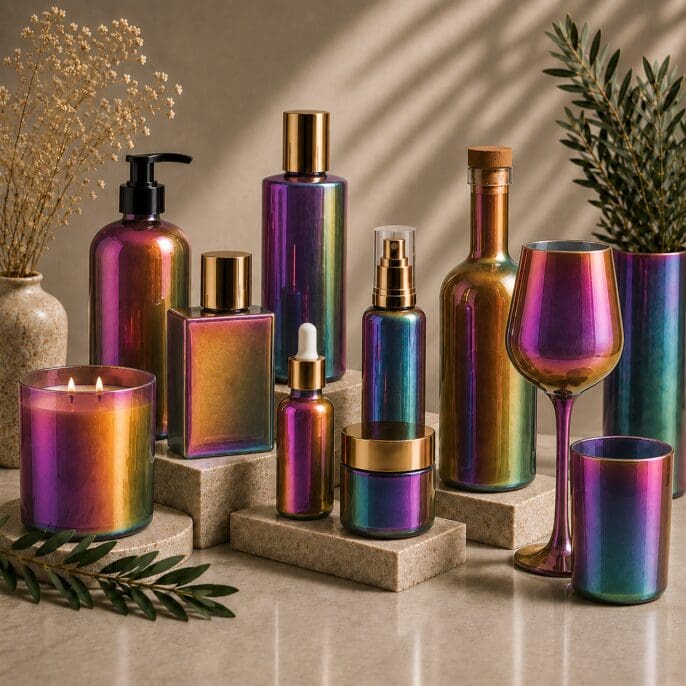
Dichroic works particularly well when the surface itself is intended to become a defining part of the product experience.
Common applications include:
- Home fragrance
- Perfumery and fragrance
- Beauty and cosmetics
- Spirits and beverage packaging
- Decorative glassware
- Drinkware
- Seasonal collections
- Limited-edition launches
- Premium and statement packaging
Decorative Techniques That Pair Well With Transparent Gloss
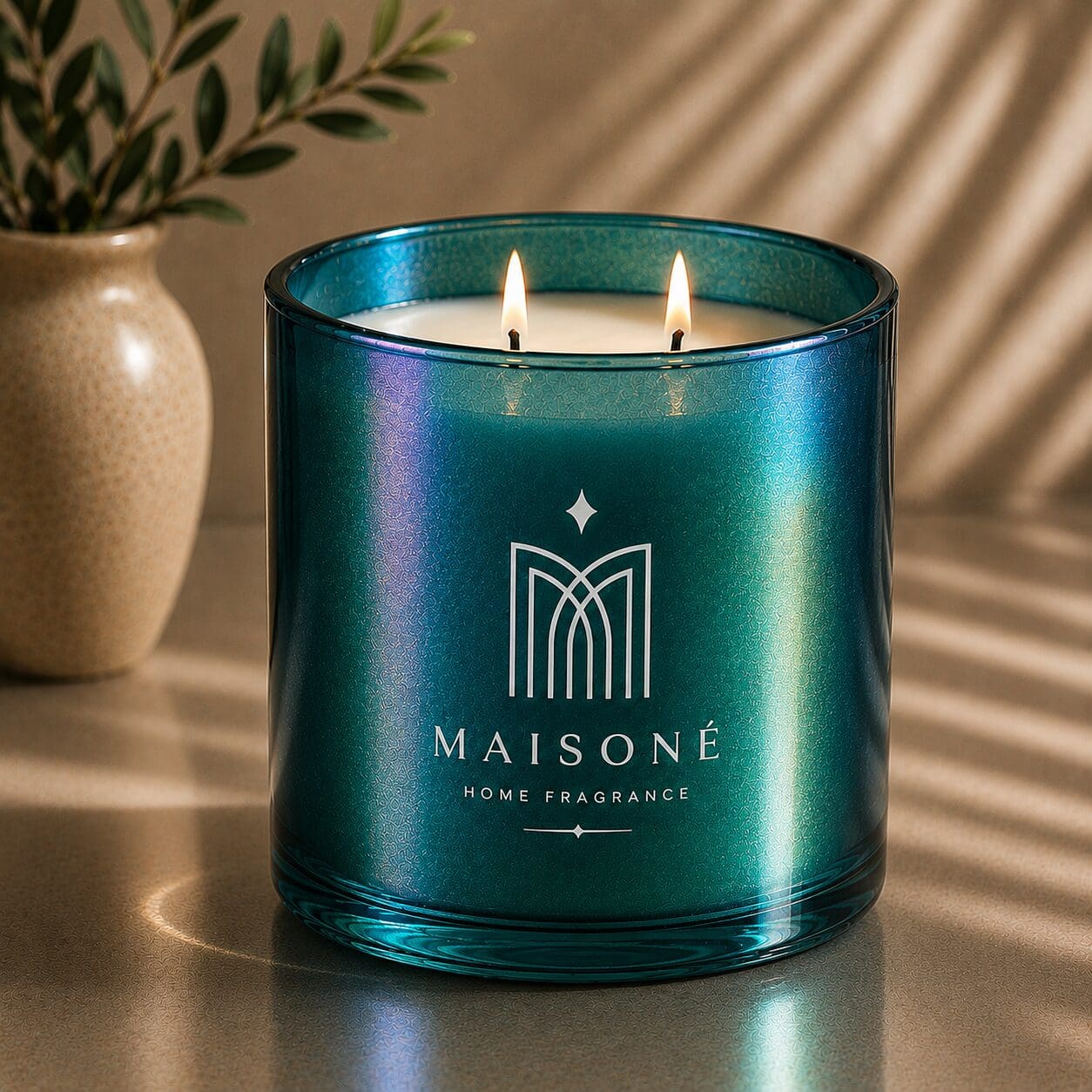
Screen Print
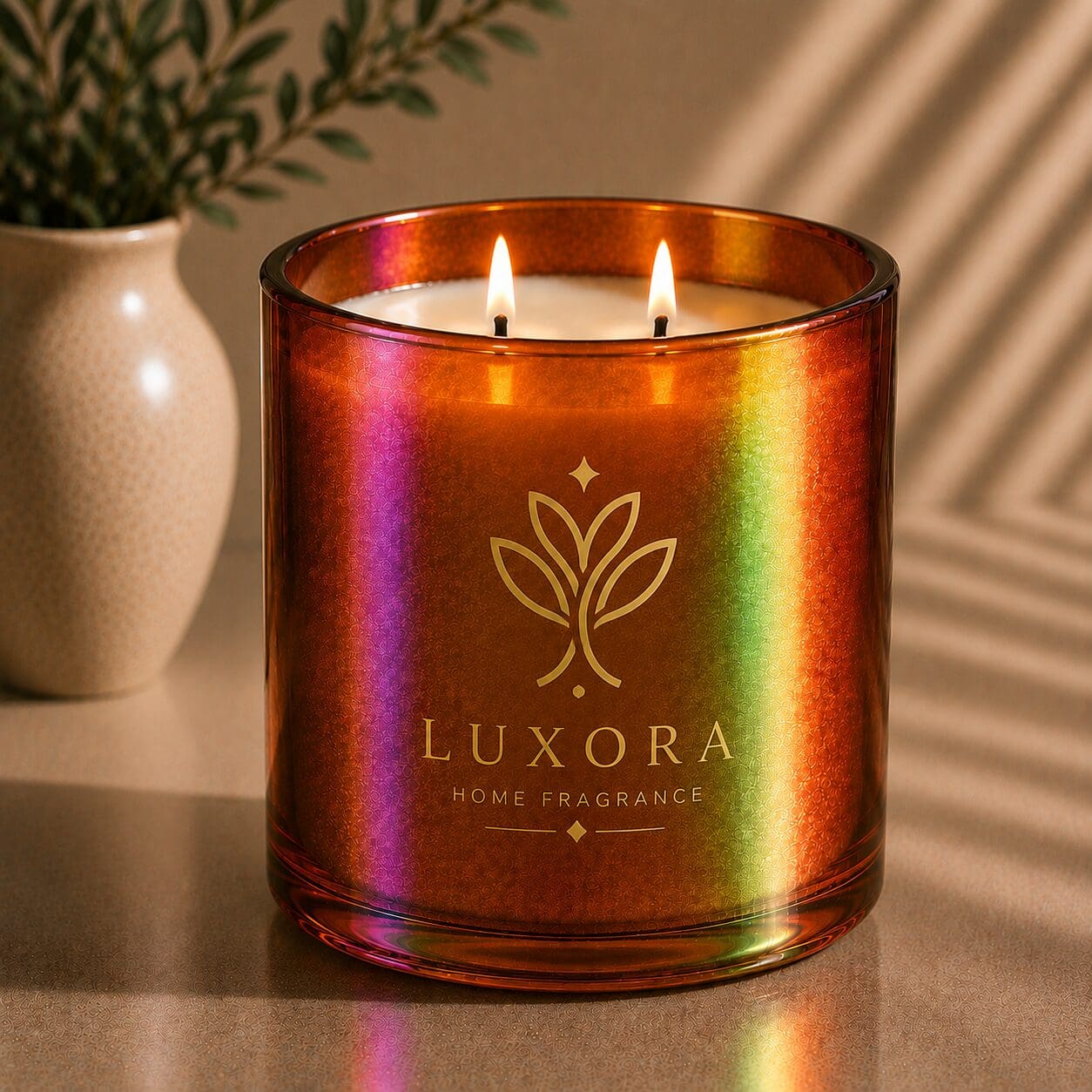
Metallic Screen Printing
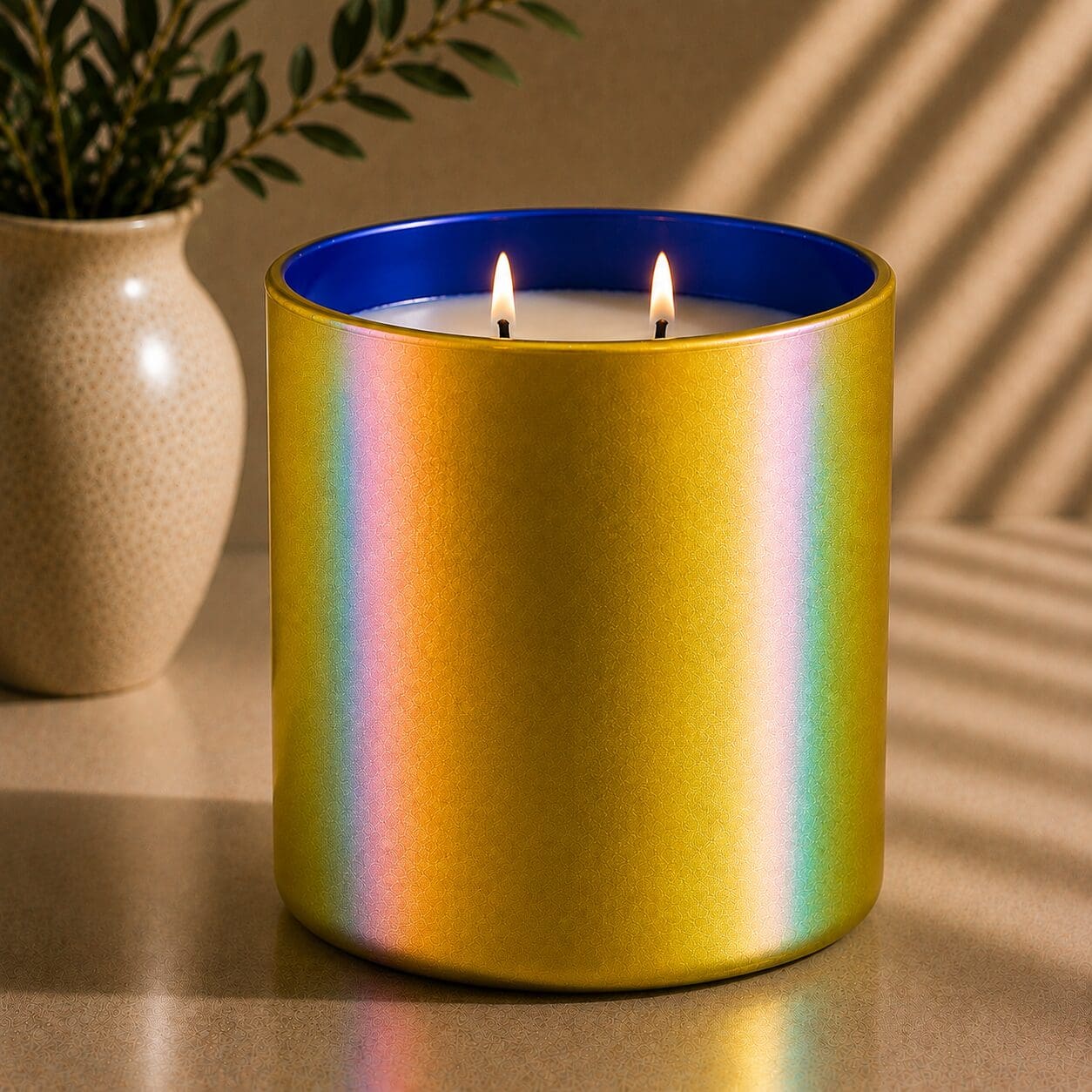
Inside/Outside
Manufacturing Considerations
Dichroic is a highly visual specialty finish, making sampling and evaluation particularly important during development.
- Color appearance changes with viewing angle.
- Lighting conditions significantly influence the perceived finish.
- The effect should be evaluated from multiple angles rather than from a single front-facing view.
- Transparency and coverage can influence the intensity of the effect.
- Container geometry can affect where color shifts and reflections appear.
- Different glass shapes may produce noticeably different visual results.
- Additional decoration should be evaluated against multiple areas of the color shift.
- Photography and digital renderings may not fully communicate the dynamic appearance of the physical finish.
- Production sampling is recommended when establishing the desired effect.
The goal with Dichroic is not necessarily to create one exact static color, but to develop a controlled range of visual behaviors that work together across the finished container.
Frequently Asked Questions
Compare Other Finishes
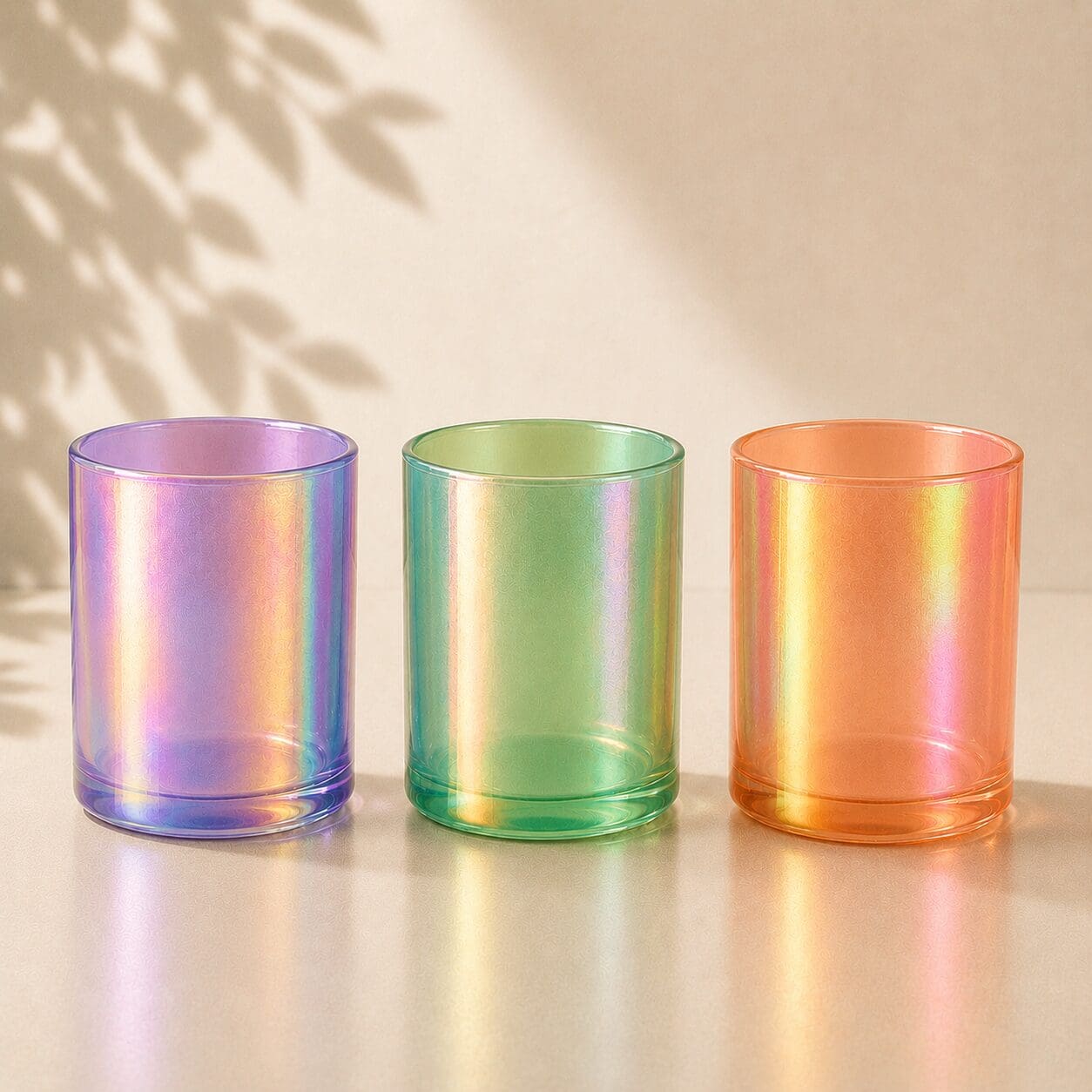
Dichroic
Creates a dynamic surface where perceived color shifts with light and viewing angle.
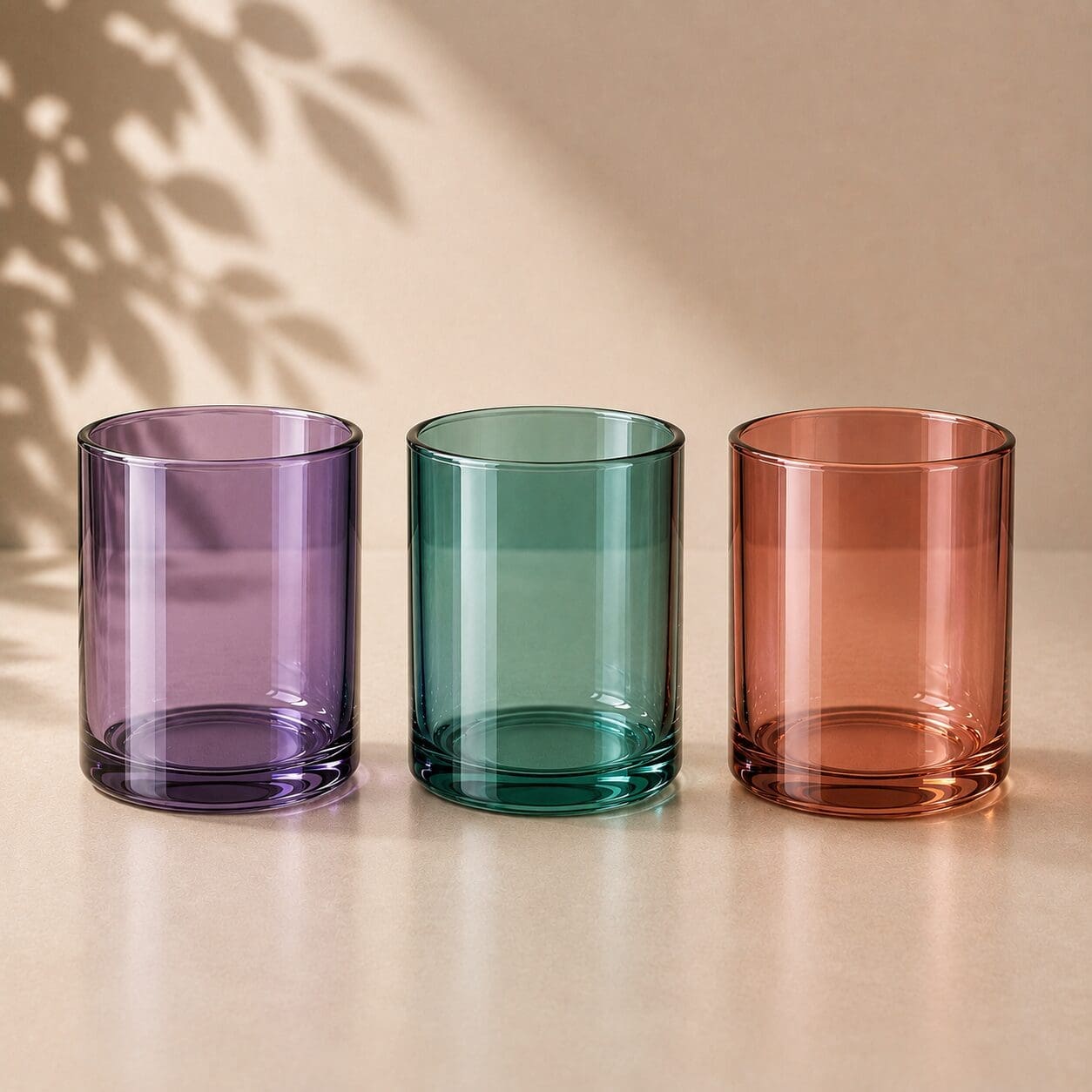
Transparent Gloss
Provides transparent color and brilliant shine while maintaining a relatively consistent color across viewing angles.
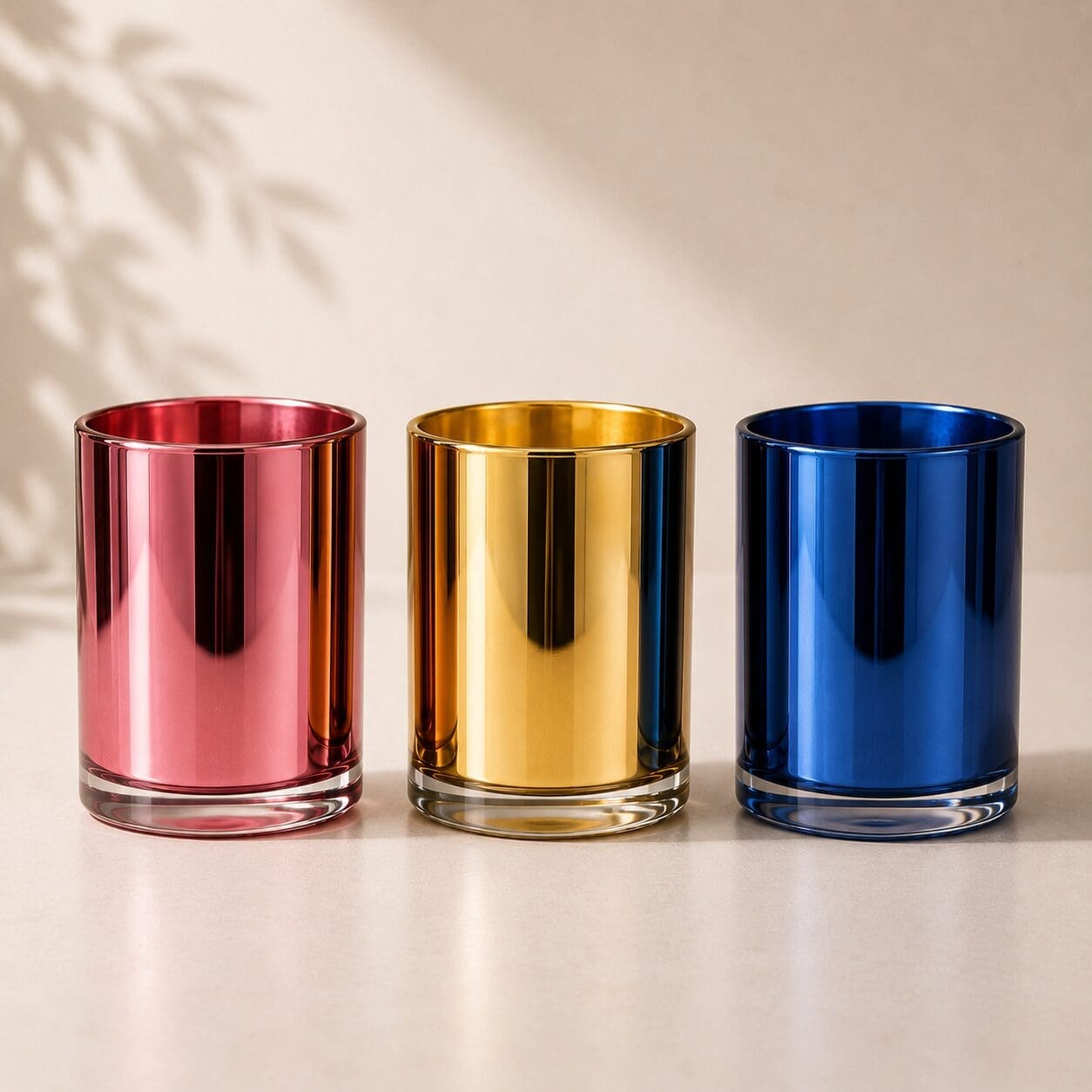
Colored Chrome
Creates a highly reflective metallic appearance where surface reflection becomes a dominant visual characteristic.
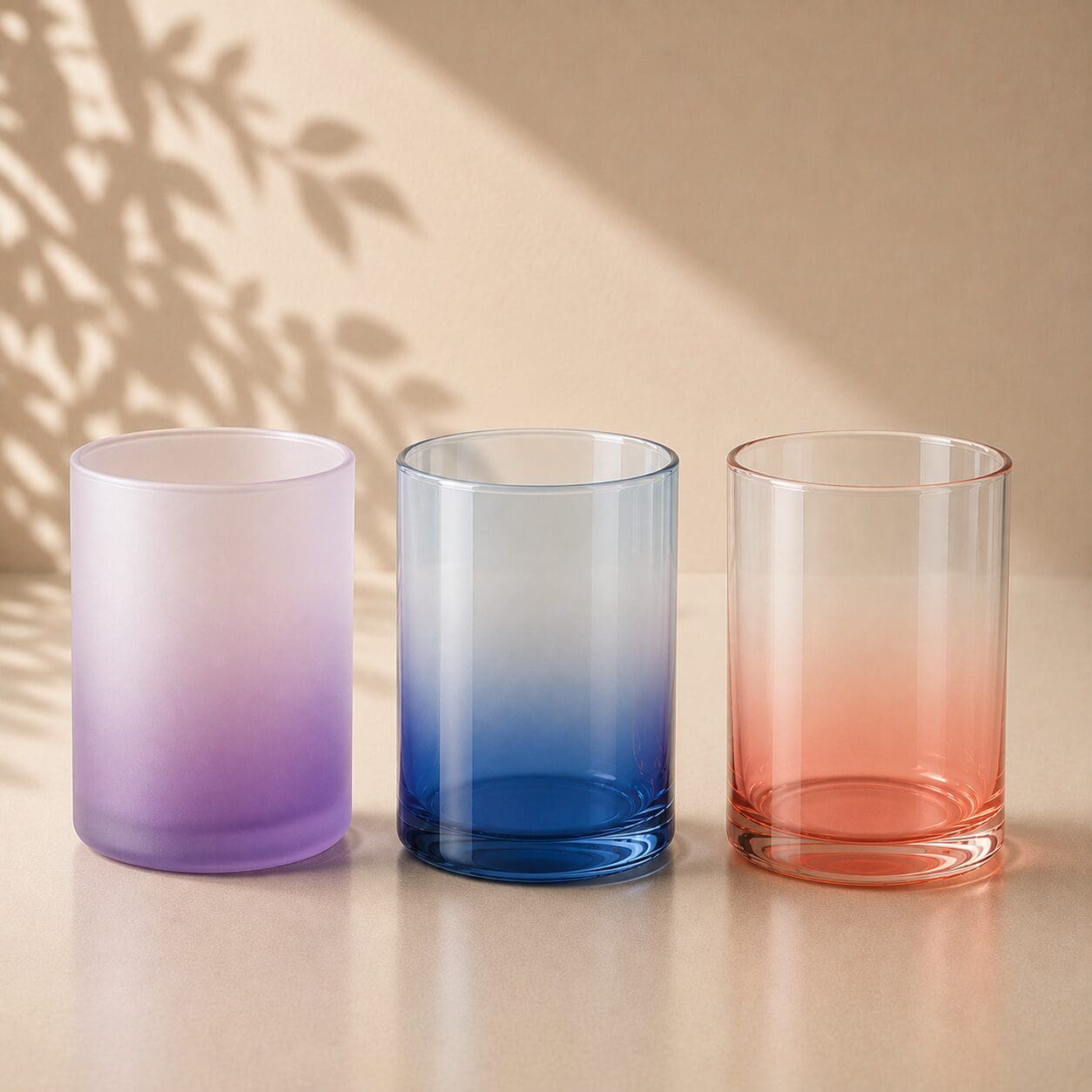
Two Color Ombre
Creates a controlled transition between two colors based on their placement across the container rather than changes in viewing angle.
Which Finish Is Right for You?
| If you’re looking for… | Choose… | Why |
|---|---|---|
| Transparent color with brilliant shine | Transparent Gloss | Maintains clarity and depth while adding a reflective colored surface. |
| A defined transition between two colors | Two Color Ombre | Creates visible movement from one intentionally placed color into another. |
| A highly reflective metallic appearance | Colored Chrome | Uses strong reflection and metallic character to create visual impact. |
| Color that changes as the product is viewed | Dichroic | Creates dynamic color shifts based on light, environment, and viewing angle. |
Ready to Explore Dichroic?
Looking for a surface that changes as consumers interact with it?
Dichroic combines shifting color, reflection, light interaction, and visual depth to create a glass finish that reveals something different as the viewing experience changes.
Request a sample or connect with our decorating specialists to explore Dichroic for your next project.